Ingredient
Gwamegi (Half-Dried Saury or Herring)
과메기
Romanization: gwamegi
A winter delicacy of the Pohang coast: Pacific saury (or herring) frozen and thawed repeatedly in the sea wind until chewy and half-dried, then wrapped in seaweed or greens with garlic and chili paste.
Flavor
Chewy, oily and concentrated, with a pronounced sea smell. Seaweed, raw garlic and sweet-tangy chili paste temper the richness and the fishiness.
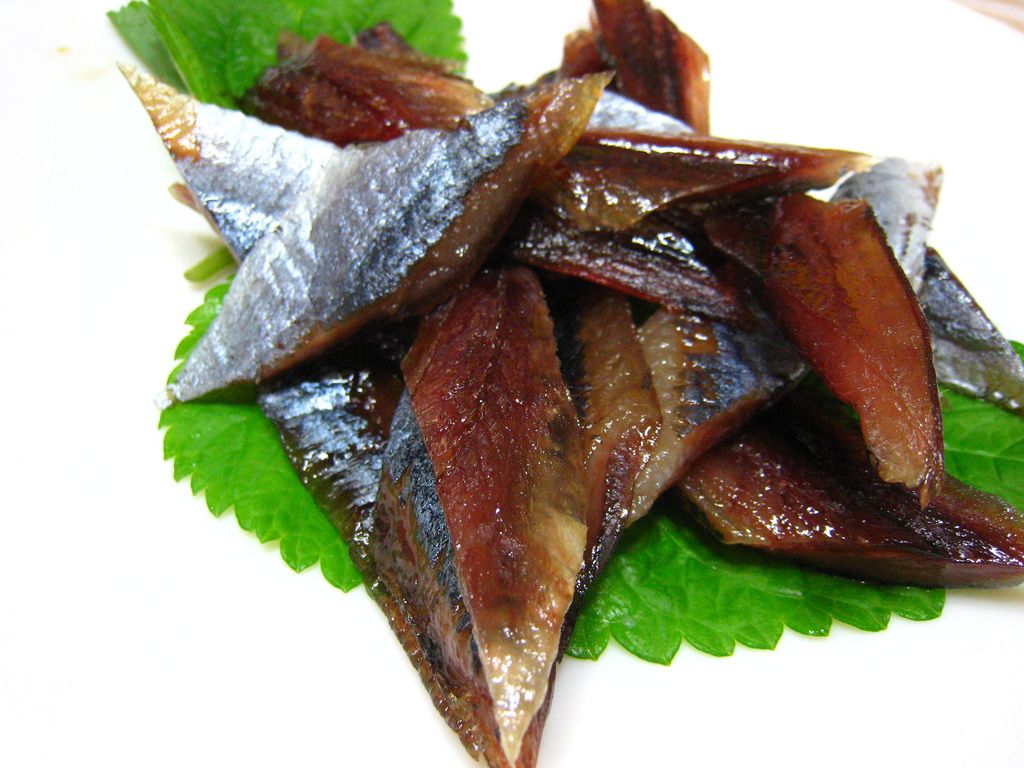 Photo: Nicole Cho (nchoz) at Flickr, CC BY-SA 2.0, via Wikimedia Commons
Origin & History
Gwamegi is a processed fish, not a species: herring or saury dried by repeated freezing and thawing in the cold sea wind of the east coast. The usual explanation of the name, in both the Encyclopedia of Korean Culture and the Encyclopedia of Korean Folk Culture, is that it derives from gwanmok (貫目, 'pierced eye'), the fish being threaded through the eyes and hung to dry. In the Guryongpo dialect of Pohang, the second syllable became megi, and the word softened to gwamegi. The folk encyclopedia adds that the novelist Kim Dong-ri used the form gwanmegi in an essay.
No record dates its beginnings. The folk encyclopedia points to gwanmok in Bingheogak Yi's Gyuhap chongseo and in the Yeoji doseo entry for Yeongil county, compiled under King Yeongjo, as evidence that it was an east-coast specialty by the late 1700s. Herring was the original fish; it dominated when huge catches came from Yeongil Bay in the colonial period, and saury took over from the 1960s, when herring catches fell and saury became plentiful. Folk tales about its origin include a scholar bound for the civil service exam who ate herring hung by the sea, and sailors who hung fish from a boat's roof, where repeated freezing and thawing produced gwamegi (Encyclopedia of Korean Culture). See Pohang and Yeongdeok.
Fish are strung on seaside drying racks from mid-November or December, depending on the source, and become gwamegi when moisture drops to about 40 percent or less. The folk encyclopedia says the winter wind and temperature around Yeongil Bay suit the drying, and that gwamegi was a local food until the mid-1990s, when vacuum packing and word of its nutritional value made it famous nationwide. Guryongpo in Pohang hosts an annual gwamegi festival. Most gwamegi sold now is saury (see kkongchi), usually trimmed of head, bones and even skin. Locals who prefer whole dried fish eat the innards first, then grill the skin and bones, and eat the flesh last. The usual way is to wrap pieces in raw miyeok, dashima, gim or perilla leaf with garlic, scallion and chogochujang or doenjang. See ssam culture.
Nutrition
| Calories | 421 kcal |
|---|---|
| Protein | 32.1 g |
| Fat | 29.9 g |
| Carbohydrates | 0.9 g |
| Fiber | Not reported |
| Sodium | Not reported |
Notable forProtein · Fat · Niacin (12.1 mg) · Phosphorus (316 mg)
Values copied from the Korean Food Composition Table (Rural Development Administration / National Institute of Crop Science) for this exact food, per 100 g edible portion. Blank fields in the table are shown as not reported. The table lists 35.5 g water per 100 g and 90 mg calcium. Typical servings are only a few slices. Actual values vary with ingredients, portion size and preparation.
Health Benefits
- Protein and B vitamins: The Korean Food Composition Table lists 32.1 g of protein, 12.1 mg of niacin and 316 mg of phosphorus per 100 g of saury gwamegi.
- Oily fish fats: The folk encyclopedia describes gwamegi as rich in the omega-3 fats DHA and EPA and in vitamin E, and says it is traditionally thought good for heart and vessel health and against aging. It gives no amounts, and these are traditional beliefs. See seafood, omega-3 and mercury.
- Energy-dense: At 421 kcal and about 30 g of fat per 100 g, it is a concentrated food, so portions matter.
- Eaten uncooked: Gwamegi is air-dried, not cooked. The FDA advises pregnant women, young children, older adults and people with weakened immune systems to avoid raw or undercooked fish.
- Storage: Buy from a reliable source and keep it cold. See food safety at home. People with a fish allergy should avoid it.
Informational, not medical advice. Talk to a qualified professional about your own health and diet.
Dishes with Gwamegi (Half-Dried Saury or Herring)
Dish guides featuring gwamegi (half-dried saury or herring) are coming soon.