History & Culture
Bunsik: Korea's Flour-Food Snack Shops
분식
How a rice-saving campaign of the 1960s and 70s helped turn flour into the basis of Korea's snack-shop table: tteokbokki, gimbap, ramyeon and sundae.
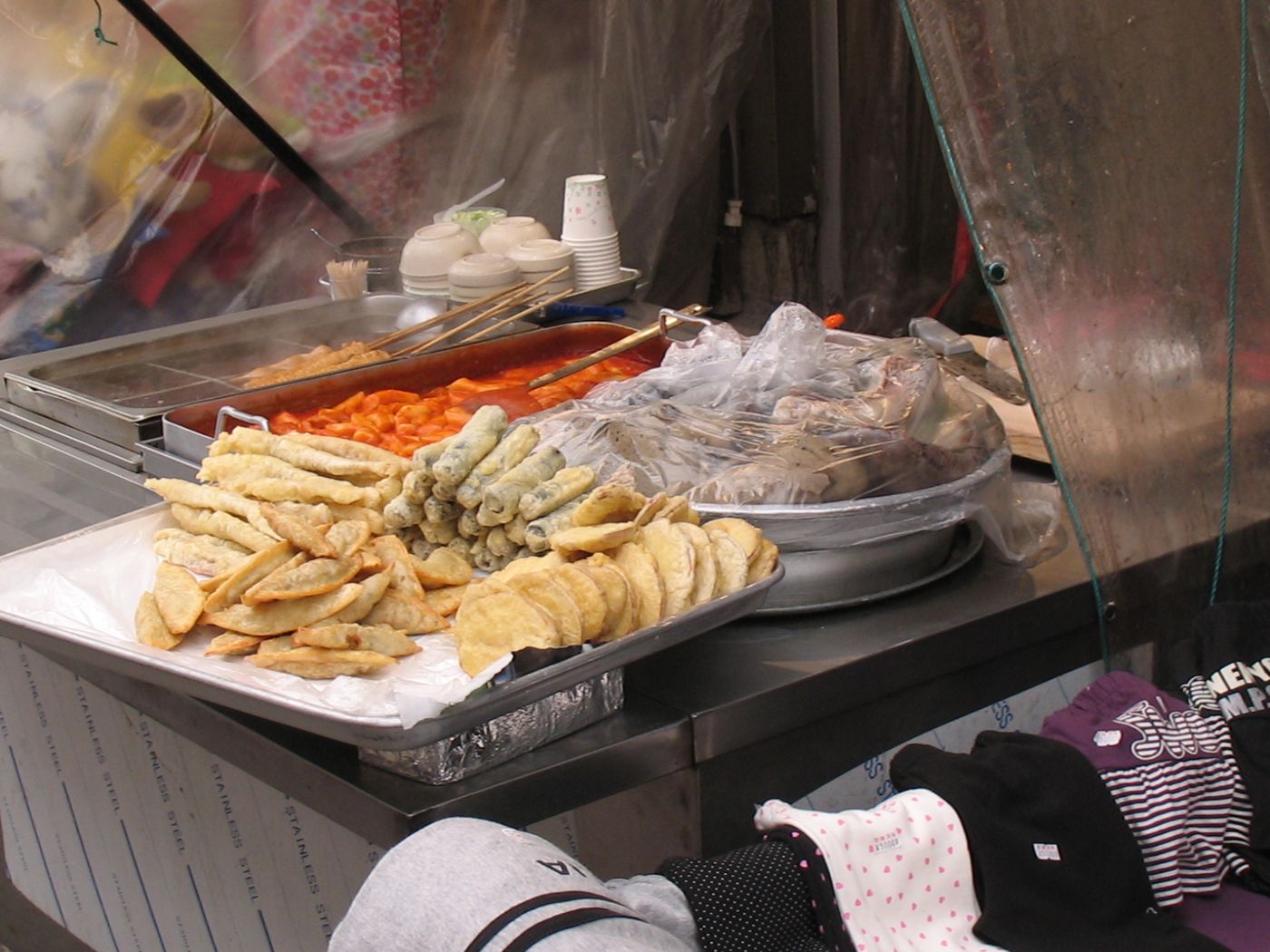 Photo: Jens Ohlig, CC BY-SA 2.0, via Wikimedia Commons
Walk past a school gate in Korea and you will likely see a bunsik (분식) shop: a small counter with a bubbling pan of tteokbokki, trays of gimbap, a pot of fish cake in broth. The word literally means food made from flour, and its history is tied to a government effort to change what people ate. Today it names a whole category of cheap, quick, comforting food that has little to do with its policy origins.
A rice shortage and a flour campaign
National Archives material describes a poor autumn harvest in 1962 that pushed rice prices sharply upward, after which the government decided in November of that year to launch a campaign promoting mixed grains and flour (honbunsik, 혼분식). American surplus grain was already arriving as aid, but people did not switch from rice to wheat on their own. The Encyclopedia of Korean Culture traces the idea of mixing grains and flour to the colonial era's rice-saving drives, and says annual administrative orders ran from 1967 to 1976 before being lifted in 1977.
The measures were hands-on. Restaurants were required to mix barley or noodles into the rice they served, designated days were set aside for flour-only dishes, and schools checked lunchboxes (see dosirak). A Seoul City record notes that in 1969, general restaurants in the capital were restricted from selling rice-based dishes on Wednesdays and Saturdays between 11 a.m. and 5 p.m. Later, in 1979, Seoul revived a standard meal for set-meal restaurants that capped the table at rice plus five side dishes, with at least a tenth of the rice replaced by other grains. The wider story is told in food in modern Korea.
The encyclopedia credits the campaign with shifting the national staple from rice-and-barley toward rice-and-wheat, and with opening the way for ramyeon and bread. Wheat flour, once an aid commodity, became an ordinary pantry item.
What fills a bunsik menu
- Ramyeon: Korea's first instant noodles are usually dated to 1963, when Samyang Foods made a chicken-flavored fried noodle using Japanese technology. Reports say it sold slowly at first; one account puts sales at 2.4 million packets in 1966 and 15 million in 1969. See ramyeon.
- Tteokbokki: The older soy-sauce version was a royal and aristocratic dish. The red, gochujang-based street version is commonly credited to Ma Bok-lim in the early 1950s, though accounts disagree on the Seoul neighborhood, and it became mainstream only in the 1970s. Cheap flour-based rice cakes helped it spread. See tteokbokki.
- Gimbap: For a long time, gimbap was home food for picnics and school trips. Small versions began appearing at bunsik counters, and by the 1990s chains were selling plain gimbap very cheaply. See gimbap.
- Sundae, fried snacks and fish cake: These sit alongside tteokbokki, often dipped in its sauce. See sundae and eomuk.
A shop culture
Bunsik shops became after-school meeting places. The Korea JoongAng Daily describes tteokbokki shops that once hired DJs to take song requests from teenage customers, a few of which still have their booths. The standard order is a plate of tteokbokki with a mix of sides to share; the on-the-spot style often adds ramyeon noodles, fish cake and a boiled egg. In recent years the format has been rediscovered with nostalgia, new sauces and vegetarian gimbap.
Bunsik sits close to Korean street food and to the noodle tradition in noodles in Korean history, and today it shares the food-court crowd with convenience-store food. Its meals tend to be salty and starch-heavy, so a rice-based, vegetable-rich meal at another time of day balances things well; see sodium in Korean food.