Ingredient
Dallae (Korean wild chive)
달래
Romanization: dallae
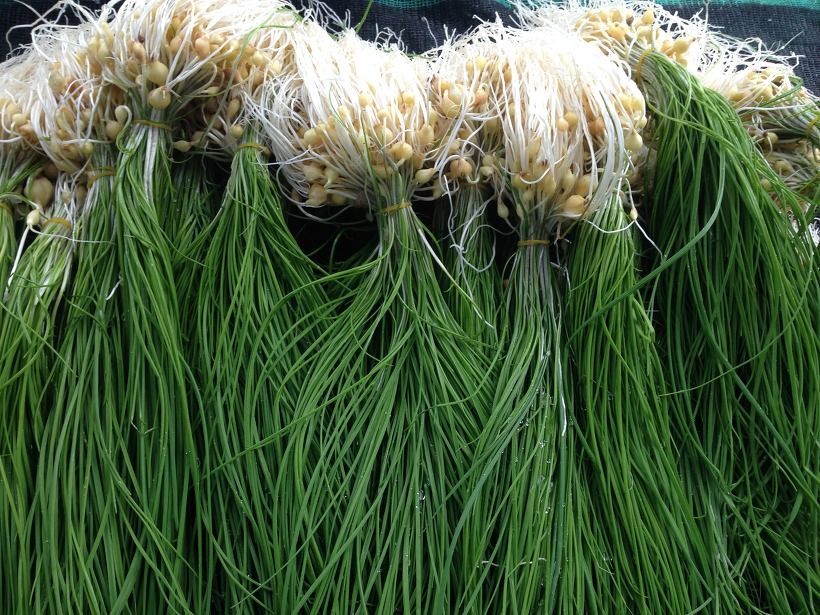
Slender, grass-like leaves with a tiny white bulb at the base, tasting of garlic and green onion at once. Chopped raw into dallae-ganjang for dipping, dressed as dallae-muchim and floated in spring doenjang-guk.
Flavor
Pungent and fresh, like a cross between garlic, green onion and chives, with a gentle bite from the bulb and a sweetish green note in the leaves.
Origin & History
Dallae is a small wild allium, Allium monanthum, a perennial relative of garlic, green onion and chives. Two or three narrow, tubular leaves rise from a round or egg-shaped underground bulb with a tuft of fine roots; small white or pinkish flowers appear on short stalks in spring, and the leaves die back by summer. It grows wild on hillsides and in fields across the country. Old Sino-Korean names include yasan and sosan ("wild" or "small garlic"), though records sometimes confuse it with related wild alliums such as sanmaneul; regional names include dallinggoe and dallanggae.
As one of the earliest wild greens of the year, dallae has long belonged to the spring table. It is eaten raw in seasoned salads, boiled or steamed and dipped in vinegared gochujang, added to doenjang soup, and pickled as jangajji. In folk medicine it was also boiled into remedies and applied to insect stings and bruises, uses recorded as tradition rather than as proven treatments.
Wild dallae is gathered from late winter through spring, bulbs and all. Hothouse cultivation now supplies markets from winter onward, so the season starts earlier than it once did.
The most familiar modern use is dallae-ganjang: dallae chopped finely into soy sauce with chili flakes and sesame, spooned over rice, tofu, steamed egg or gim. It also goes into dallae-muchim with vinegar and gochugaru, savory pancakes and bubbling doenjang-jjigae, where it is added at the last moment to keep its sharpness.
Nutrition
| Calories | 56 kcal |
|---|---|
| Protein | 2.35 g |
| Fat | 0.31 g |
| Carbohydrates | 13.41 g |
| Fiber | 2.9 g |
| Sodium | 4 mg |
Notable forVitamin C · Vitamin A · Folate · Potassium
Korean Food Composition Table entry "Wild garlic (Dallae), Raw" (달래, 생것): also 35.25 mg vitamin C, 85 µg RAE vitamin A, 64 µg folate, 316 mg potassium and 54.29 µg vitamin K per 100 g. Actual values vary with ingredients, portion size and preparation.
Health Benefits
- Vitamin C: The Encyclopedia of Korean Culture singles out dallae for its vitamin C, and the Korean Food Composition Table lists about 35 mg per 100 g raw; it also provides vitamin A (as beta-carotene), folate and potassium.
- Eaten raw: Dallae is one of the spring greens Korea's food-safety ministry lists as fine to eat raw, which preserves its vitamin C, but it should be soaked and rinsed under running water several times first.
- Traditional uses: Folk remedies using dallae for sleep, digestion or stings are traditional beliefs, not established treatments.
- Vitamin K: It contains moderate vitamin K; people taking warfarin should keep their intake of greens consistent and consult their doctor before changing their diet.
Informational, not medical advice. Talk to a qualified professional about your own health and diet.