Techniques
Making Makgeolli
막걸리 빚기
Nuruk, steamed rice and water, left to ferment and then pressed through a sieve: the traditional process behind Korea's cloudy rice drink, now a National Intangible Heritage.
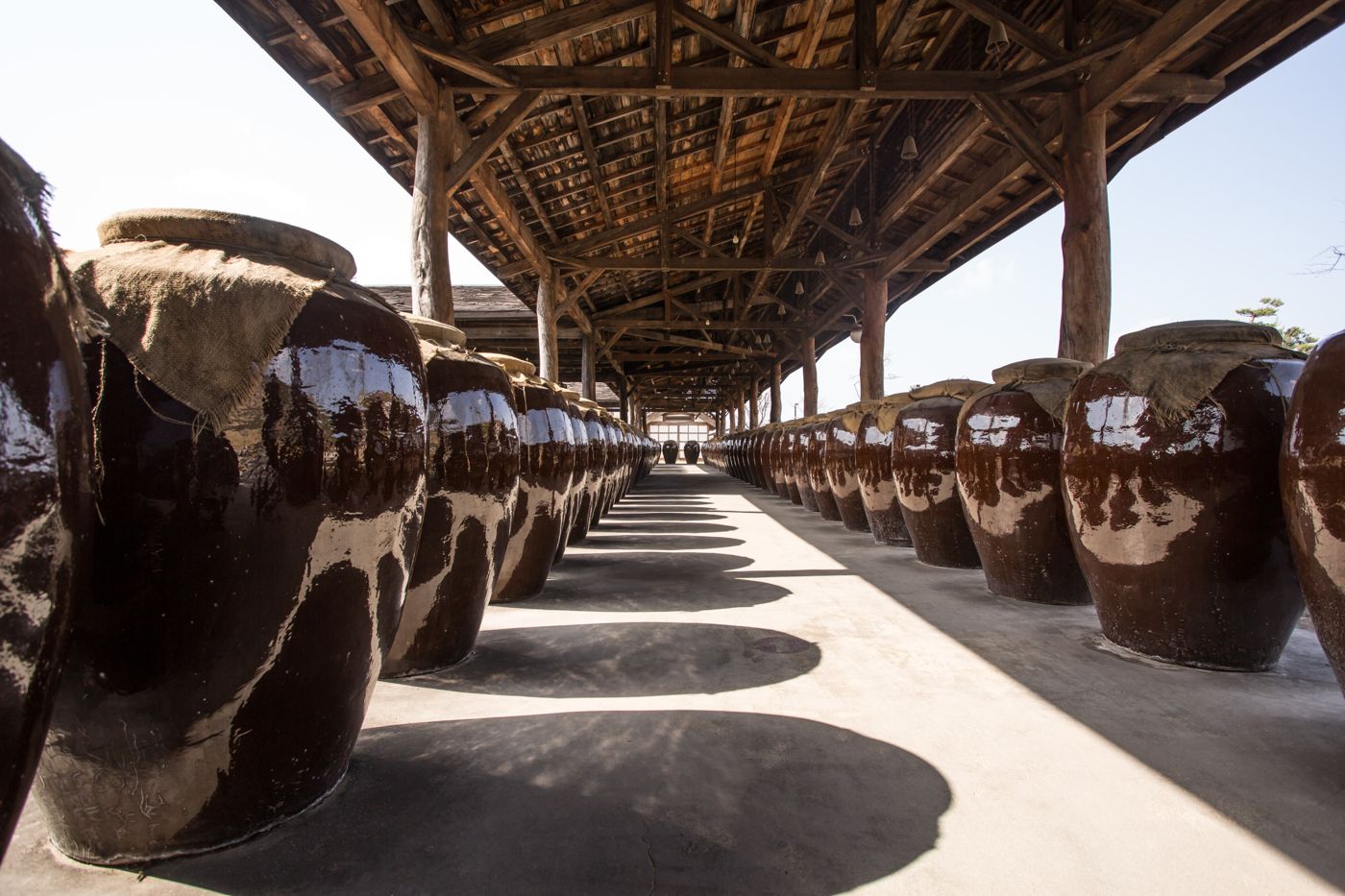 Photo: russik ryoo, CC0, via Wikimedia Commons
Makgeolli (막걸리) is Korea's cloudy, lightly sparkling rice brew. Its name is usually explained as "roughly strained" or "just strained," a description of the last step in making it. The Encyclopedia of Korean Culture lists makgeolli bitgi, the making of makgeolli, as a National Intangible Heritage: a household craft as well as a drink. This page describes the traditional process for readers interested in food history. For the drink itself see makgeolli, and for its place in Korean drinking culture, traditional liquor.
Three ingredients
Makgeolli takes a starchy grain, nuruk and water. Rice, the staple, is the usual grain (ssal), though the encyclopedia notes that regions mixed in millet, corn or sweet potato, and that in the 1960s, when imported grain flooded in, policy pushed breweries toward wheat flour. The Encyclopedia of Korean Folk Culture adds that northern provinces used millet or sorghum, Gangwon's mountains corn, and the southern islands barley or sweet potato. Whatever the grain, it was fermented with nuruk.
Nuruk: the starter
Nuruk is a cake of raw grain colonized by molds and yeasts. The molds produce enzymes that turn starch into sugar; the yeasts turn sugar into alcohol. The folk encyclopedia describes the traditional method. Coarsely ground wheat is moistened, wrapped in cloth, packed into a mold and trodden hard underfoot into a dense cake, often with a dip in the center so heat does not build up there. The cakes ferment on straw or mugwort, turned every few days, at about 35 to 40°C for the first week and a little cooler for the second, then dry slowly and age for a few months. Households made their year's supply in the humid heat of the summer dog days.
The Encyclopedia of Korean Culture records regional styles: flat round cakes pressed and stacked on the heated floor in Seoul and the Yeongnam region, and conical or hat-shaped cakes hung from the rafters in Honam and Chungcheong. Coarse wheat-and-bran nuruk was used for makgeolli and soju, fine flour nuruk for clear brews. Since the 1960s, the encyclopedia notes, most commercial breweries have used ipguk, steamed grain inoculated with a single cultivated mold, instead of wild nuruk.
Fermenting the mash
The encyclopedia preserves a description of Seoul makgeolli around 1906. Rice was soaked overnight, drained, half-dried and coarsely broken, then steamed and spread on straw mats to cool. Coarsely crumbled nuruk was mixed in, the mash went into a large jar with water, and it was left to ferment. It was ready in two to five days. Brewers made most makgeolli between autumn and late spring, because the mash soured too quickly in summer heat.
Straining: where the name comes from
The final step gives the drink its character. When fermentation finished, the mash was poured through a sieve; the lees were mashed by hand to break up the rice grains, water was added, and the mixture was strained again. Broken grains cloud the drink. The folk encyclopedia explains the related practice of first ladling off the clear liquid at the top as refined clear liquor (cheongju) and then sieving the sediment below with water to make makgeolli. Adding water lowers the strength, which made it a farmer's drink, served as a midmorning snack during rice planting. Distilling instead produces soju.
The 1906 description puts the alcohol at around 4.5 percent and the keeping time at only four or five days before it soured. Today, the encyclopedia notes, most makgeolli runs 6 to 8 percent, with lighter 3 to 5 percent versions and stronger small-brewery bottlings of 10 to 12 percent. Unpasteurized saeng-makgeolli is sold with its lactic acid bacteria and yeast still alive, which is why it is kept cold and has a short shelf life (fermented foods).
Law and the home brewer
Home brewing has a complicated legal history. Both encyclopedias describe tightening liquor-tax laws in the mid-1930s that made brewing at home illegal; the folk encyclopedia notes that nuruk itself was policed, and that many household styles disappeared. Brewing for one's own consumption was permitted again from 1995. From 1964 rice was banned from makgeolli because of grain shortages, and the drink was made from wheat flour and corn; rice makgeolli was briefly allowed in 1971 and is now the norm. Rules on home brewing and selling alcohol differ by country, so readers outside Korea should check local law.
At the table
The Encyclopedia of Korean Culture calls makgeolli "liquid rice," and notes that sour, well-ripened kimchi is often named its best companion (baechu-kimchi). Makgeolli also appears on village ritual and ancestral tables (jesa food). It contains alcohol and is unsuitable for children, during pregnancy and for anyone avoiding alcohol; see anju and drinking culture.
Sources
- 01막걸리 빚기 (Makgeolli bitgi) — Encyclopedia of Korean Culture
- 02막걸리 (Makgeolli) — Encyclopedia of Korean Culture
- 03누룩 (Nuruk) — Encyclopedia of Korean Culture
- 04막걸리 (Makgeolli) — Encyclopedia of Korean Folk Culture, National Folk Museum of Korea
- 05누룩 (Nuruk) — Encyclopedia of Korean Folk Culture, National Folk Museum of Korea