Ingredient
Nuruk (Fermentation Starter)
누룩
Romanization: nuruk
The traditional starter for Korean rice liquors (sul): crushed wheat or other grain pressed into cakes and left until molds and wild yeasts colonize it. It supplies the enzymes and yeasts that turn rice into makgeolli and yakju.
Flavor
Not eaten on its own. Dry nuruk smells earthy, grainy and faintly musty, like toasted wheat and damp hay. In the finished liquor, it contributes the fruity, slightly sour, rustic depth that sets nuruk-brewed sul apart from koji-brewed drinks.
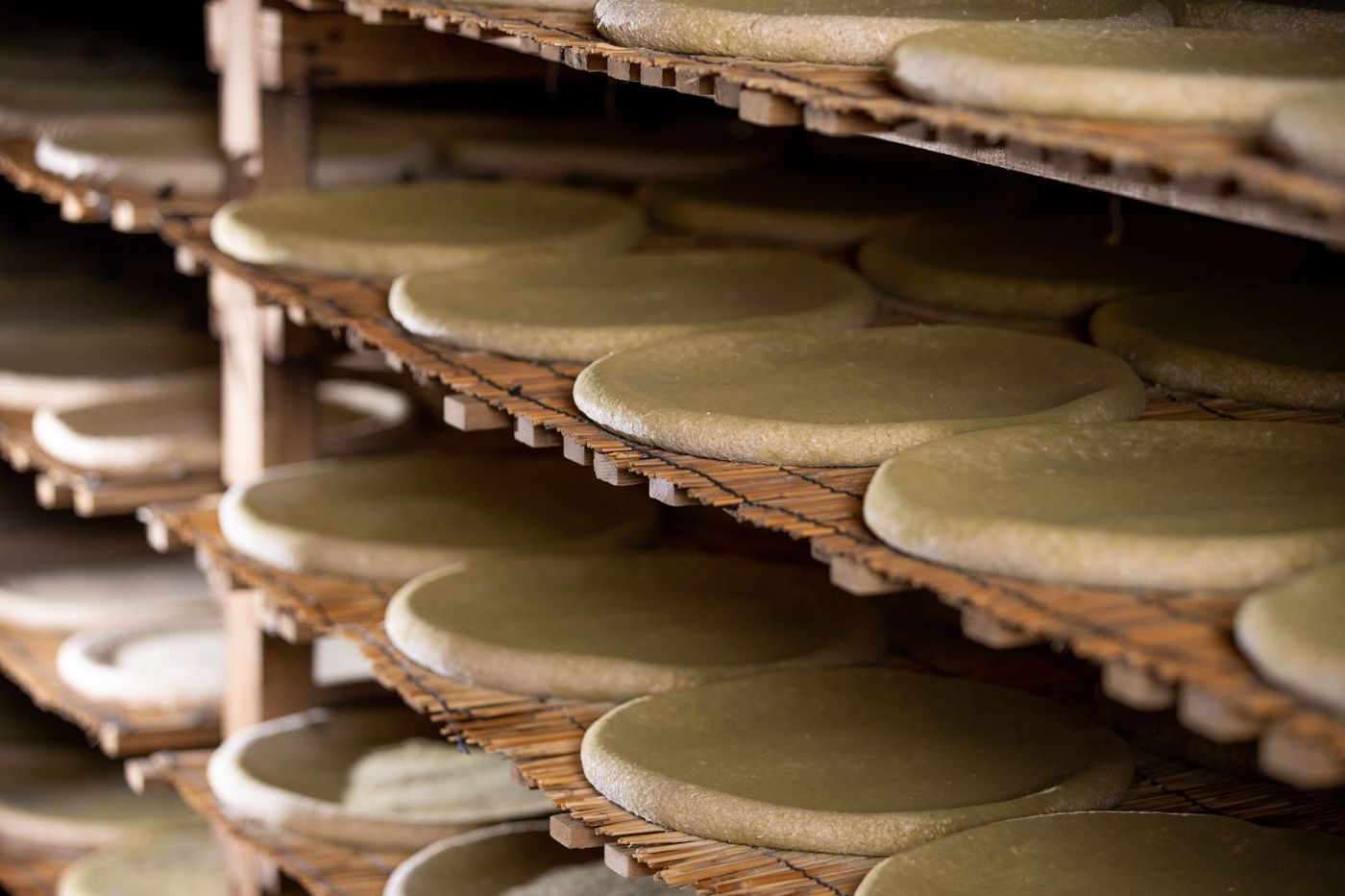 Photo: Republic of Korea, CC BY-SA 2.0, via Wikimedia Commons
Origin & History
Grain cannot ferment into alcohol until its starch is broken into sugar, and in Korea that job has long belonged to nuruk. The Encyclopedia of Korean Culture defines it as a starter made by growing enzyme-rich molds on grain. The first explicit Korean mention is in the Gaoli tujing (Goryeo dogyeong), the account of a Song envoy who visited in 1123, though written references to liquor in the Three Kingdoms era suggest starters existed much earlier. Detailed recipes appear in Joseon texts, using wheat, rice, mung beans and barley.
Most nuruk was the pressed-cake kind (byeongguk, or maknuruk). Crushed grain was moistened, wrapped in cloth, straw or leaves and trodden firmly, by foot or in a wooden mold, then stacked on a heated floor or in a shed under straw or mugwort and turned regularly while molds grew, which took from about a week to more than forty days. The encyclopedia records regional styles: flat, round cakes stacked to ferment in Seoul and Gyeongsang, and cone- or hat-shaped cakes hung indoors in Jeolla and Chungcheong. Wheat nuruk made after the wheat harvest (jeolguk) was the most common. Folklore held that loosely trodden nuruk made thin, sour wine.
Making nuruk was a summer and autumn sideline for farm households until 1927, when makers and brewers formed a company to produce it year-round. From the 1960s many breweries switched to ipguk, rice inoculated with a cultured white koji mold; the Encyclopedia of Korean Culture calls nuruk the biggest single influence on makgeolli's flavor. Wheat nuruk still defines traditional and craft brewing, and nuruk also starts traditional vinegars: the 19th-century Gyuhap chongseo describes a vinegar begun with roasted nuruk powder and water.
Health Benefits
- A living starter: Nuruk carries a mixed community of molds, yeasts and bacteria that do the brewing. It is an ingredient for making liquor and vinegar, not a food to eat on its own.
- Mold safety: Aspergillus oryzae, the workhorse mold in many East Asian starters, is genetically very close to A. flavus, which can produce aflatoxin. A 2025 genomic study of nuruk strains notes that telling them apart matters for food safety. Use nuruk from reputable makers and discard any batch with unusual colors or off smells.
- Gluten: Traditional nuruk is made mostly from wheat, so it is not suitable for people with celiac disease, and liquors brewed with it may contain wheat.
- Its purpose is alcohol: Nuruk exists to make alcoholic drinks; see the cautions on makgeolli.
Informational, not medical advice. Talk to a qualified professional about your own health and diet.
Dishes with Nuruk (Fermentation Starter)
Dish guides featuring nuruk (fermentation starter) are coming soon.
Sources
- 01누룩 (Nuruk) — Encyclopedia of Korean Culture
- 02막걸리 빚기 (Makgeolli brewing) — Encyclopedia of Korean Culture
- 03식초 (Vinegar) — Encyclopedia of Korean Culture
- 04Comparative genome analyses of Aspergillus oryzae and Aspergillus flavus originated from a Korean fermentation starter, nuruk — Food Microbiology (2025)
- 05Eating, Diet, & Nutrition for Celiac Disease — NIDDK