Ingredient
Kongnip (soybean leaves)
콩잎
Romanization: kongnip
The leaves of the soybean plant, eaten green in summer and as autumn-yellowed leaves cured in brine. In Gyeongsang they become the beloved, pungent kongnip-jangajji and kongnip-kimchi.
Flavor
Fresh green leaves are grassy and slightly beany. Brine-cured autumn leaves turn yellow, soft but slightly leathery, and sharply sour and savory, a taste that divides people outside Gyeongsang.
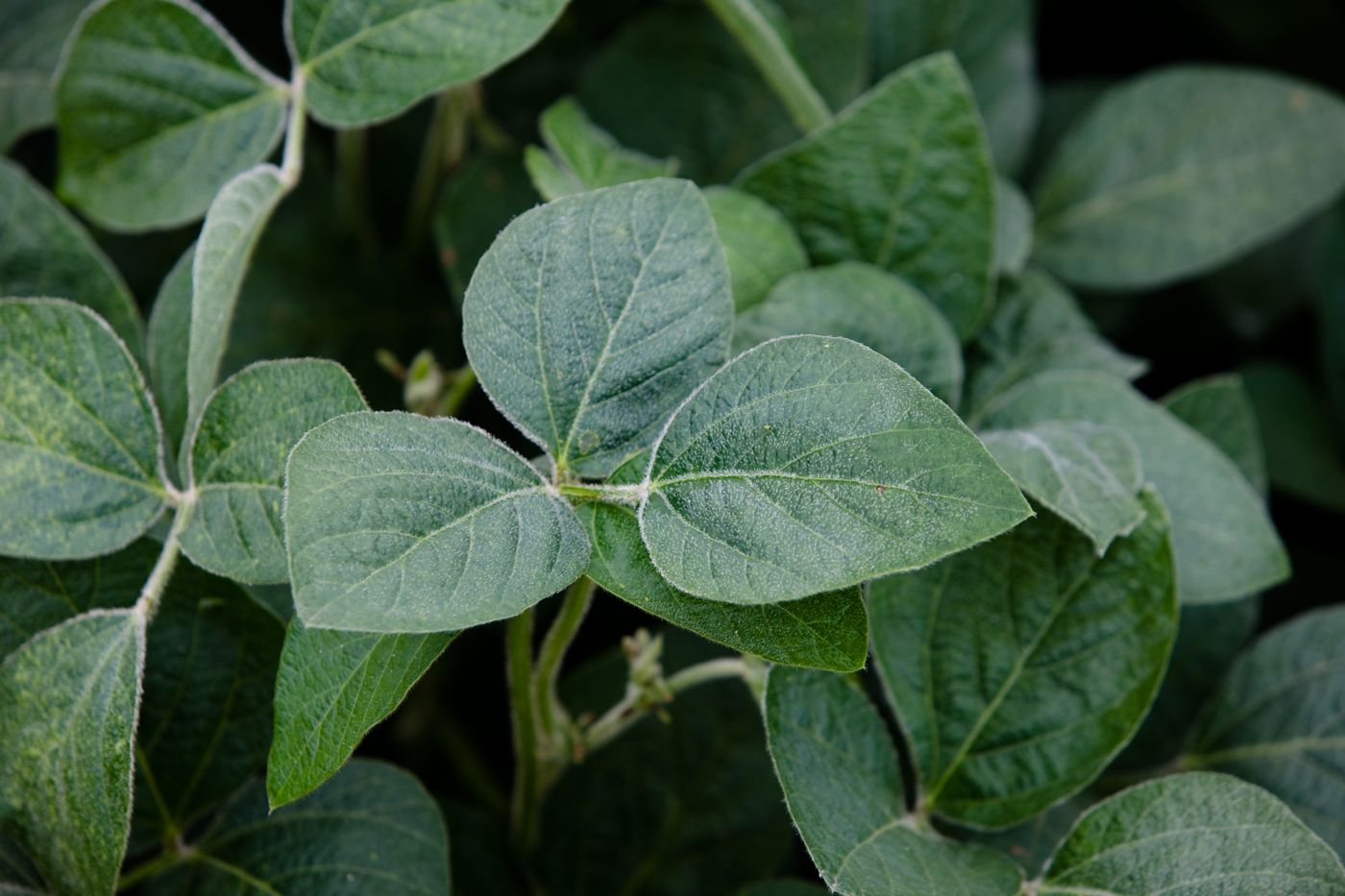 Photo: United Soybean Board, CC BY 2.0, via Wikimedia Commons
Origin & History
Kongnip are the leaves of the soybean (kong), one of Korea's oldest crops. Farmers have long picked some leaves to help the plant, and eating them is old enough that the 1830s farming text Nongjeong hoeyo warned that stripping every leaf would leave the beans smaller and less oily, as the Daegu history encyclopedia notes. In hard times, soybean leaves joined acorns and pine needles in famine porridges, which gave them a humble image.
Soybean leaves are above all a Gyeongsang food. The Encyclopedia of Korean Culture lists kongnip-kimchi among Gyeongsang's regional dishes, and the Daegu encyclopedia describes kongnip-kimchi, kongnip-jangajji, leaves buried in doenjang and kongnip wraps as the city's signature leaf dishes. For the classic autumn version, yellowed leaves are tied in bundles of 20 to 30 and steeped in brine for two weeks or more until cured, then blanched, soaked and layered with a paste of chili flakes, fish sauce and garlic. Daegu cooks also make a summer water kimchi of fresh green leaves in a thin flour broth seasoned with doenjang or anchovy sauce.
In Changwon, according to the Digital Changwon Culture Encyclopedia, tender leaves thinned from the fields are salted for a few days and buried in doenjang in early autumn, to be dug out the following spring; cooks then rinse them and brush each leaf with fish sauce, chili, garlic, ginger, radish and chives. The warm southern climate, the entry explains, favored salty, long-keeping banchan like this one. See jangajji pickling.
Elsewhere, soybean leaves are eaten fresh. On Jeju, the encyclopedia notes, farmers picked tender leaves in the field to wrap barley rice with doenjang and salted fish, and cooked soybean-leaf soup. See ssam culture.
Nutrition
| Calories | 94 kcal |
|---|---|
| Protein | 6.6 g |
| Fat | 0.3 g |
| Carbohydrates | 21 g |
| Fiber | Not reported |
| Sodium | Not reported |
Notable forProtein · Vitamin C · Niacin
Korean Food Composition Table entry "Soybean, Leaf, Raw" (콩잎, 잎, 생것): also 69.9 g water, 16 mg vitamin C, 3.9 mg niacin, 1.6 mg iron and 33 mg calcium per 100 g. This is an older entry with only a few nutrients analyzed; fiber, sodium, potassium, folate and vitamin K are not reported, and the carbohydrate figure may include fiber. Brined or doenjang-cured leaves will be much higher in sodium. Actual values vary with ingredients, portion size and preparation.
Health Benefits
- Leafy protein: Per the Korean Food Composition Table, raw soybean leaves provide protein, vitamin C and niacin, though the database entry is incomplete.
- Isoflavone claims: Regional sources promote soybean leaves as rich in isoflavones and good for health; research on eating the leaves themselves is limited, so treat these as promotional claims.
- Salty pickles: Kongnip-jangajji and kongnip-kimchi are heavily salted and seasoned with fish sauce to keep; eat them in small portions and see sodium in Korean food.
- Soy allergy: People with soy allergy should ask their allergist before eating soybean leaves.
Informational, not medical advice. Talk to a qualified professional about your own health and diet.