Ingredient
Slender Korean scallion (jjokpa)
쪽파
Romanization: jjokpa
A thin, mild scallion with a small bulb at its base, grown mostly in the south and harvested in autumn for the kimchi season. It is the usual choice for pa-kimchi and also goes into pancakes and quick banchan.
Flavor
Pungent and grassy when raw, with more bite than a chive, then mellow and sweet once salted, fermented or lightly cooked.
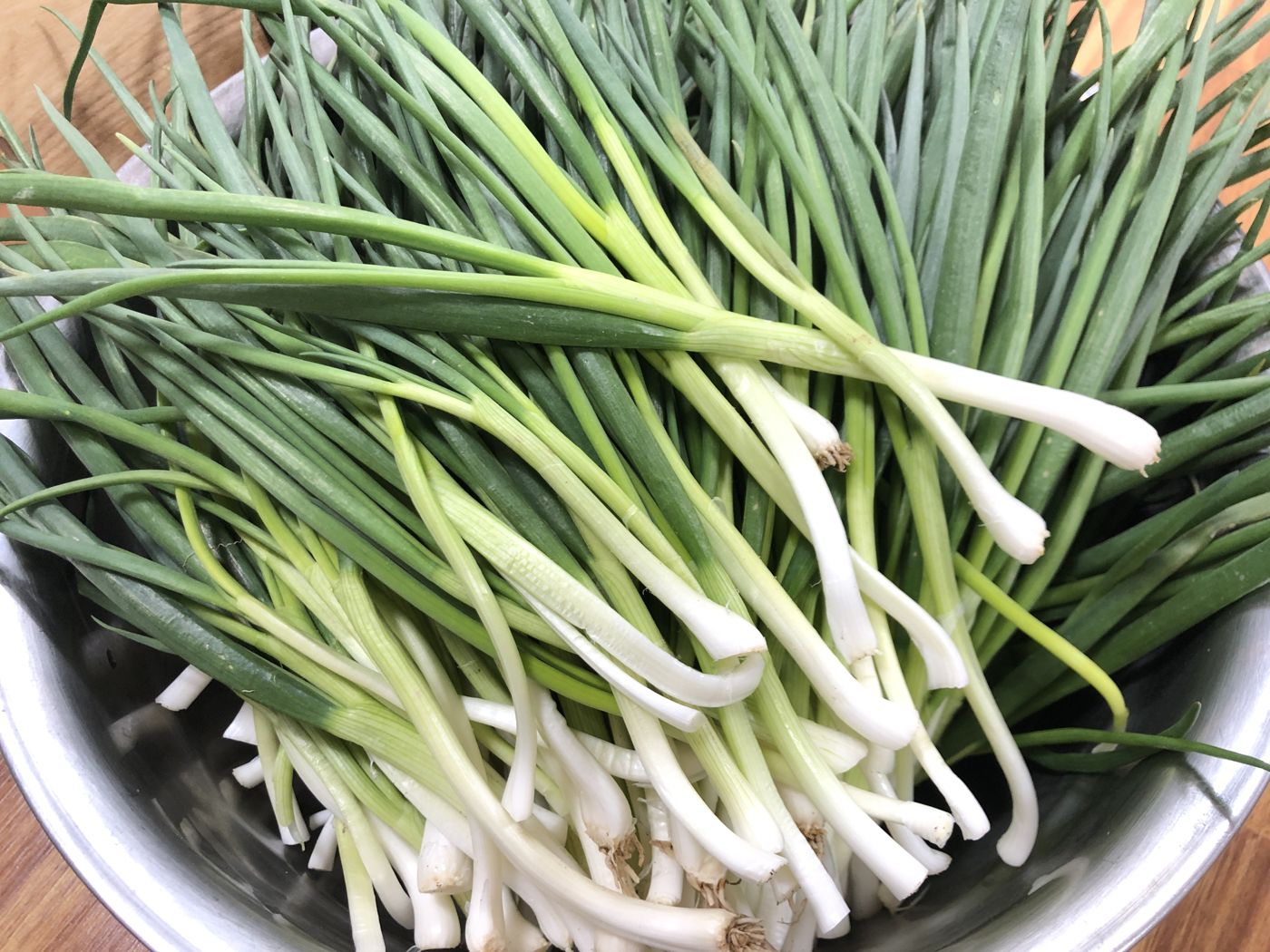 Photo: Choikwangmo9, CC0, via Wikimedia Commons
Origin & History
Jjokpa is classified as Allium wakegi, a different species from the long white-stalked daepa (Allium fistulosum) that the Encyclopedia of Korean Culture treats under "pa". That entry says onions of the daepa group probably reached Korea before the Goryeo period and are valued mainly as a seasoning that tempers the smell of meat and fish. The extension service describes jjokpa as thinner-leaved and milder than daepa, with an onion-like aroma. It forms a small bulb, and most Korean crops are of a type that does not bolt or flower.
The crop follows the seasons of the Korean kitchen. The rural extension service gives late August to early September as the best planting window for the kimchi harvest, with open-field crops lifted in October and November. It is a cool-season crop that is less cold-hardy than daepa, so the south suits it best. Greenhouse and tunnel plantings stretch supply through winter and spring, and in good conditions a crop can be ready about 40 days after planting.
The autumn crop's best-known job is pa-kimchi, whole scallions bound in a gochugaru, garlic and fermented-anchovy seasoning (see myeolchi-aekjeot and making kimchi). Thin scallions also appear in pajeori and in the shellfish pancake haemul-pajeon. For the general scallion and the larger daepa, see green onion.
Nutrition
| Calories | 26 kcal |
|---|---|
| Protein | 1.69 g |
| Fat | 0.17 g |
| Carbohydrates | 5.8 g |
| Fiber | 2.4 g |
| Sodium | 1 mg |
Notable forVitamin K · Potassium · Calcium
Values from the Korean Food Composition Table for 쪽파, which its English interface labels "Welsh onion, Shallot". The table also gives about 303 mg potassium, 60 mg calcium and 109 µg vitamin K per 100 g raw. The English label does not mean the Western bulb shallot. Actual values vary with ingredients, portion size and preparation.
Health Benefits
- A light seasoning vegetable: At about 26 kcal per 100 g raw, with 2.4 g of fiber, jjokpa adds flavor for few calories. Portions in a dish are small.
- Some minerals and vitamin K: The Korean Food Composition Table lists about 60 mg of calcium and 109 µg of vitamin K per 100 g raw. A garnish adds little, but a whole bunch in pa-kimchi adds more.
- Aroma compounds: The Encyclopedia of Korean Culture notes that onions of the pa group contain allicin, as garlic does. How much that matters at cooking quantities is not established by the sources used here.
- Kimchi-form caution: A study of 13 commercial pa kimchi samples found histamine above a suggested 100 mg/kg limit in 6 of them. People sensitive to histamine may prefer young kimchi in modest portions. See fermented foods and histamine.
Informational, not medical advice. Talk to a qualified professional about your own health and diet.
Dishes with Slender Korean scallion (jjokpa)
Dish guides featuring slender korean scallion (jjokpa) are coming soon.
Sources
- 01쪽파 — Nongsaro, Rural Development Administration
- 02쪽파 작업일정 — Nongsaro, Rural Development Administration
- 03파 (Pa) — Encyclopedia of Korean Culture
- 04Welsh onion, Shallot, Raw — Korean Food Composition Table, National Institute of Agricultural Sciences
- 05Formation of Biogenic Amines in Pa (Green Onion) Kimchi and Gat (Mustard Leaf) Kimchi — PMC