Ingredient
Gizzard Shad
전어
Romanization: jeoneo
A small, bony, richly flavored silver fish that Koreans associate with autumn. It is sliced whole and raw with its fine bones, grilled with coarse salt, tossed with vegetables and chili vinegar, or fermented into rare, pea-sized jeotgal.
Flavor
Rich and nutty, with oily, savory flesh and a clean finish that has a toasted, almost sesame-like note when grilled. Raw slices crunch faintly from the soft bones; the stomach *jeotgal* is firm and salty.
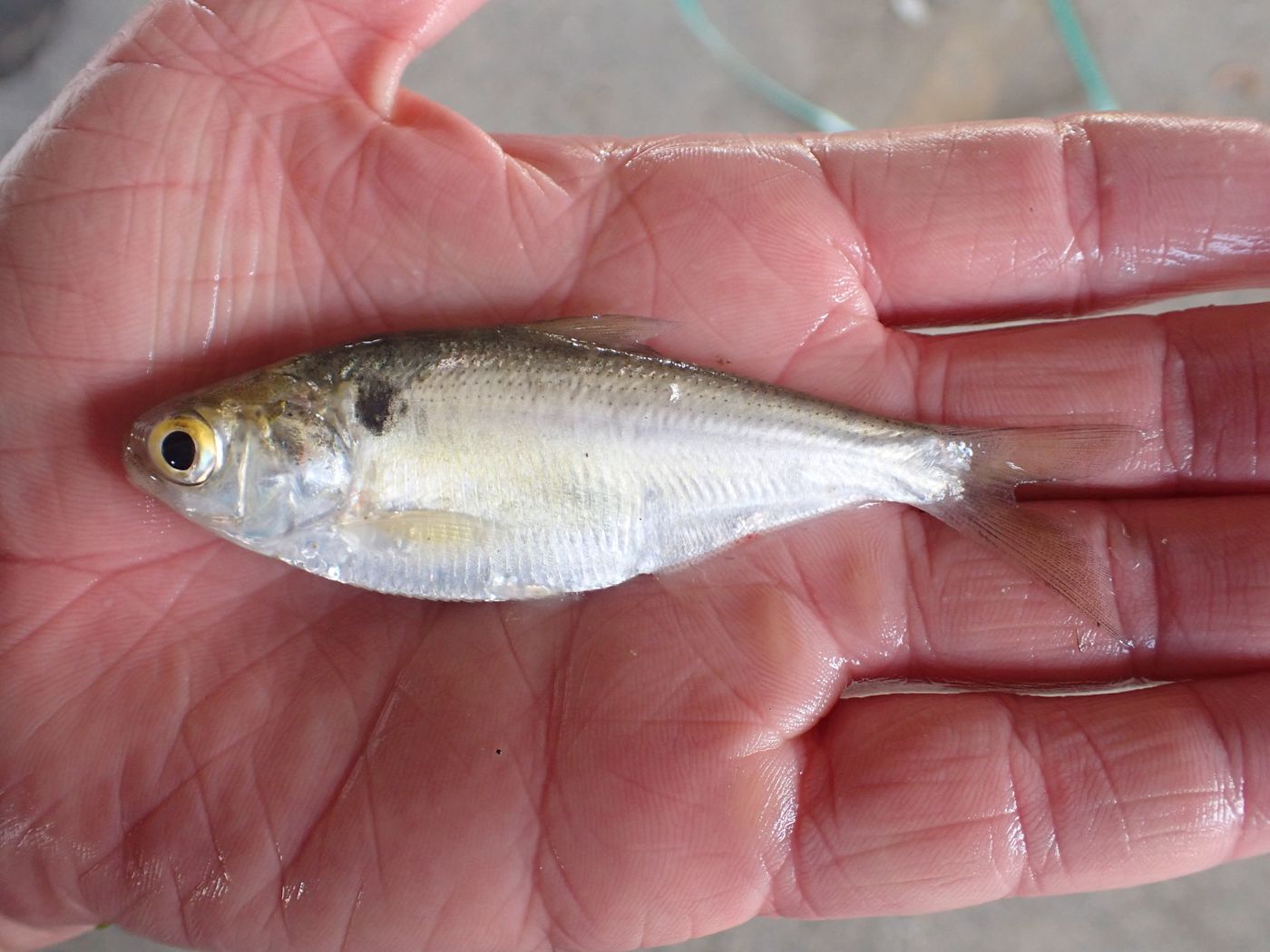 Photo: Fishes of Texas team, CC BY-SA 4.0, via Wikimedia Commons
Origin & History
Jeoneo is written 錢魚, with the character for 'money.' The Encyclopedia of Korean Folk Culture quotes Seo Yu-gu's Nanho eomokji: the flesh has many fine bones, yet they are soft enough not to catch in the throat, and the meat is rich and tasty. Merchants sold it salted in Seoul, where rich and poor alike prized it, and buyers paid without haggling over the price, hence 'money fish.' It is caught mostly along the west and south coasts, and it was already a tribute fish by 1530, when the Sinjeung dongguk yeoji seungnam listed it among offerings from Hadong.
Its fame as the fish of autumn rests on proverbs, which the folk encyclopedia records: there is sesame in an autumn shad's head, meaning the fish is so rich it tastes of toasted sesame; even a daughter-in-law who has left home will return at the smell of shad on the grill; and 'spring mullet, autumn shad.' Jeoneo is eaten from about August, but the encyclopedia observes that its bones turn tougher as autumn deepens, so early-season fish are best for raw slices. Since around 2000, it says, jeoneo has become a national autumn fish, with festivals held across the country from August to October and live fish rushed in tanks to city restaurants. Farmed shad has been produced on the west coast since about 2000.
The classic ways to eat it are hoe cut with the bones and dipped in seasoned doenjang or wrapped in perilla leaves, hoe-muchim mixed with vegetables and chili vinegar, and whole salted grilled fish; see hoe culture and preparing hoe. Jeoneo also yields several jeotgal. The folk encyclopedia names yeopsak-jeot from the young fish, jeoneo-sokjeot from the innards, and the prized jeoneo-bamjeot (also called dombae-jeot) from just the pea-sized stomachs, salted and kept cool for two to three months and then seasoned with chili, sesame oil and green chili. It records the practice around Yeosu in Jeolla and Hadong in Gyeongsang. See making jeotgal and seasonal foods.
Nutrition
| Calories | 107 kcal |
|---|---|
| Protein | 19.2 g |
| Fat | 2.7 g |
| Carbohydrates | 0.2 g |
| Fiber | 0 g |
| Sodium | Not reported |
Notable forProtein · Calcium (141 mg) · Phosphorus (311 mg) · Niacin (6.1 mg)
Values copied from the Korean Food Composition Table (Rural Development Administration / National Institute of Crop Science) for this exact food, per 100 g edible portion. Blank fields in the table are shown as not reported. The table lists a refuse portion of 48 percent. Fat in this fish varies with the season, so one table sample may not reflect the richest autumn fish. Actual values vary with ingredients, portion size and preparation.
Health Benefits
- Protein and minerals: The Korean Food Composition Table lists about 19 g of protein, 141 mg of calcium and 311 mg of phosphorus per 100 g raw edible portion.
- Eaten whole: The folk encyclopedia notes that when the soft bones are eaten the fish is a good calcium source, and describes jeoneo as containing the unsaturated fats EPA and DHA. It gives no amounts.
- Traditional appetite food: The folk encyclopedia describes the salted-stomach jeotgal as easy to digest and traditionally eaten when appetite is poor.
- Raw fish: Jeoneo is often eaten raw. The FDA advises pregnant women, young children, older adults and people with weakened immune systems to avoid raw or undercooked fish.
- Sodium: Jeotgal such as jeoneo-bamjeot is heavily salted. See sodium in Korean food.
- Bones and allergy: The folk encyclopedia suggests that for large fish you can eat just the flesh, because the bones get tougher. People with a fish allergy should avoid jeoneo in all forms.
Informational, not medical advice. Talk to a qualified professional about your own health and diet.
Dishes with Gizzard Shad
Dish guides featuring gizzard shad are coming soon.
Sources
- 01전어 (Gizzard shad) — Encyclopedia of Korean Folk Culture (한국의식주생활사전)
- 02전어밤젓 (Jeoneo-bamjeot) — Encyclopedia of Korean Folk Culture (한국의식주생활사전)
- 03가을 전어(錢魚) 머리에는 깨가 한 되다 — Encyclopedia of Korean Folk Culture (한국세시풍속사전)
- 04전어, 생것 (Dotted gizzard shad, raw) — Korean Food Composition Table, RDA
- 05Selecting and Serving Fresh and Frozen Seafood Safely — U.S. Food and Drug Administration