History & Culture
Korean Food Abroad: Diaspora Foodways
해외 한인의 음식 문화
Carrot salad in Tashkent, offal grills and new kimchi in Osaka, short-rib tacos in Los Angeles: how Korean emigrants rebuilt their table with what they could find.
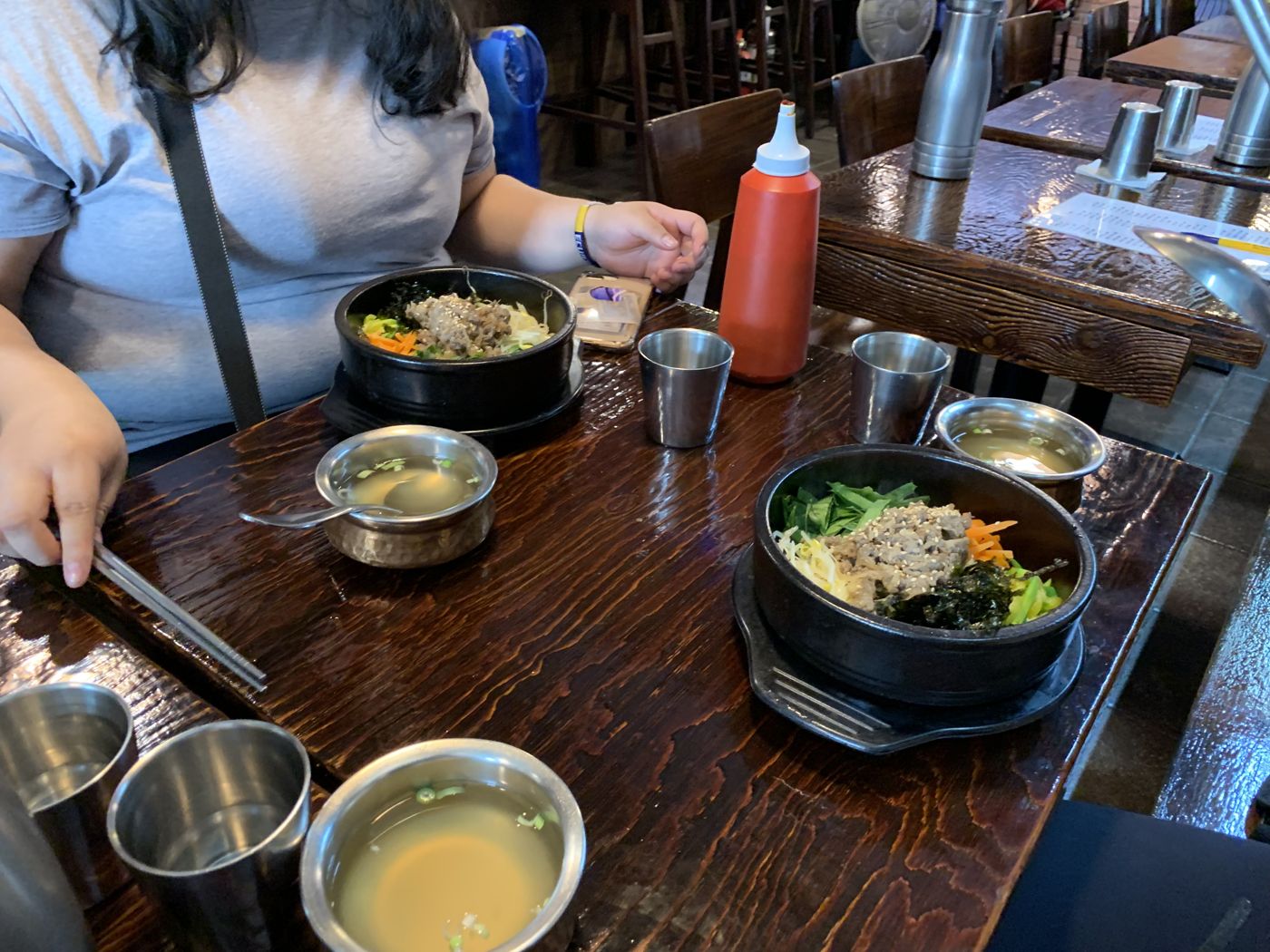 Photo: Awrights711, CC BY-SA 4.0, via Wikimedia Commons
Korean food traveled abroad long before it became fashionable. Migrants carried it to the Russian Far East in the nineteenth century, to Japan under colonial rule and to the Americas, and in each place they rebuilt the table from local ingredients. The results are not lesser copies of food in Korea but cuisines of their own, sometimes unknown on the peninsula.
Koryo-saram and Korean carrots
The Koryo-saram (고려 사람) are ethnic Koreans of the former Soviet Union. Their ancestors began moving into the Russian Far East in the second half of the nineteenth century, driven by poverty and famine and later by Japanese rule over Korea. In 1937 Stalin's government deported the entire community, about 172,000 people according to most accounts, mainly to Kazakhstan and Uzbekistan, in crowded trains that took weeks. Many died during the deportation and resettlement; estimates of the toll vary widely.
In Central Asia, napa cabbage and Korean radish were hard to find, and cooks adapted. The best-known result is morkovcha, the spicy carrot salad sold across the former Soviet Union as Korean carrots. Shredded carrot is dressed with vinegar, oil, garlic, chili and coriander seed, a recognizably banchan-like dish built from Central Asian ingredients. It is usually described as a kimchi substitute, though no one recorded its invention, and it is virtually unknown in South Korea. Koryo-saram tables also kept noodle soups (kuksi) and steamed buns (pigodi) as family dishes.
Zainichi Koreans in Japan
Zainichi Koreans are Koreans resident in Japan, many descended from people who arrived during colonial rule (1910–1945) or fled turmoil on the peninsula after it. The Ikaino–Ikuno district of Osaka has had Japan's largest Korean population since before the Second World War; in 2019 about a fifth of Ikuno Ward's residents were foreign nationals, roughly 80 percent of them Zainichi Korean. An anthropological study of the area by Park Keunmo found that the earliest Korean food businesses there sold kimchi and rice cakes, foods that needed little capital or training.
Meat was harder. The cuts used in Korea were too expensive, so Zainichi cooks used what Japanese butchers discarded: offal, known in Japan as horumon, together with pig's feet, heads and blood. Korean and some Japanese traders were selling offal for grilling around Osaka's Korean market by about 1928, and after the war offal stayed outside the controls placed on meat, which kept it cheap. Park argues that this reflected adaptation to poverty more than a simple transfer of Korean meat culture. Grilled offal and marinated beef from Korean-run restaurants grew into what Japan now calls yakiniku.
Kimchi changed too. Park notes that most kimchi made by Zainichi Koreans for the Japanese market is sweeter and less fermented, with less garlic and salted seafood, and that new versions with celery, bitter gourd and tomato appeared. It also moved from rice side dish to salad or appetizer with drinks.
Korean-American food and Los Angeles
Korean immigration to the United States grew sharply after immigration reform in 1965, and Los Angeles became its center. A Korean church opened there in 1905, but modern Koreatown dates from 1971, when the immigrant businessman Hi Duk Lee bought land near Olympic Boulevard and Normandie Avenue and opened Olympic Market; the city officially recognized Koreatown in 1980. Its barbecue houses, tofu-stew shops, noodle restaurants and supermarkets made Korean food available in America decades before it reached the mainstream.
The next generation mixed it with the city around them. The Kogi truck, which soft-opened on November 20, 2008, put Korean barbecue into tacos. The idea was Mark Manguera's, a Filipino American who had married into a Korean family, and the cooking was Roy Choi's; announcing the truck's stops on Twitter drew lines hundreds long. Korean-Mexican tacos and gochujang glazes have since become part of a recognizable Korean-American style. The grilling tradition behind them is covered in Korean barbecue culture.
Kimchi far from home
For many emigrant families, kimchi is what anchors the table. Napa cabbage, gochugaru and saeujeot are now sold in Korean groceries worldwide, and many families abroad still make kimchi in batches at home, in the spirit of the autumn kimjang. Where ingredients were scarce, families improvised, as the carrot salad shows. Basic method is in making kimchi.
Sources
- 01How Central Asia became home for the Koryo-Saram — Novastan (2026)
- 02Taming Morkovcha: Russia's Beloved Korean Carrot Salad — The Moscow Times (2020)
- 03Park Keunmo, The Transformation of Food Culture in Zainichi Korean Society (Osaka University, 2021)
- 04Iconic Neighborhood Restaurants: Koreatown — PBS SoCal (2015)
- 05Kogi Korean BBQ, a taco truck brought to you by Twitter — Los Angeles Times (2009, archived)