History & Culture
Chuseok Foods: Songpyeon, New Rice and the Harvest Table
추석 음식
The foods of the autumn harvest holiday: songpyeon steamed on pine needles, new-crop rice and liquor, fruit, taro soup, and how the Chuseok charye table differs from Seollal's.
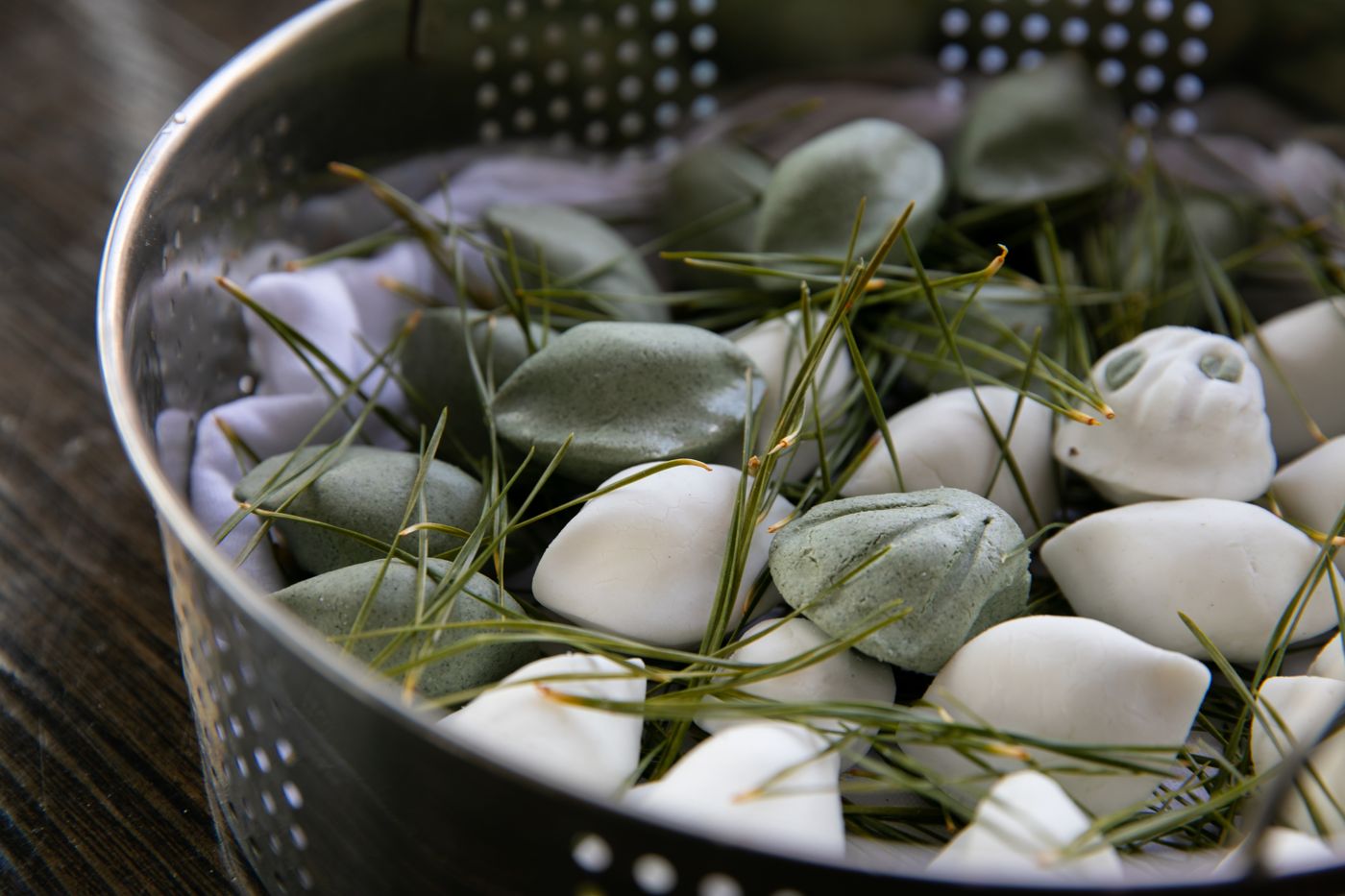 Photo: korea.net, CC BY-SA 2.0, via Wikimedia Commons
Chuseok (추석), the fifteenth day of the eighth lunar month, is also called hangawi, gabae or jungchujeol. The Encyclopedia of Korean Culture notes that it has been observed since the early Three Kingdoms period, and cites the Samguk sagi account of Silla women dividing into two teams for a month-long weaving contest that ended at the full moon, with the losers feeding the winners. It is a harvest holiday, and its food is built around the first of the new crop. The year-round calendar is in seasonal foods.
Songpyeon: the signature cake
The defining food is songpyeon. The Encyclopedia defines it as a steamed cake of non-glutinous rice flour kneaded with hot water, filled and shaped by hand, then steamed on a bed of pine needles. Fillings include red bean, sesame, jujube and pine nut; variants add mugwort or pine bark. For Chuseok everything is meant to be new: the Encyclopedia says the filling beans, red beans, chestnuts and jujubes are all of the new harvest. The cake is older than the holiday's fame suggests: the Encyclopedia says it was common by Goryeo, and describes a separate occasion, Junghwajeol on the first day of the second month, when songpyeon made from grain hung at the gate on the first full moon was given to farm workers. More on the rice-cake family is on the tteok page.
New rice, liquor and fruit
The Encyclopedia lists the Chuseok offering as rice cooked from the new crop, liquor brewed from new rice (sindoju), and songpyeon, instead of the white rice cake soup of Seollal. Fruit is persimmon, chestnut, jujube, walnut, ginkgo and quince, with apples and pears added later; chestnuts, jujubes and dried persimmons are essential. See traditional liquor and rice in Korean culture.
Taro soup and the rest of the table
The same entry names mung-bean sprouts and taro soup (toranguk) as characteristic holiday dishes, and mentions a yellow hen as a prized food. A family's actual table usually grows around these with jeon, namul and sweet drinks such as sikhye, but the Encyclopedia entry for Chuseok does not itself list those, so they are best read as common practice rather than documented rule. Taro soup is covered in toran-guk.
Charye and grave visits
Early on Chuseok morning the household holds charye (차례). Rather than rice cake soup, the table has new-crop rice and songpyeon, and the Encyclopedia's charye entries say rice and soup are not offered in the usual way. After the rite the family shares the offered food, a custom called eumbok, and then visits the graves, having trimmed the grass beforehand (beolcho). The Encyclopedia notes that charye was customary in the southern rice-growing region but less observed in the northern dry-field region, although Chuseok's spread nationwide has strengthened it. Families vary widely, and the rules of arrangement are discussed in jesa food.
Games and the holiday today
Chuseok was a time for community games such as ssireum, tug-of-war, and ganggangsullae on the southwest coast. Today it is a public holiday and many travel to hometowns. The Encyclopedia's author hopes that the old meaning, gratitude for abundance and care for ancestors, will continue even though the agricultural basis of the holiday has weakened.