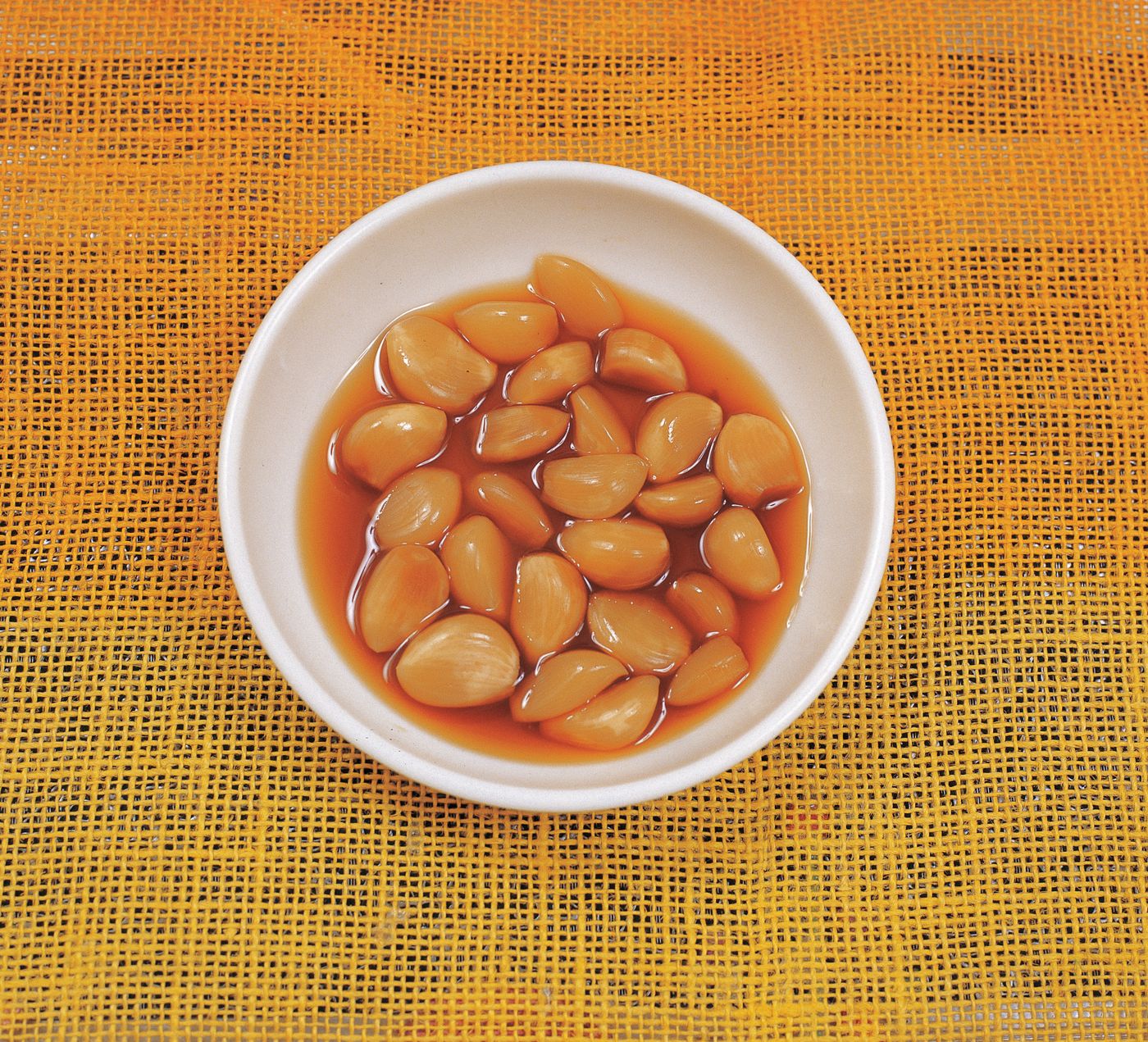
 Photo: wizdata, CC0, via Wikimedia Commons
Jangajji · Pickled 장아찌
Soy-Pickled Garlic
마늘장아찌
Romanization: maneul-jangajji
Young garlic mellowed in vinegar, then cured in a sweet soy brine until mild, tangy and deep amber — a long-keeping pickle.
- Serves
- 25
- Prep
- 40 min
- Cook
- 15 min
Recipe
Ingredients · Serves 25
- 500 gYoung garlic clovespeeled, root ends trimmed
- 250 mlRice vinegarfor the first soak
- 250 mlWaterfor the first soak
- 250 mlSoy sauce (ganjang)
- 250 mlWaterfor the soy brine
- 100 gSugar
- 100 mlRice vinegarfor the soy brine
Method
Technique: Jangajji: Pickling in Jang
Step 1: Wash the peeled garlic and dry it well. Pack into a clean glass jar.
Step 2: Mix the 250 ml vinegar with 250 ml water and pour over the garlic to cover. Close and refrigerate for 7–10 days to soften the garlic's sharpness.
Step 3: Drain the garlic and discard the vinegar water.
Step 4: Bring the soy sauce, water and sugar to a boil, stirring until the sugar dissolves. Remove from the heat, stir in the vinegar and let it cool completely before pouring it over the garlic.
Step 5: After 3–4 days, pour off the brine, bring it back to a boil, cool and pour it back over the garlic. Repeat once more after another 3–4 days.
Step 6: Keep refrigerated. The garlic is ready after about 3–4 weeks and keeps for several months chilled. Use clean utensils and discard if mold appears.
Origin & History
Maneul-jangajji belongs to jangajji, Korea's long tradition of vegetables preserved in salt, soy sauce or fermented pastes so they can be eaten well beyond their season.
The classic method, as the Encyclopedia of Korean Culture describes it, starts when new garlic first comes in and is still tender: the garlic is soaked in vinegared water to draw out its harsh pungency, then cured in soy sauce sweetened with sugar. The result is sweet, salty and slightly sour, with a deep reddish-brown color; a paler version is made with salt instead of soy sauce.
Because the season for young garlic is short, it is a dish of late spring and early summer preparation, enjoyed through the rest of the year.
Key Ingredients
 Garlic마늘Used raw, minced, pickled and roasted, garlic is one of the essential aromatics of Korean food — in seasonings, marinades, kimchi and namul.
 Soy sauce간장Korean soy sauce, in two main kitchen forms: pale, salty guk-ganjang (soup soy sauce) brewed the traditional way from meju, and darker, sweeter jin-ganjang for braises and marinades.
Nutrition
| Calories | 23 kcal |
|---|---|
| Protein | 0.5 g |
| Fat | 0 g |
| Carbohydrates | 5.1 g |
| Fiber | 0.6 g |
| Sodium | 225 mg |
From the Korean Food Composition Table entry “Garlic, Pickled, Maneul-jangajji” (per 100 g: 113 kcal, 1127 mg sodium), scaled to the serving size. Homemade batches vary with salting and seasoning. Actual values vary with ingredients, portion size and preparation.
Health Benefits
- Garlic: raw garlic is rich in manganese and vitamin B6 per 100 g; a small serving of pickled cloves contributes modest amounts. Its sulfur compounds are the subject of ongoing research.
- Milder than raw: the vinegar soak and long cure tame garlic's bite, making it easy to eat several cloves with a meal.
Regional Variations
- Whole heads or cloves: young garlic is pickled as whole heads, skins and all, or as peeled cloves.
- Soy or salt: soy-sauce brine gives a dark, sweet pickle; a salt brine gives a white version.
- Garlic scapes: the same treatment is applied to garlic stems and scapes (maneul-jong).
Pairings
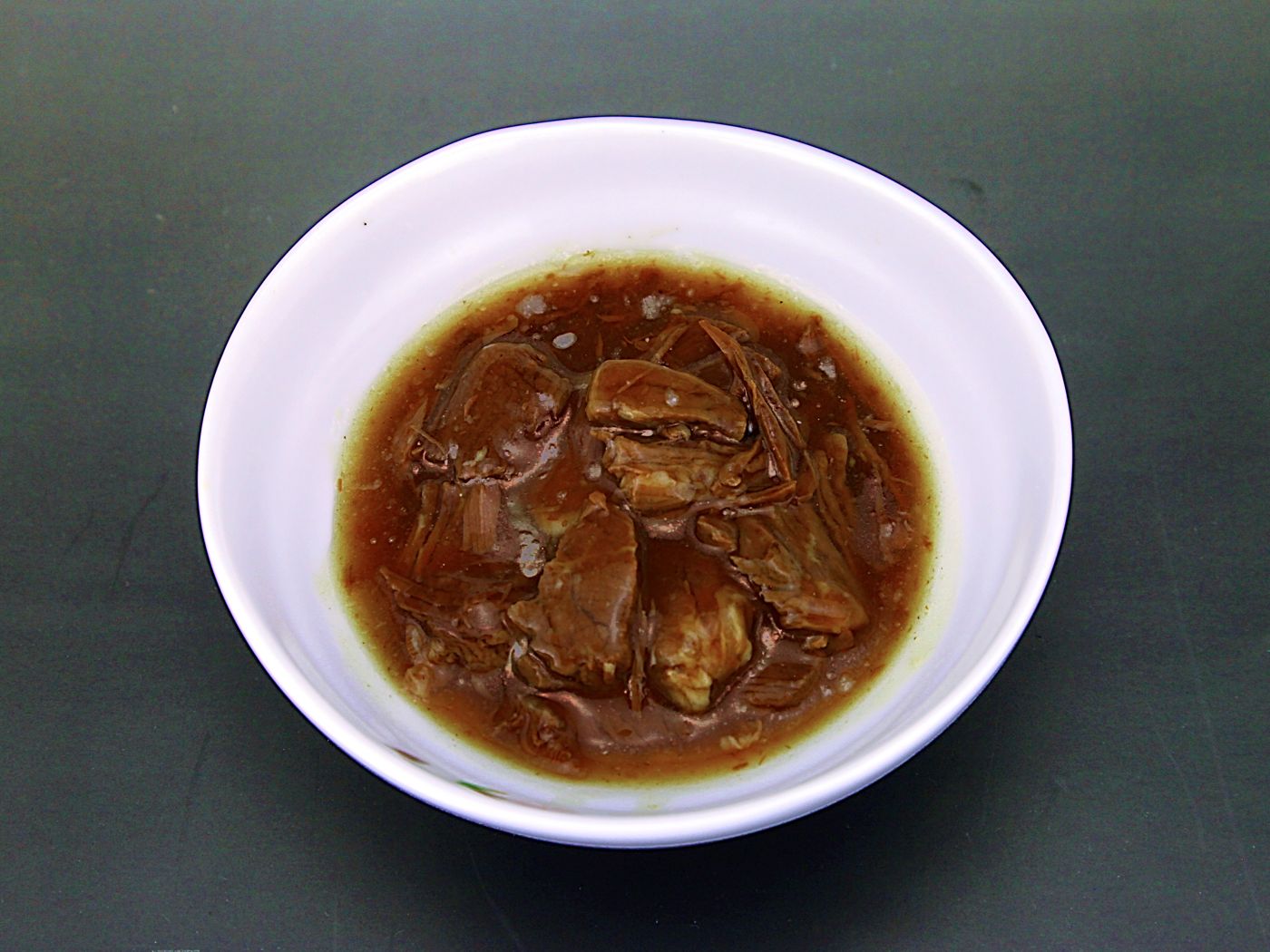 Jangjorim장조림Lean beef simmered in soy sauce until tender, then torn into strands and served in its savory broth, often with eggs, garlic and mild peppers.
 Sigeumchi Namul시금치나물Spinach blanched for a few seconds, squeezed dry and dressed with garlic, soy sauce and sesame — one of the simplest and most familiar namul.
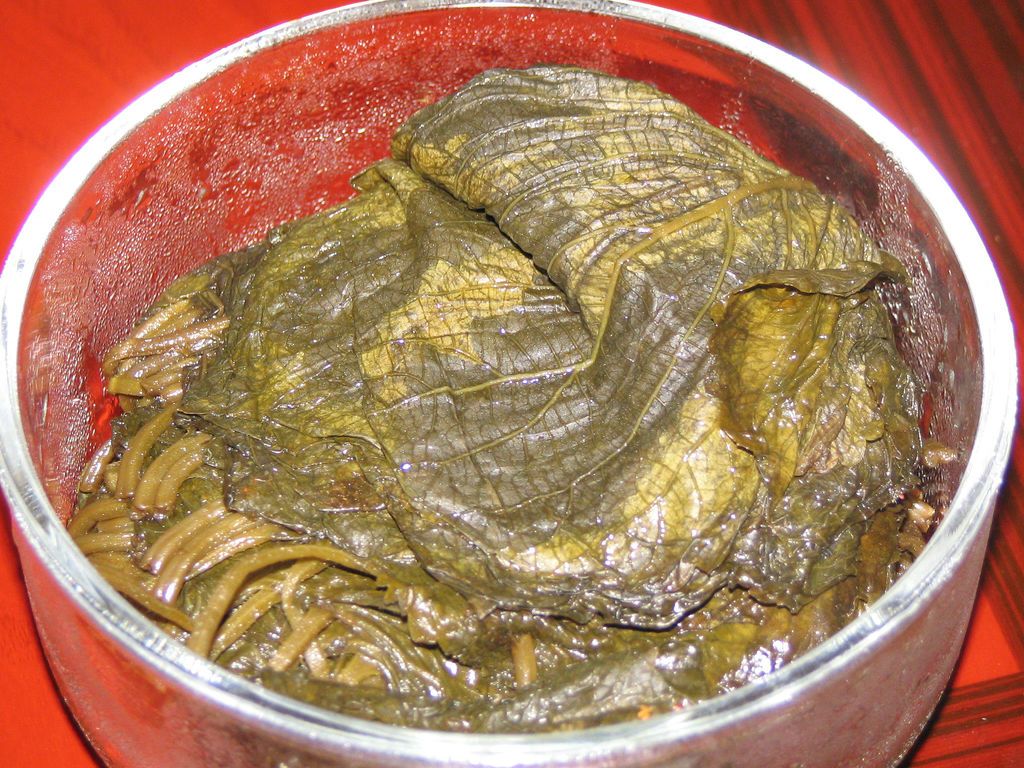 Soy-Pickled Perilla Leaves깻잎장아찌Fragrant perilla leaves steeped in a sweet-salty soy brine — peeled off one at a time and wrapped around a spoonful of rice.