Wellness
Fermented Soybeans: Doenjang, Cheonggukjang and Ganjang
발효 콩 식품
How doenjang, cheonggukjang and ganjang are made, what fermentation changes in the soybean, and what research says about benefits, sodium and biogenic amines.
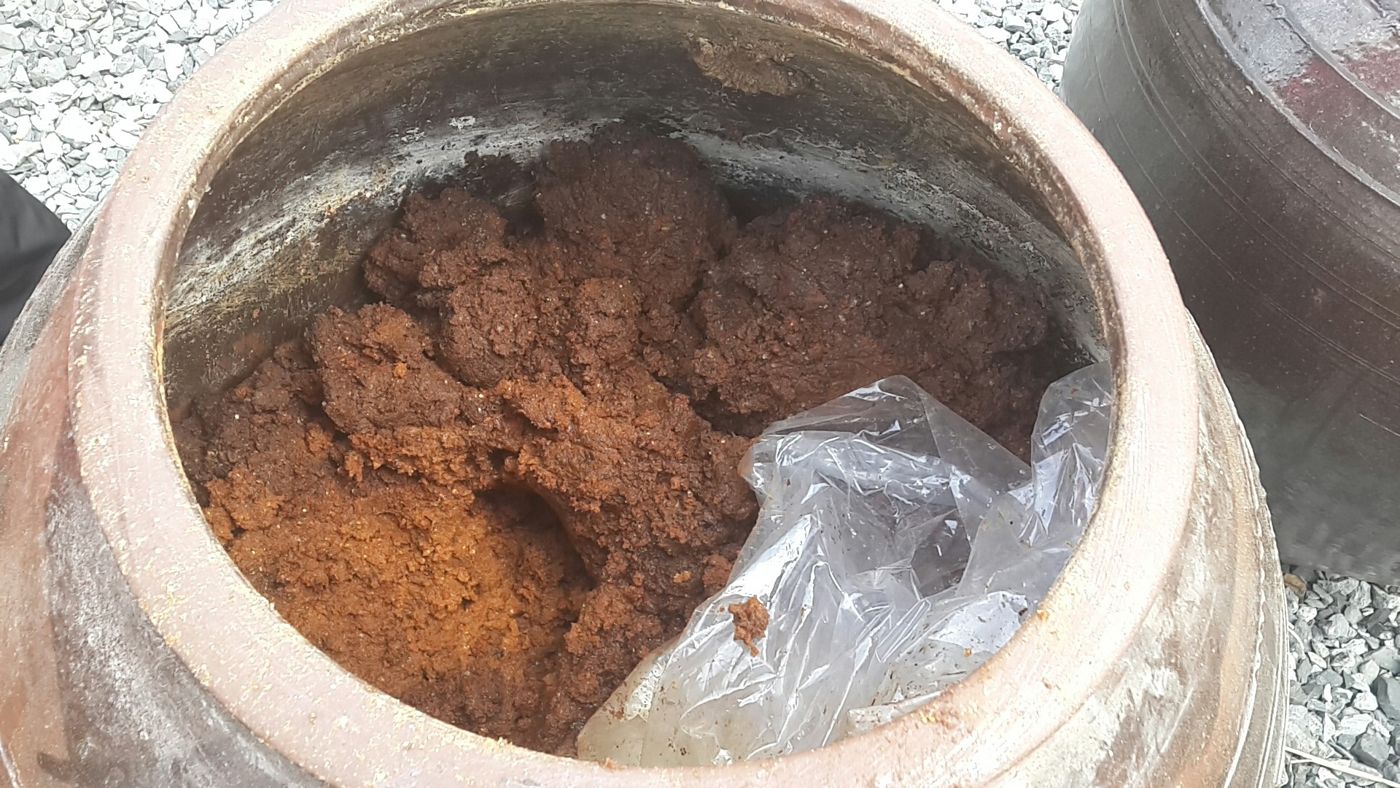 Photo: Mar del Este, CC BY-SA 4.0, via Wikimedia Commons
Soybeans are the backbone of Korean seasoning. Fermented, they become doenjang, ganjang, cheonggukjang and, with chili and rice, gochujang. This page looks at the soybean ferments specifically. For fermentation in general, including the difference between fermented and probiotic, see fermented foods.
Two ways to ferment a soybean
Long-aged jang. Doenjang and ganjang begin as meju, blocks of cooked, crushed soybeans that are fermented by naturally occurring bacteria and molds and then steeped in brine, traditionally in earthenware crocks. The liquid becomes ganjang and the solids become doenjang. A review of Korean fermented foods by Patra and colleagues notes that Bacillus subtilis and Bacillus licheniformis are reported as the dominant microbes in doenjang, along with molds such as Aspergillus, Mucor and Rhizopus. Traditionally, jang is made once a year and eaten throughout the following months. See making jang and onggi.
Quick-fermented cheonggukjang. Cheonggukjang takes days rather than months. Boiled soybeans are kept warm, around 40 to 43°C according to the same review, for two to four days while Bacillus subtilis, traditionally introduced through rice straw, ferments them. The beans are not steeped in brine as they ferment, and the result is pungent and sticky, usually simmered into a stew.
What fermentation changes
Microbial enzymes break soybean proteins down into peptides and free amino acids, which account for much of the savory depth of these foods. Fermentation also converts isoflavones, plant compounds found in soy, from their sugar-bound forms into the free forms daidzein and genistein. A 2022 review of fermented soy products describes this conversion, along with the production of organic acids, peptides and other metabolites, as one of the main ways fermentation alters soybeans.
What the research says
Fermented soy has been studied extensively, but most of that work is in cells and animals.
- Laboratory and animal studies: Reviews list antioxidant, anti-inflammatory and metabolic effects reported for doenjang and cheonggukjang. These findings point researchers toward questions worth testing in people; they do not show that eating these foods produces the same effects.
- Human evidence is limited: Compared with the volume of laboratory work, studies in people are far fewer, so specific benefits remain unproven.
- Observational studies are mixed: A 2011 meta-analysis of studies in Japanese and Korean populations found that high intake of fermented soy foods was associated with modestly higher odds of stomach cancer, while non-fermented soy foods such as tofu were associated with lower odds. The included studies varied considerably, and observational research of this kind shows associations, not cause and effect.
The fair summary is that these are nourishing, flavorful foods made from a protein-rich legume, and that claims of specific health effects run ahead of the human evidence.
The sodium trade-off
Salt makes long-aged jang possible. The Patra review describes ganjang as roughly 15 to 20 percent salt, and doenjang is also salty. In Korean national survey data for 2013 to 2017, doenjang soup stood out among the individual dishes contributing the most sodium. Practical steps:
- Let vegetables carry the stew: Doenjang and cheonggukjang stews with plenty of tofu, squash and greens spread the paste further.
- Eat the solids, leave some broth.
- Check labels: Commercial cheonggukjang and jang vary in salt; compare sodium per serving.
For more, see sodium in Korean food.
Biogenic amines
Fermentation can produce biogenic amines such as histamine and tyramine. Normally, enzymes in the gut break these down quickly. A 2019 review of Asian fermented soybean foods explains that problems can arise when those enzymes are overwhelmed or blocked, with symptoms such as headache, flushing and palpitations. The review found that most products tested fall within safe levels, though some contain amounts above suggested limits, and that few countries regulate amines in fermented soy.
A 2023 Korean study measured amines in 292 samples from 50 commercial brands of soy sauce, gochujang, doenjang, ssamjang and cheonggukjang. Cheonggukjang had the highest maximum levels of both histamine and tyramine. Because these seasonings are eaten in small amounts, the authors concluded they are safe for the general population, but advised people taking classical monoamine oxidase inhibitor (MAOI) antidepressants to be careful with cheonggukjang. Stir-frying lowered amine levels in soy sauce and gochujang, reflecting how heat can reduce some amines.
Things to keep in mind
- Sodium: The main everyday consideration for ganjang and doenjang.
- MAOI medications: People taking these drugs are typically advised to limit high-tyramine foods; cheonggukjang deserves particular attention.
- Soy allergy: All of these foods are made from soybeans; check commercial labels for wheat and other allergens.
- Sensitivity to amines: Anyone who notices headaches or flushing after aged or fermented foods may want to discuss it with a clinician.
Sources
- 01Kimchi and Other Widely Consumed Traditional Fermented Foods of Korea: A Review (Patra et al., Frontiers in Microbiology, 2016)
- 02Fermented Soy Products and Their Potential Health Benefits: A Review (do Prado et al., Microorganisms, 2022)
- 03Fermented and non-fermented soy food consumption and gastric cancer in Japanese and Korean populations: a meta-analysis of observational studies (Kim et al., Cancer Science, 2011)
- 04Bacterial Production and Control of Biogenic Amines in Asian Fermented Soybean Foods (Mah et al., Foods, 2019)
- 05Monitoring and risk assessment of biogenic amines in Korean commercial fermented seasonings (Shi and Moon, Heliyon, 2023)
- 06Trends in sodium intake and major contributing food groups and dishes in Korea: KNHANES 2013–2017 (Jeong et al., Nutrition Research and Practice, 2021)