Ingredient
Quick-Fermented Soybean Paste
청국장
Romanization: cheonggukjang
Whole cooked soybeans fermented for just a few days in a warm room until sticky threads form, then lightly pounded with salt. Pungent and deeply savory, it is best known as a winter stew.
Flavor
Earthy, nutty and intensely savory, with a strong, funky aroma that intensifies on cooking. The beans stay partly whole, so stews have body and texture.
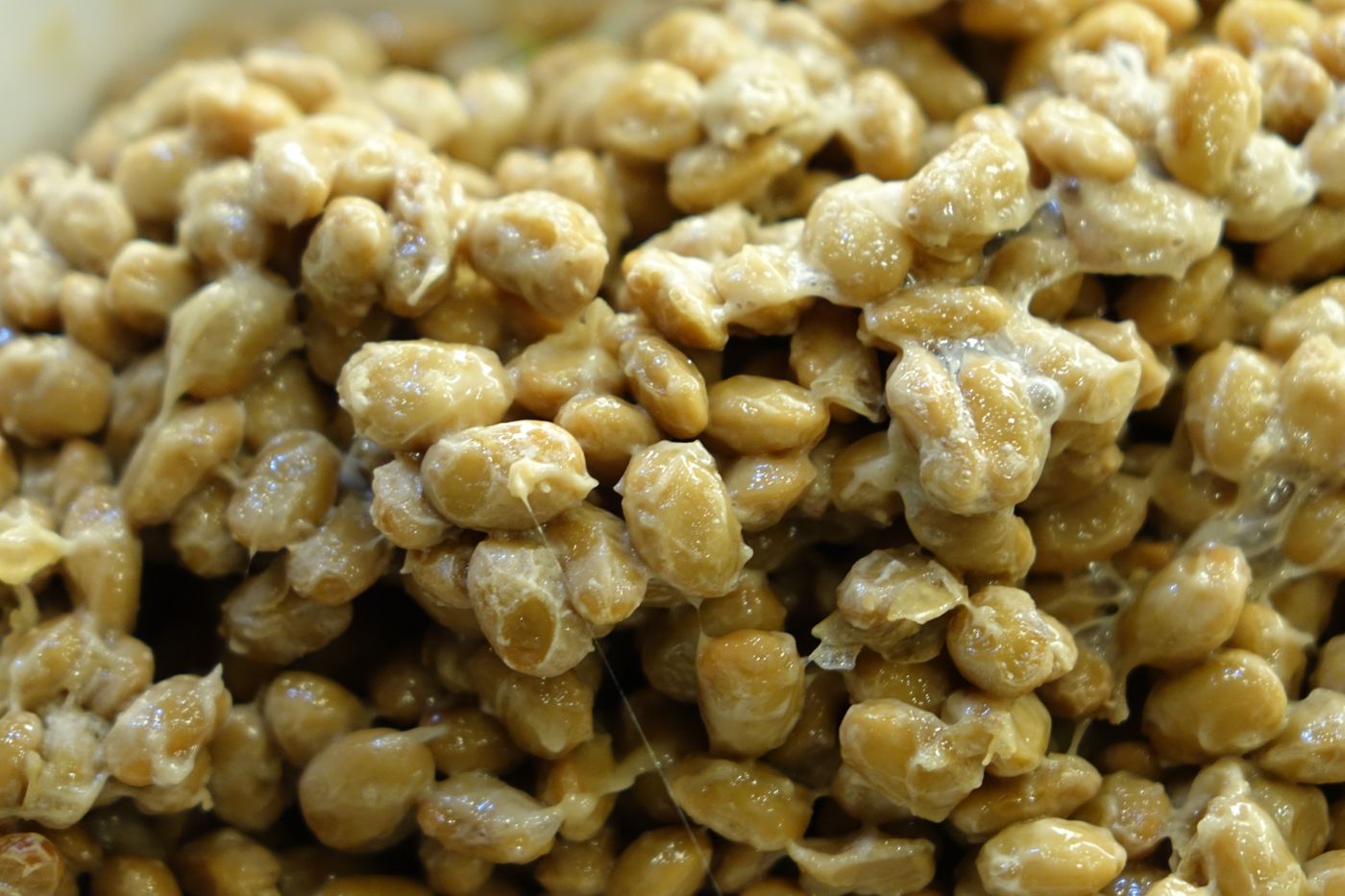 Photo: 최광모, CC BY-SA 4.0, via Wikimedia Commons
Origin & History
Where doenjang takes months of brick fermentation and aging, cheonggukjang is ready in days. Cooked soybeans are wrapped (traditionally in rice straw) and kept in a warm room, where Bacillus bacteria carried on the straw multiply and coat the beans in sticky, stringy mucilage. The Encyclopedia of Korean Culture notes that the vigor of the bacteria on the straw shaped the flavor. Once the beans have ‘caught,’ they are pounded briefly with salt, often with garlic, ginger and coarse chili powder, and kept for cooking.
The earliest written recipe appears in Jeungbo sallim gyeongje (1760), which describes fermenting new-crop soybeans on a heated floor for three days until threads form, then mixing them with roasted soybean powder and brine. The origin of the name is uncertain: the encyclopedia records explanations ranging from a wartime paste that could be made quickly (jeongukjang) to one learned from Qing China (cheongguk). By the 1939 cookbook Joseon yori beop, it had become the base of an elaborate stew with beef cuts, dried cod, abalone and sea cucumber.
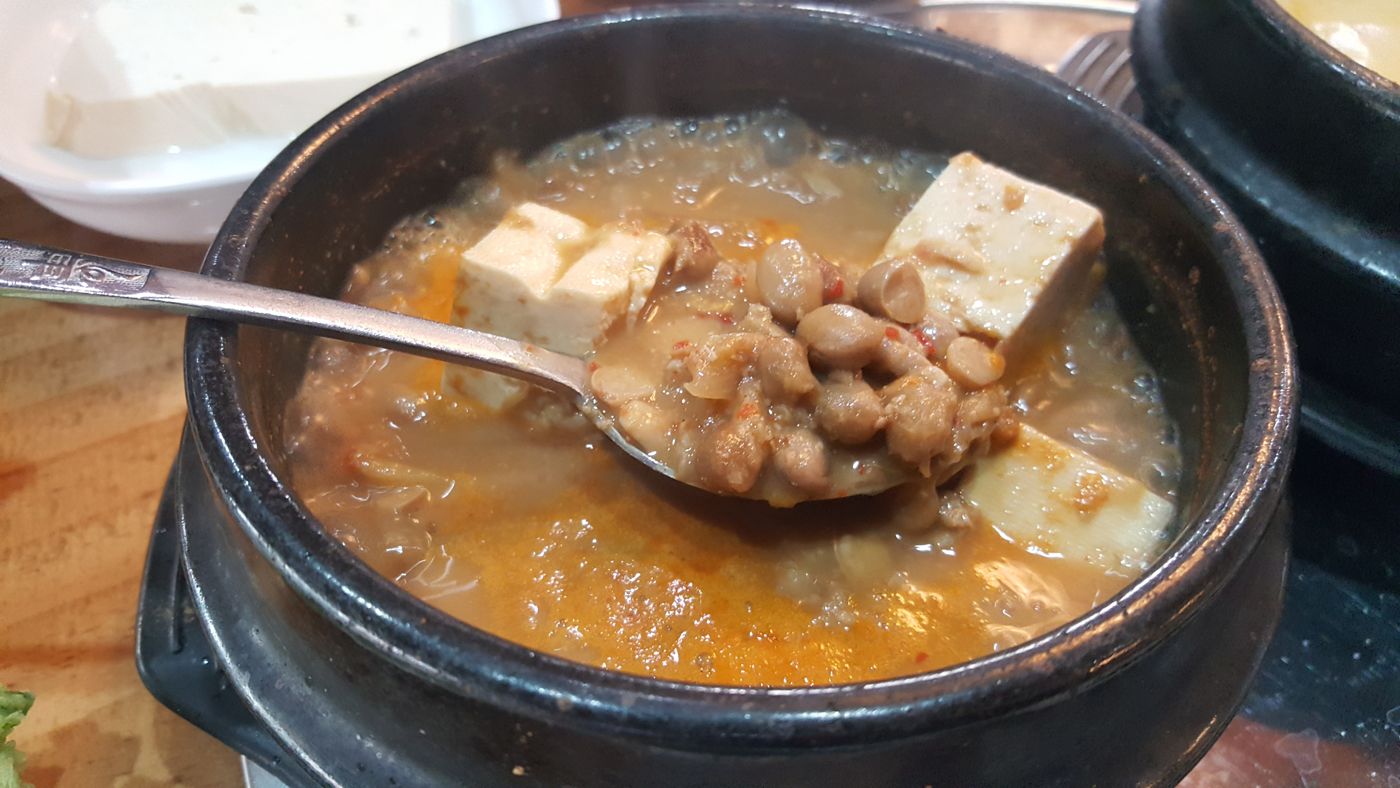
Today it is mostly eaten as cheonggukjang-jjigae, simmered with tofu, kimchi, pork or beef and chili, and it is also sold dried and powdered. Many modern producers use selected starter cultures instead of straw.
Nutrition
| Calories | 217 kcal |
|---|---|
| Protein | 20.79 g |
| Fat | 9.61 g |
| Carbohydrates | 12.8 g |
| Fiber | 8.8 g |
| Sodium | 1135 mg |
Notable forProtein · Dietary fiber · Potassium · Iron · Folate
Values from the Korean Food Composition Table (RDA, 2022 data); salt equivalent about 2.9 g per 100 g. The same table lists ‘cheonggukjang for stew’ (청국장, 찌개용) at 136 kcal and 3,083 mg sodium per 100 g, and dried cheonggukjang powder at 459 kcal and only 12 mg sodium. Sodium varies widely by product. Actual values vary with ingredients, portion size and preparation.
Health Benefits
- Whole-soybean nutrition: Because the beans are eaten whole, cheonggukjang is a source of plant protein, fiber, potassium, iron and folate; per 100 g, the Korean table lists about 21 g protein and 9 g fiber.
- Sticky mucilage: The threads contain poly-γ-glutamic acid, and the beans carry soy isoflavones. Laboratory and animal studies of these compounds are ongoing; claims for specific health effects are not established in people.
- Vitamin K2: Bacillus-fermented soybeans can contain menaquinone-7, a form of vitamin K2, and researchers have isolated it from cheonggukjang. Levels vary by product; people taking warfarin should keep their intake steady and talk with their clinician.
- Sodium: Seasoned cheonggukjang, especially the stew-ready type, is salty. Unsalted or powdered versions let you control the salt.
- Biogenic amines: Studies have found tyramine and other biogenic amines in some cheonggukjang samples at high levels, which can cause headaches or blood-pressure effects in sensitive people. Anyone told to limit tyramine should ask their clinician. Soy is also a common allergen.
Informational, not medical advice. Talk to a qualified professional about your own health and diet.
Sources
- 01청국장 (Cheonggukjang) — Encyclopedia of Korean Culture
- 02Biogenic amine reduction by food additives in Cheonggukjang, a Korean fermented soybean paste, fermented with tyramine-producing heterogeneous bacterial species — PMC
- 03A comparative study of menaquinone-7 isolated from Cheonggukjang with vitamin K1 and menaquinone-4 on osteoblastic cell differentiation and mineralization — Food and Chemical Toxicology (2019)
- 04Taking warfarin (Coumadin) — MedlinePlus
- 05Korean Food Composition Table (National Standard Food Composition Table) search — Rural Development Administration