Travel
Hanok Villages and Hanok Stays
한옥마을과 한옥 숙박
Where to see and sleep in traditional Korean houses: Bukchon, Jeonju, Hahoe and Yangdong, how ondol floors work, and what a hanok-stay breakfast is usually like.
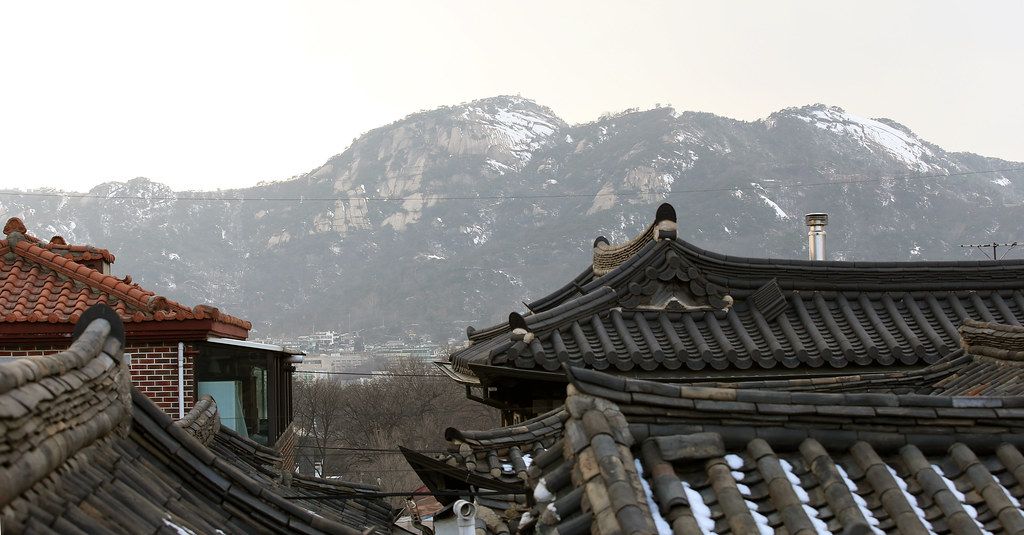 Photo: KOREA.NET - Official page of the Republic of Korea, CC BY-SA 2.0, via Flickr
A hanok (한옥) is a traditional Korean house. Visiting a hanok village or sleeping in one is a way to see the setting in which much of the food in this encyclopedia was cooked and eaten. This page covers the best-known villages, what the floors and bedding are like, and what to expect at the table.
Four villages
- Bukchon (Seoul). Bukchon Hanok Village sits between Gyeongbokgung and Changdeokgung palaces and has the most stay options in the city, according to Seoul Tourism. Day-trippers crowd its main lanes through the day, and the neighborhood is quieter early and late. Seochon, west of Gyeongbokgung, is quieter and more residential.
- Jeonju. VisitKorea describes Jeonju Hanok Village as a major hanok village that mixes old houses with modern streets and has many accommodations. The city says it holds more than 800 buildings. It is also a food destination, covered in eating in Jeonju.
- Hahoe (Andong). A clan village that has been home to the Pungsan Ryu family for roughly six hundred years. Cars are kept out of the village. See eating in Andong.
- Yangdong (Gyeongju). A hillside village where two clans have lived for about five hundred years. The path is steep, so wear comfortable shoes.
Hahoe and Yangdong were inscribed together on the UNESCO World Heritage List in 2010 as "Historic Villages of Korea." Both are lived-in neighborhoods. Visit open houses only, keep voices low and do not look into private homes.
Ondol and the warm floor
Traditional hanok are heated from the floor. In the classic system, a fire is lit in a firebox next to the kitchen, and its smoke and heat pass through flues under thick stone slabs, which store and slowly release heat. Early versions grew out of the cooking hearth, so cooking and heating were linked. A raised wooden floor called maru sits between rooms and yard and stays unheated. Today most Korean homes, and most hanok stays, use hot-water or electric versions of the same idea. Seoul Tourism notes that stays usually turn the heat off in summer. For the comparable idea of warmth as relaxation, see mogyoktang.
What it is like to sleep there
VisitKorea says many hanok use mats and blankets on the floor for sleeping rather than beds, though some rooms have Western beds. Check facilities before you book: some hanok lack modern conveniences, and some are cultural assets where you must take care. Because the houses are wooden, VisitKorea also warns about fire. Some stays offer programs such as tea ceremonies or cooking classes.
Breakfast
Seoul Tourism says breakfast is often included in Seoul hanok stays and is typically a Korean meal of rice, soup and banchan, sometimes with juk. Inclusions vary by property, and some stays do not serve breakfast at all, so confirm before booking. If the meal arrives as a tray, it follows the logic described in Korean table settings and sharing banchan. Rice porridge such as hobak-juk is a common gentle option. If you have dietary restrictions, tell the host in advance; see dietary needs in Korea.
Choosing where to stay
- For first-time visitors, Bukchon or Jeonju offers the most choice and the easiest access to restaurants.
- For quiet, consider Seochon or a village stay in Andong or Gyeongju, booked well in advance.
- Look for confirmation of whether bathrooms are private or shared.
- Prices, availability and breakfast policies change often; check current listings.
For the household that cooked in such houses, see royal court cuisine and jongga cuisine.