Beauty
Seaweed in Beauty
해조류와 뷰티
From miyeok soup to roasted gim and kelp snacks, seaweed is everyday Korean food. Here is how it reached the sheet mask, and what small studies do and do not show.
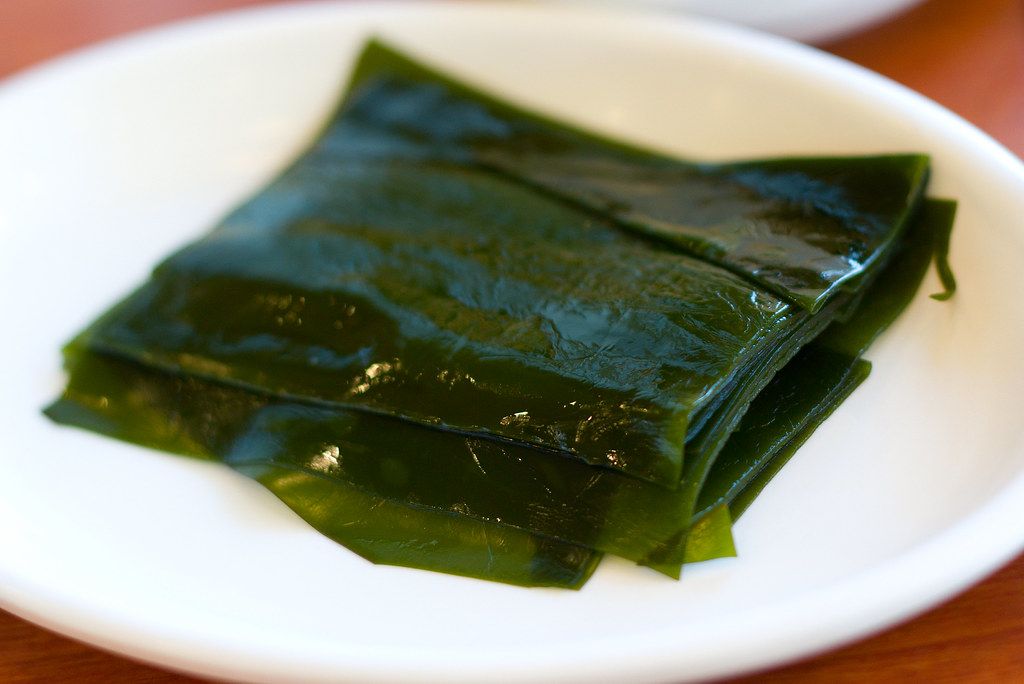 Photo: Symic, CC BY-SA 2.0, via Flickr
Start at the table. Three seaweeds do most of the work in a Korean kitchen. Miyeok (미역) is simmered into soup, and the Encyclopedia of Korean Culture also lists it seasoned as a salad, stir-fried, and deep-fried in crisp strips. Gim (김) is brushed with sesame or perilla oil and roasted, or turned into the crisp fried snack bugak. Dasima (다시마) is coated with rice paste and fried as buyeok and twigak, simmered in soy sauce, or used as a wrapper. You can read more on each ingredient page: miyeok, gim and dasima, or in dishes like miyeok-guk and gim-gui.
A food first, a folk medicine second
The old texts treat seaweed as a food and a remedy rather than a cosmetic. The encyclopedia entry on miyeok says the Dongui bogam called it cold in nature and salty in taste, and notes the tradition of serving seaweed soup to mothers after childbirth, a custom explored in postpartum food traditions. The entry for dasima mentions the same text's uses for swelling and lumps. A folk custom described for gim has people eating rice wrapped in it on the first full moon of the new year, in the belief it brightens the eyes. None of these entries mentions use on the skin or hair, and I did not find a documented Korean tradition of seaweed masks or seaweed bathing in the sources checked. Masks and baths are better described as modern products than as inherited rituals.
The modern mask
Gim farming spread along Korea's southern coast in the late Joseon period, and a Wando fisher adapted the reed screens used in fish weirs for it, according to the encyclopedia. Wando, in South Jeolla, is also where a company began in 2020 to make hand-finished sheet masks from fresh kelp sheets. Asia Economy reported an export contract for 4,000 packs to a US firm in August 2020. The article repeats the company's and a county official's claims about moisturizing, soothing and collagen, which are marketing statements as reported, not verified findings. For where such masks fit in the wider routine, see the K-beauty routine.
Evidence status
A 2021 systematic review in the Journal of Clinical and Aesthetic Dermatology looked for human studies of topical macroalgae extracts and found eight. Its authors concluded that clinical studies to date demonstrate moisturizing, skin-lightening and anti-cellulite benefits. The same review also shows the limits: most studies were small (roughly 10 to 90 people), mostly short (from a single application to a few months), and tested crude extracts with unknown amounts of active ingredients. One of the authors founded a seaweed skincare brand listed in the article's product table. Two fucoidan-rich extracts, from Undaria and Fucus, reduced UV-induced redness and water loss compared with placebo in the studies it summarizes.
The review does not discuss seaweed baths. It also does not cover edible seaweed: eating miyeok or gim is a nutrition question, not a skincare one, and the iodine in dried seaweed is the main consideration, covered in seaweed and iodine.
Bottom line
- Table: a long and well-documented tradition across all three seaweeds.
- Traditional beauty use: not found in the encyclopedia sources reviewed.
- Topical evidence: small, short, extract-based studies, with some moisturizing and lightening signals; no large trials.
- Masks: product claims are not the same as findings; check the ingredient list, and be cautious if you have a known seaweed sensitivity.
Sources
- 01미역 (Sea mustard) — Encyclopedia of Korean Culture
- 02김 (Laver) — Encyclopedia of Korean Culture
- 03다시마 (Kelp) — Encyclopedia of Korean Culture
- 04Clinical Studies of the Safety and Efficacy of Macroalgae Extracts in Cosmeceuticals — Journal of Clinical and Aesthetic Dermatology, 2021 (PMC)
- 05Wando Seaweed Mask Pack Achieves Success in U.S. Export — Asia Economy