Wellness
Korean Ginseng: Tradition, Research and Safety
고려인삼
Fresh, white and red ginseng, what clinical research does and doesn't show, how Korea regulates red ginseng products, and the interactions worth knowing about.
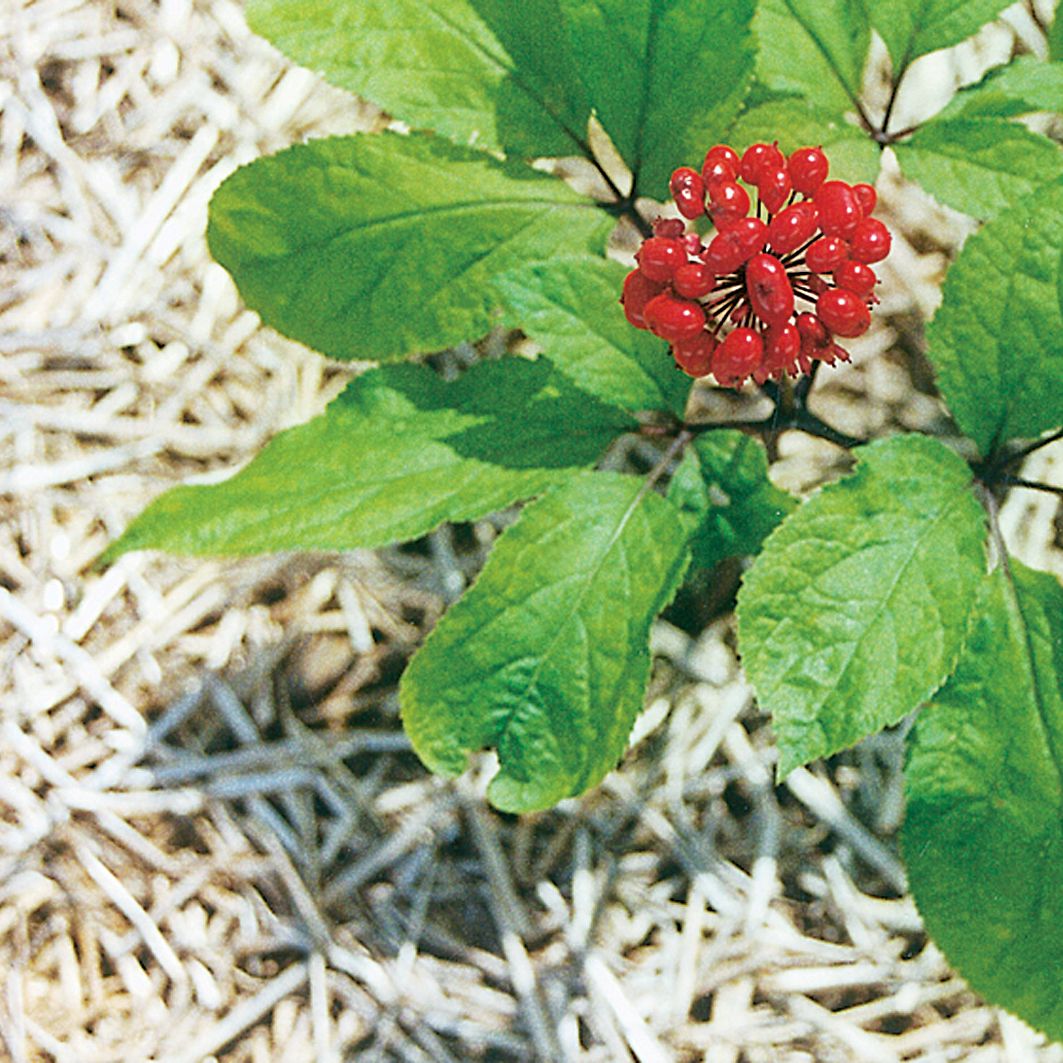 Photo: FloraFarm GmbH / Katharina Lohrie, CC BY 3.0, via Wikimedia Commons
Few plants carry as much prestige in Korea as insam (인삼), the root of Panax ginseng. It turns up in a whole chicken simmered for samgyetang, in honeyed slices beside a cup of tea and, most of all, in a large market for red ginseng extracts, powders and drinks. Here are the forms you will meet, what research in people has found, and the safety points that matter.
One root, several forms
Panax ginseng is a perennial in the ivy family (Araliaceae). The Encyclopedia of Korean Culture describes how cultivation developed in Korea as wild roots grew scarce, with Gaeseong becoming a famous growing center, and how the name Goryeo insam came to stand for Korean ginseng abroad. What changes from one product to the next is mostly processing:
- Fresh ginseng (susam, 수삼): The root as harvested, still holding about 70 percent water. This is the form usually tucked into soups. See the ginseng ingredient page.
- White ginseng (baeksam, 백삼): Dried without steaming, which makes it hard and shelf-stable.
- Red ginseng (hongsam, 홍삼): Steamed with the skin on, then dried to 15.5 percent moisture or less. A 2018 monograph from researchers at the Korea Ginseng Corporation describes steaming at roughly 90 to 100°C followed by hot-air drying, a process that turns the root reddish brown and makes it keep for years.
Steaming does more than change the color. Ginseng contains a family of compounds called ginsenosides, and heat converts some of them into forms, such as Rg3 and Rh2, that are characteristic of red ginseng. That is why researchers treat red and white ginseng as chemically different products, even though both come from the same species. American ginseng (Panax quinquefolius) is a separate species with its own body of research.
What the research shows, and what it doesn't
Ginseng has been studied for decades, but the trials tend to be small, use different preparations and doses, and measure different outcomes, which makes firm conclusions hard. The US National Center for Complementary and Integrative Health (NCCIH) summarizes the picture this way:
- Thinking and memory: Some studies suggest modest benefits in middle-aged adults but not in young adults. A 2024 meta-analysis of 15 randomized trials found a small effect on memory and no clear effect on overall cognition, attention or executive function, and called for better-quality studies.
- Fatigue: A 2023 systematic review of 19 trials found no significant reduction in fatigue overall. Some subgroups, including general fatigue and multi-herb ginseng formulas, showed small effects.
- Blood sugar and heart health markers: NCCIH notes a 2022 review reporting improvements in some markers in people with prediabetes or diabetes, but describes the overall evidence as inconclusive and conflicting.
- Exercise performance: Most studies show no improvement.
In short, ginseng is not a proven treatment for any condition. Its long history of use is part of its cultural story, but research is ongoing and results so far are mixed.
How Korea regulates red ginseng
In South Korea, red ginseng products are commonly sold as health functional foods (geongang gineung sikpum, 건강기능식품), a regulated category created under the Health Functional Foods Act, which took effect in 2004. According to the 2018 monograph, ingredients must be supported by data on standardization, safety and human studies before a functional claim is approved. Its authors list six claims approved for Korean red ginseng: immune function, relief of fatigue, blood circulation (through effects on platelet aggregation), memory, antioxidant activity and menopausal symptoms. Note that the monograph was written by researchers at Korea's largest red ginseng producer.
A regulated claim describes what a standardized product at a set daily amount may support. It is narrower than a medical approval, and it does not apply to a few slices of root in a pot of soup.
Safety and interactions
- Short-term use: NCCIH says ginseng appears safe for most adults when taken for up to six months at recommended doses. Trouble sleeping is the most common side effect. Severe rashes, liver injury and allergic reactions are rare.
- Warfarin and other blood thinners: Ginseng may affect blood clotting. Small Korean trials, including one of 25 heart-valve patients taking red ginseng, found no significant change in INR, but case reports have pointed both ways and the studies were short. NCCIH advises talking with a health care provider before combining ginseng with an anticoagulant.
- Diabetes medications: Ginseng may lower blood sugar, so taking it alongside glucose-lowering drugs could add to their effect.
- Who should avoid it: NCCIH advises against ginseng supplements during pregnancy and breastfeeding and for infants and children. It may also worsen autoimmune conditions.
If you take prescription medicine, show any ginseng product to your pharmacist or doctor. For the cultural idea behind tonic foods, see yaksik dongwon; for ginseng and jujube infusions, see traditional Korean teas.
Sources
- 01Asian Ginseng: Usefulness and Safety (NCCIH)
- 02인삼 (Ginseng) — Encyclopedia of Korean Culture
- 03Red ginseng monograph (So et al., Journal of Ginseng Research, 2018)
- 04Effects of Ginseng on Cognitive Function: A Systematic Review and Meta-Analysis (Zeng et al., Phytotherapy Research, 2024)
- 05Ginseng and Ginseng Herbal Formulas for Symptomatic Management of Fatigue: A Systematic Review and Meta-Analysis (Li et al., 2023)
- 06Interaction between warfarin and Korean red ginseng in patients with cardiac valve replacement (Lee et al., International Journal of Cardiology, 2010)