Ingredient
Korean ginseng
인삼
Romanization: insam
The forked, pale root of Panax ginseng, eaten fresh as susam or dried and steamed into white and red ginseng. On the table it appears whole in samgyetang, in honeyed slices, teas and liquor, and occasionally as a banchan of its own.
Flavor
Earthy and bittersweet, with a woody, slightly medicinal perfume and a lingering warmth on the tongue. Fresh roots are crisp and juicy; red ginseng is sweeter and more caramel-like.
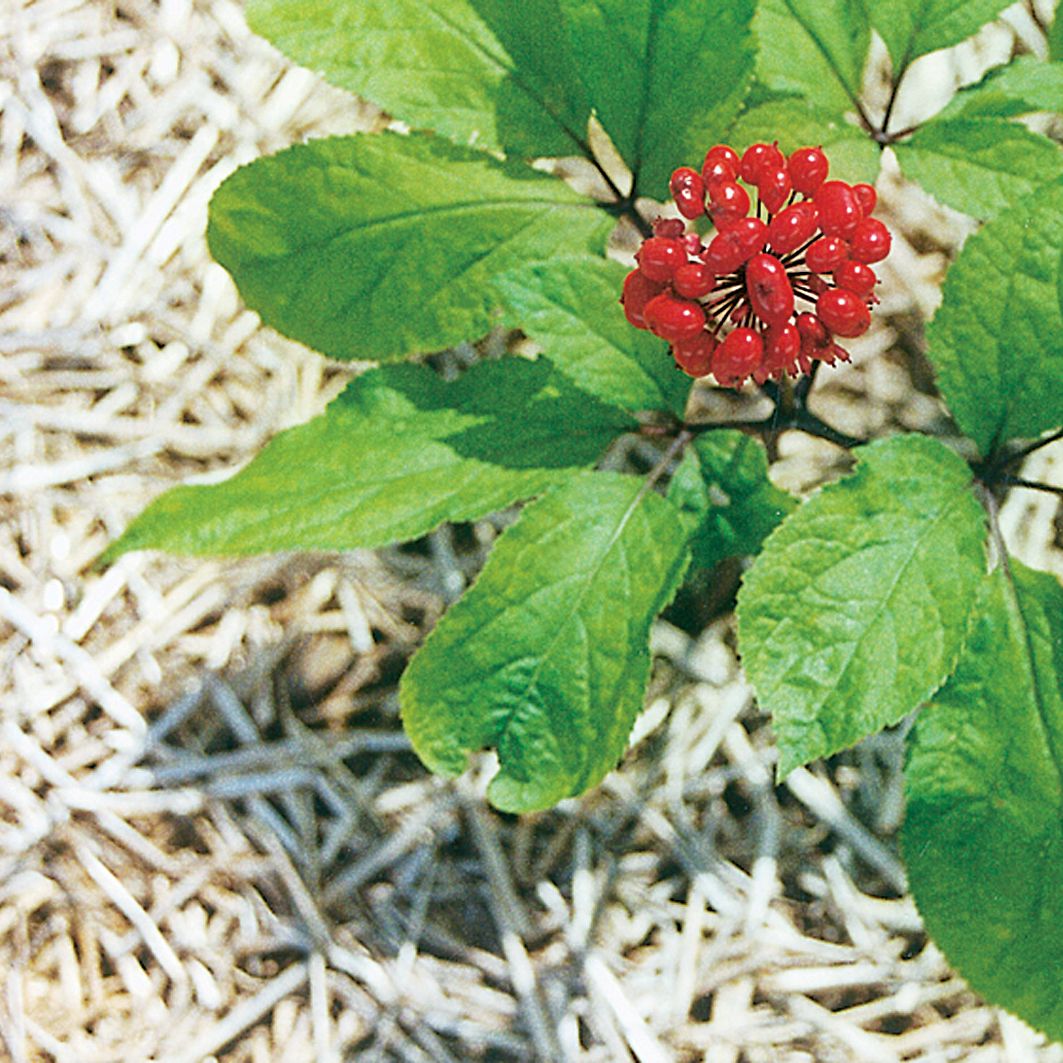 Photo: FloraFarm GmbH / Katharina Lohrie, CC BY 3.0, via Wikimedia Commons
Origin & History
Ginseng is the root of Panax ginseng, a slow-growing perennial herb of the ginseng family (Araliaceae) that grows wild in the shaded forests of the Korean peninsula, Manchuria and the Russian Far East. A single stem bears a whorl of palmate leaves, pale green flowers and, later, red berries; the forked root develops over years. Korean writing distinguishes its own ginseng as goryeo insam and uses a different character for sam than foreign ginsengs; American ginseng (Panax quinquefolius) and "Siberian ginseng" (Eleutherococcus senticosus, not a Panax at all) are different plants. The old native word for ginseng was sim, which survives in simmani, the name for wild-ginseng hunters.
Korean ginseng appears in Chinese texts of the fifth and sixth centuries, which mention roots from Baekje and Goguryeo, and the Samguk sagi records Silla sending ginseng to the Tang court. In 1123 the Song envoy Xu Jing described Goryeo ginseng and noted that roots were steamed to keep them from spoiling over summer, an early hint of red ginseng. For centuries ginseng was a major tribute item and one of Korea's most valuable exports. As overharvesting made wild roots scarce in the Joseon period, cultivation from seed spread, and Gaeseong became the great center of growing and processing.
Two places carry especially strong ginseng traditions today. In Punggi, in North Gyeongsang, local history credits the magistrate Ju Se-bung with planting seeds of wild ginseng there around 1541, and Punggi is often called the birthplace of cultivated ginseng in Korea, though this is a regional tradition rather than a settled historical fact. In Geumsan, South Chungcheong, a farming system said to date back some 1,500 years, using shade structures of natural materials and resting fields for 15 to 20 years between crops, was recognized by the FAO as a Globally Important Agricultural Heritage System in 2018.
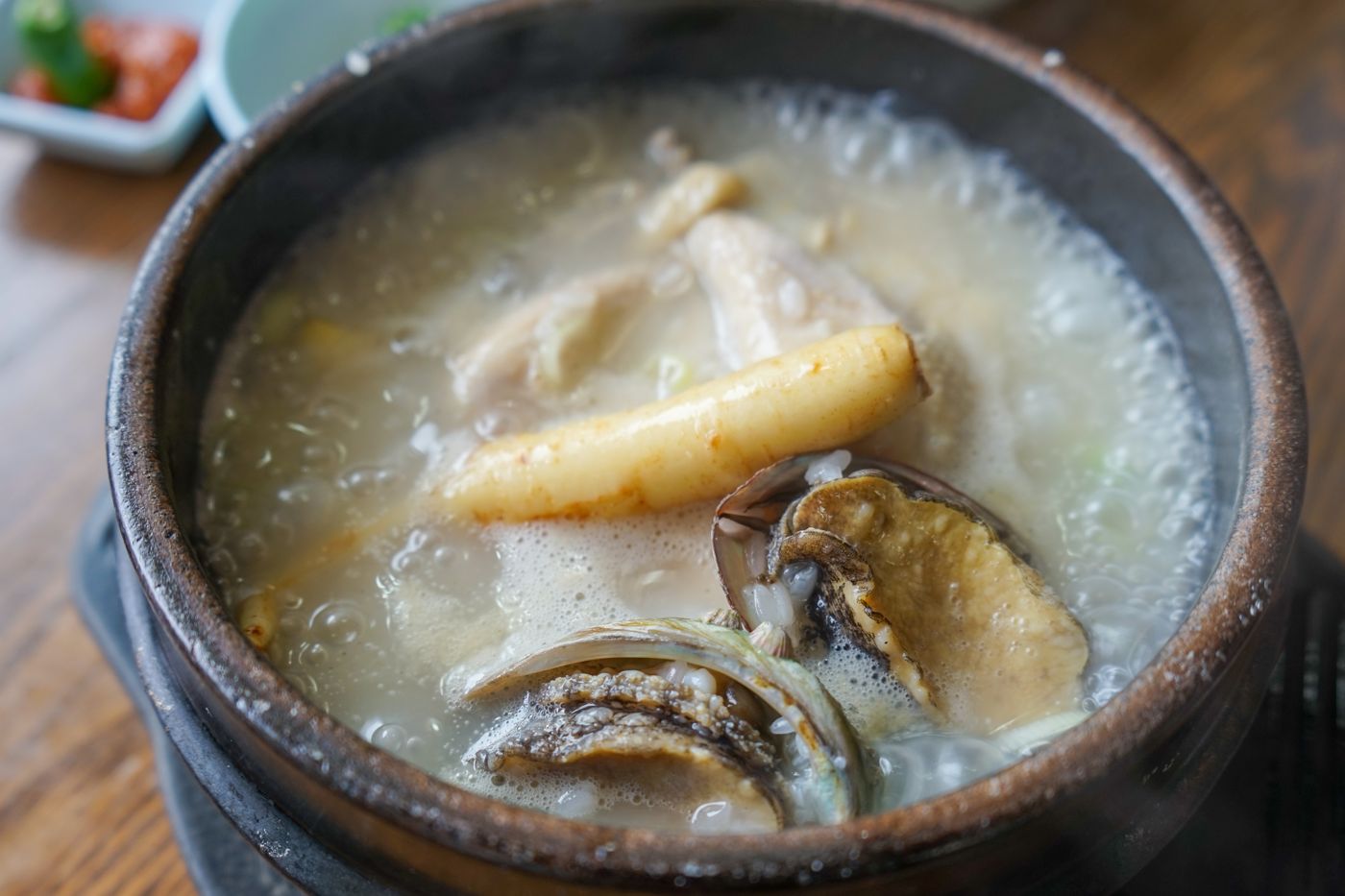
Fresh ginseng is called susam. Dried as is, it becomes white ginseng (baeksam); steamed and then dried, it turns reddish-amber as red ginseng (hongsam). In the kitchen, whole fresh roots are simmered with a young chicken, glutinous rice, jujubes and milk-vetch root in samgyetang, the classic summer restorative dish; sliced fresh ginseng is steeped in honey, dipped in gochujang, battered and fried, or made into tea and insam-ju.
Nutrition
| Calories | 90 kcal |
|---|---|
| Protein | 4.12 g |
| Fat | 0.76 g |
| Carbohydrates | 18.85 g |
| Fiber | 2.4 g |
| Sodium | 12 mg |
Notable forPotassium · Iron · Manganese
Korean Food Composition Table entry "Korean ginseng, Raw" (인삼, 수삼, 생것): also 447 mg potassium, 4.64 mg iron, 1.16 mg manganese and 0.36 mg vitamin B6 per 100 g. Ginseng is normally eaten in small quantities, so its contribution to everyday nutrition is modest. Actual values vary with ingredients, portion size and preparation.
Health Benefits
- What research shows: According to the U.S. National Center for Complementary and Integrative Health (NCCIH), Asian ginseng may modestly help some aspects of thinking or fatigue, but results are mixed and the evidence is not conclusive; research is ongoing.
- Food amounts versus supplements: A root simmered in samgyetang is very different from concentrated extracts. NCCIH considers short-term use in recommended amounts likely safe for most adults; insomnia is the most common side effect, and serious reactions are rare.
- Drug interactions: Ginseng may affect blood clotting and blood sugar. MedlinePlus lists ginseng among products that may interact with warfarin, NCCIH notes mixed results on warfarin and uncertainty with blood-pressure drugs, statins and some antidepressants, and people with diabetes should be cautious. Talk with a doctor before using ginseng products alongside medication.
- Pregnancy: NCCIH notes that oral ginseng may be unsafe during pregnancy (a ginseng compound caused birth defects in animal studies) and that there is little safety information for breastfeeding.
- Tradition: Ginseng's reputation as a cure-all comes from centuries of East Asian herbal tradition; it should not be used in place of medical treatment.
Informational, not medical advice. Talk to a qualified professional about your own health and diet.
Sources
- 01인삼 — Encyclopedia of Korean Culture
- 02풍기인삼 — 디지털영주문화대전 (Encyclopedia of Korean Local Culture)
- 03Two new sites added to global agricultural heritage list — FAO
- 04Asian Ginseng — National Center for Complementary and Integrative Health
- 05Herb-Drug Interactions: What the Science Says — NCCIH Clinical Digest
- 06Korean Food Composition Table: Korean ginseng, Raw — National Institute of Agricultural Sciences