Ingredient
Yubu (Fried Tofu Pouches)
유부
Romanization: yubu
Thin slices of pressed tofu, deep-fried until puffed and golden. The fried slices can be split open into pouches. Simmered sweet and salty, they are stuffed with seasoned rice for yubu-chobap. Sliced, they go into fish-cake soup, noodle soups and hot pots.
Flavor
Plain yubu is mild and slightly nutty, with a spongy, chewy-soft texture and a faint fried richness. Its real flavor comes from what it absorbs. Seasoned pouches for chobap are distinctly sweet and salty, and yubu in soup tastes of the broth.
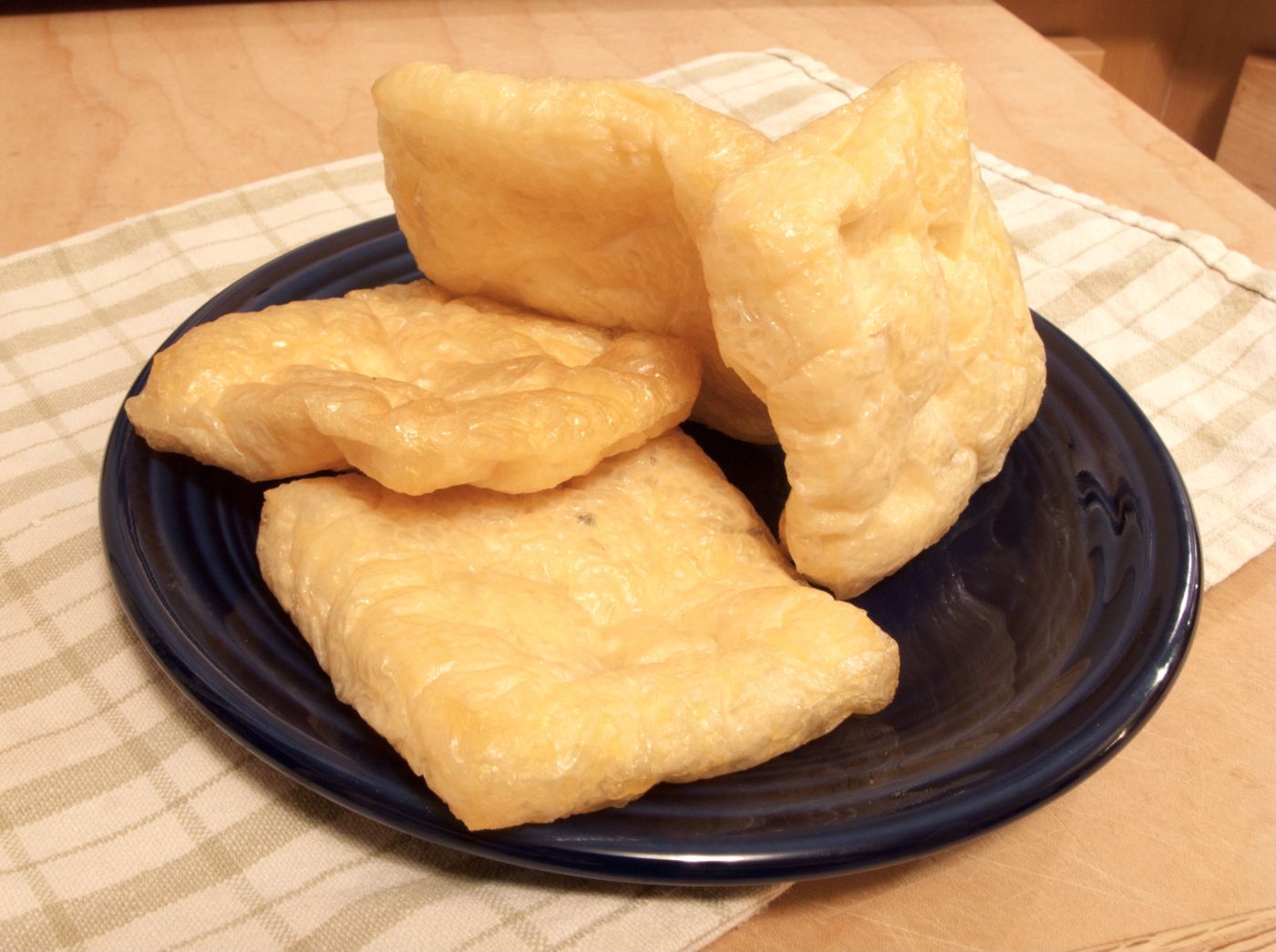 Photo: David Niergarth, CC BY 2.0, via Wikimedia Commons
Origin & History
The name is written with the characters for oil (yu, 油) and tofu (bu, 腐), and the Korean Food Composition Table describes yubu as deep-fried thin slices of pressed tofu. Frying drives out water and puffs the slice so that the inside separates from the crust, leaving a hollow pouch. Tofu itself is old in Korea; it is recorded from the Goryeo period onward and was made at temples that supplied royal tombs. Fried tofu pouches of this kind belong to a newer, Japanese-influenced layer of the table. They are the same food Japan calls aburaage.
Korean tofu comes in only a few types compared with China and Japan. The Encyclopedia of Korean Folk Culture lists the familiar Korean ones as soft tofu, firm block tofu and yubu, a sign of how ordinary yubu has become in Korean kitchens. Its best-known use is yubu-chobap: pouches simmered in soy sauce, sugar and cooking wine, then filled with rice seasoned with vinegar, sugar and salt. Supermarkets sell kits with the pouches already seasoned and a packet of rice seasoning, which made yubu-chobap a lunchbox and picnic staple (see dosirak). Like gimbap, which the Encyclopedia of Korean Culture traces to Japanese rolled sushi adapted in Korea, it shows how a dish brought in under Japanese rule was taken into Korean home cooking.
Beyond chobap, sliced yubu goes into eomuk-tang, noodle soups and jeongol hot pots. It soaks up broth like a sponge. Cooks also stuff whole pouches with minced meat, tofu and vegetables and tie them shut with blanched chives (yubu-jumeoni, 'yubu purses').
Nutrition
| Calories | 450 kcal |
|---|---|
| Protein | 26.11 g |
| Fat | 34.23 g |
| Carbohydrates | 7.93 g |
| Fiber | 1.5 g |
| Sodium | 7 mg |
Notable forProtein · Calcium · Iron · Fat
Values from the Korean Food Composition Table (RDA) for unseasoned yubu, which also lists about 584 mg calcium and 4.6 mg iron per 100 g. The table has a separate entry for seasoned yubu (두부, 유부, 조미); pouches sold for yubu-chobap are simmered in soy sauce and sugar and are much higher in sodium and sugar than these figures. One pouch weighs only a few grams. Actual values vary with ingredients, portion size and preparation.
Health Benefits
- Plant protein: Like other tofu, yubu is a source of soy protein, and the Korean Food Composition Table lists notable calcium and iron, per 100 g.
- Fat from frying: About a third of plain yubu's weight is fat, according to the Korean Food Composition Table. Many recipes blanch the pouches in boiling water before seasoning to rinse off surface oil.
- Seasoned pouches: Ready-to-fill pouches are packed in a sweet soy brine, and the rice seasoning adds more sugar and salt. Check labels if you watch sodium or sugar.
- Soy allergy: Soy is one of the nine major food allergens in the US, according to the FDA. Yubu is pure soy, and seasoned kits may also contain wheat from soy sauce.
Informational, not medical advice. Talk to a qualified professional about your own health and diet.
Dishes with Yubu (Fried Tofu Pouches)
Dish guides featuring yubu (fried tofu pouches) are coming soon.