Ingredient
Maesaengi (Fine Green Seaweed)
매생이
Romanization: maesaengi
A hair-fine green alga grown on the tidal flats of southwest Korea and harvested in winter. It is cooked into thick, silky soups, rice cake soup and pancakes that stay scalding hot while barely steaming.
Flavor
Clean, sweet and distinctly of the sea, with a silky, clinging texture that is almost like a thick sauce. Sesame oil and oysters give it body.
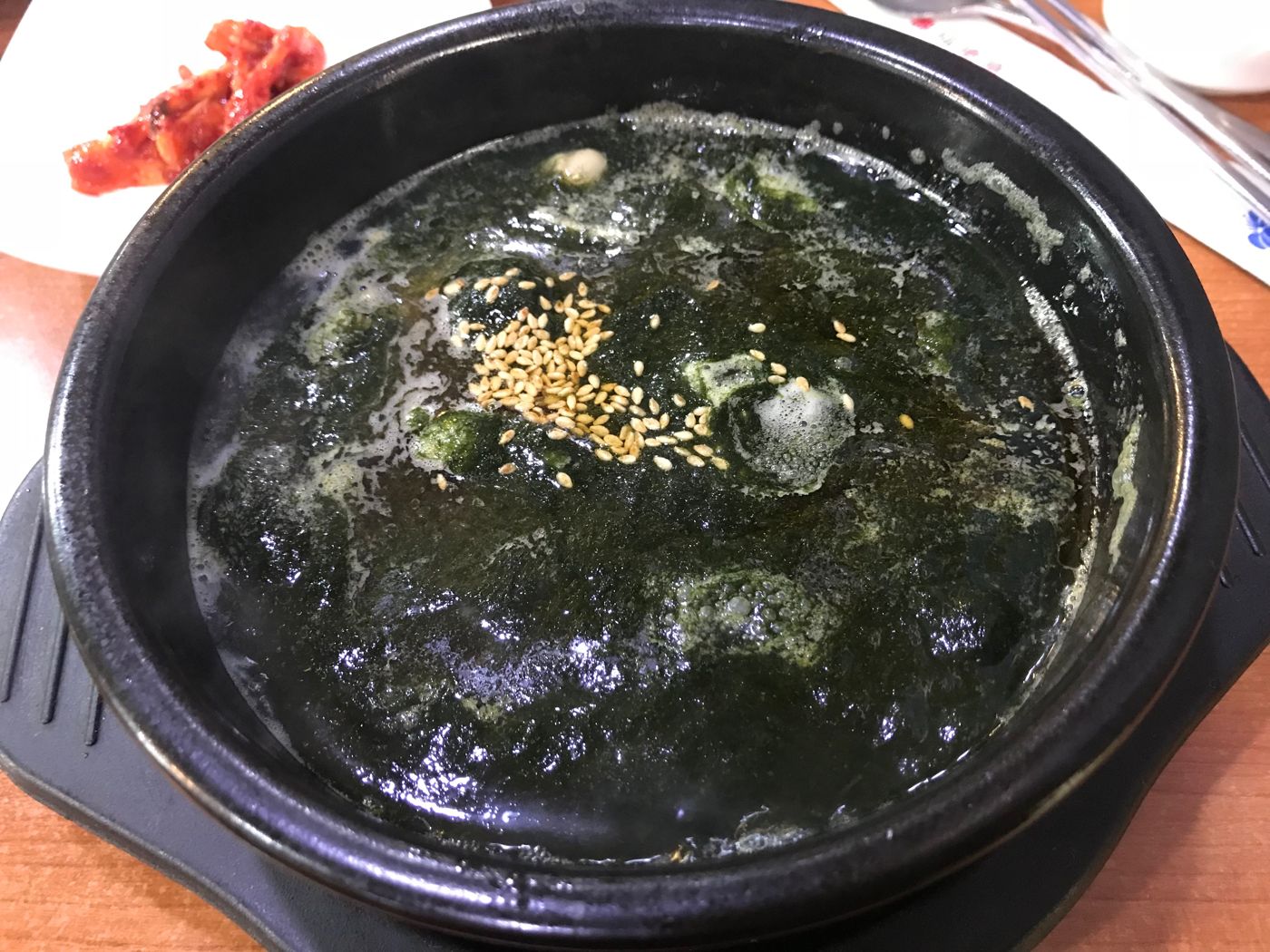 Photo: lazy fri13th, CC BY 2.0, via Wikimedia Commons
Origin & History
Maesaengi is Capsosiphon fulvescens, an annual green alga. The Encyclopedia of Korean Folk Culture says it appears from mid-October, peaks around February and fades by April, preferring cold, clean, gently moving water, with about 8 degrees Celsius best for growth. In Korea it is common in sheltered bays on the south coast and southern west coast. It grows densely around Maryang in Gangjin, Sinri in Jangheung and the waters between Gogeum and Yaksan islands in Wando, all once part of Gangjin county. The Sejong sillok jiriji lists it as a local product of Jeolla (as maesan), and the Sinjeung dongguk yeoji seungnam lists it in Gangjin, Haenam, Jangheung and Jindo. Another gazetteer, the Dongguk yeoji seungnam, records it as a tribute item from Jangheung.
Jeong Yak-jeon's Jasaeobo describes it as finer than silkworm thread, denser than ox hair and several feet long, dark blue-green, turning soft and tangled in soup and tasting sweet and fragrant. It was long gathered where it grew on seaweed beds. The folk encyclopedia dates the first farming to 1992 at Neobdo in Wando, with indoor seeding methods developed in 1999. Growers lay bamboo nets from mid-October to catch spores, move them out to sea once the nets turn pale green, and harvest mainly from December into February.
Maesaengi's best-known trait is that its soup holds heat without much steam, so a careless first spoonful scalds the mouth. This is behind a southern proverb about serving maesaengi soup to a son-in-law you dislike. In Jeolla cooking, per the folk encyclopedia, the greens are sautéed in sesame oil, seasoned with salt and simmered into a thick, nearly solid soup. The traditional dishes are maesaengi tteokguk, pancakes and soup with oysters (compare gul-guk), and newer products include noodles, ramen and snacks. Portions can be frozen to eat all year. See Jeolla and seasonal foods.
Nutrition
| Calories | 39 kcal |
|---|---|
| Protein | 3.88 g |
| Fat | 3.29 g |
| Carbohydrates | 8.19 g |
| Fiber | 6.5 g |
| Sodium | 104 mg |
Notable forDietary fiber · Iron (18.3 mg) · Vitamin B12 (10.27 µg) · Calcium (91 mg)
Values copied from the Korean Food Composition Table (Rural Development Administration / National Institute of Crop Science) for this exact food, per 100 g edible portion. Blank fields in the table are shown as not reported. Fresh maesaengi is mostly water (84.3 percent), and a cooked bowl is diluted by broth. Actual values vary with ingredients, portion size and preparation.
Health Benefits
- Fiber and minerals: The Korean Food Composition Table lists 6.5 g of fiber, 91 mg of calcium and 18.3 mg of iron per 100 g raw. Served portions are small and mostly water.
- Vitamin B12 listed: The same table reports 10.27 µg of vitamin B12 per 100 g. This entry did not check how well the body absorbs it from this alga.
- Traditional claims: The folk encyclopedia describes maesaengi as low in calories and fat, rich in calcium, and good for anemia and bone health. Treat these as traditional beliefs.
- Heat: The soup holds scalding heat with little steam, as the proverb says. Let it cool and test a small spoonful.
- Sodium and oil: Soups are seasoned with salt and sesame oil, and versions with rice cakes or oysters add more. See sodium in Korean food.
- Seaweed and iodine: Seaweeds vary widely in iodine; see seaweed and iodine if you have thyroid concerns or eat seaweed daily.
Informational, not medical advice. Talk to a qualified professional about your own health and diet.
Dishes with Maesaengi (Fine Green Seaweed)
Dish guides featuring maesaengi (fine green seaweed) are coming soon.