Ingredient
Chopi (Korean Pepper, Zanthoxylum piperitum)
초피
Romanization: chopi
The dried, ground husks of Zanthoxylum piperitum, a thorny shrub of the citrus family. It gives a citrusy, numbing tingle and is sprinkled into loach soup, freshwater fish stews and kimchi, especially in Gyeongsang, where it is called jepi. It is often mislabeled sancho.
Flavor
Bright and lemony-resinous, with hints of mint and anise, followed by a tingling, numbing buzz on the tongue rather than true heat. Fresh leaves are greener and more herbal. It is strongest freshly ground and fades quickly once exposed to air.
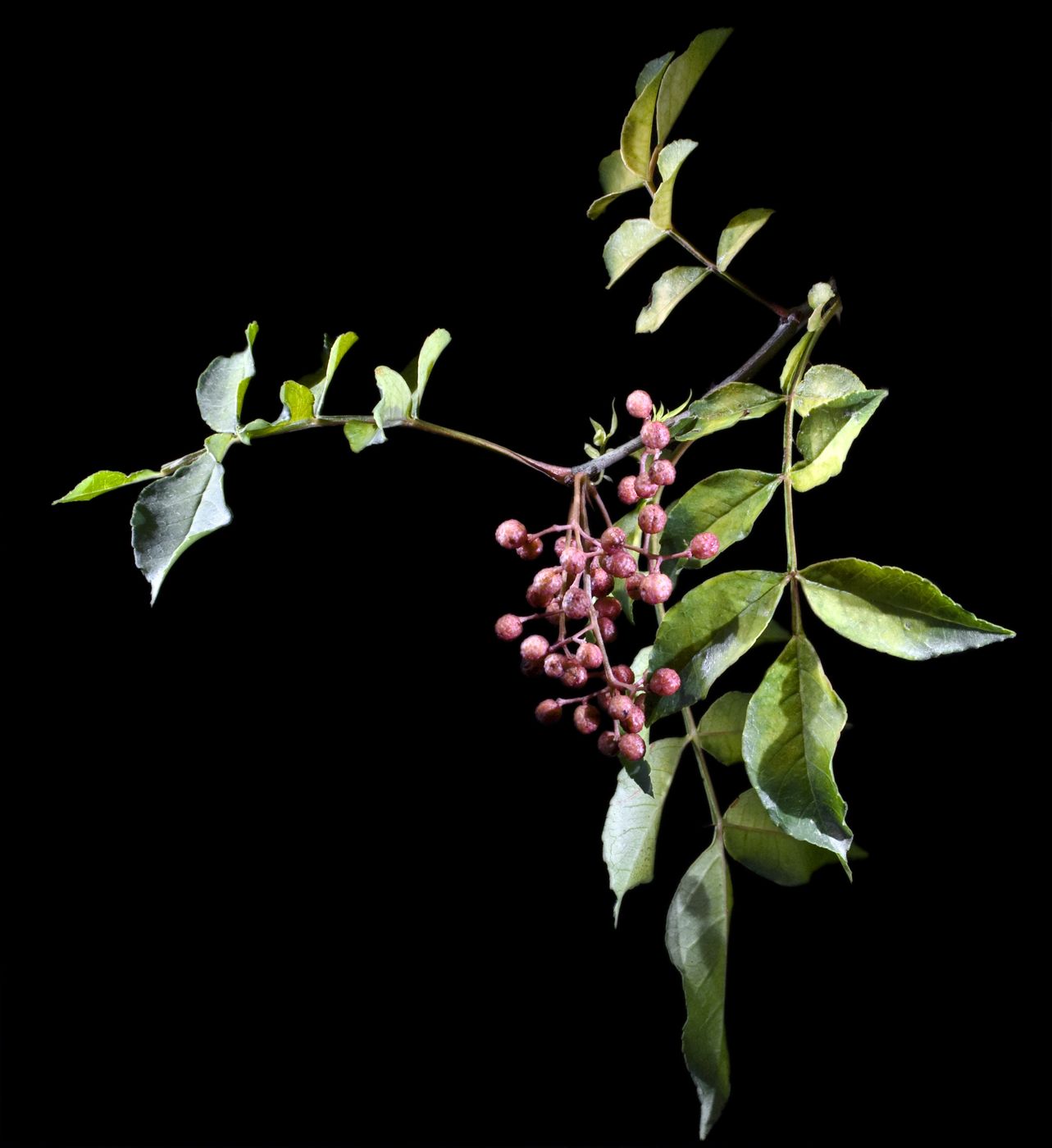 Photo: Didier Descouens, CC BY-SA 4.0, via Wikimedia Commons
Origin & History
Two related shrubs grow wild in Korea, and their names are constantly confused. Chopi is Zanthoxylum piperitum; true sancho is Z. schinifolium. A 2019 study from the Jeonnam Institute of Natural Resources Research describes both as early-cultivated trees of southern Korea, used as spices and as traditional herbal medicines. One field mark separates them: chopi bears its thorns in opposite pairs, sancho alternately. Once the husks are dried and ground, they are hard to tell apart, and the study found that commercial products are often mixed. A Jeonbuk Ilbo article adds that cookbooks, broadcasts and even dictionaries call chopi 'sancho.' True sancho, also called bundi, is mainly pressed for oil, while chopi supplies the spice. The Korean Food Composition Table itself lists the powder as 'sancho,' and the folk encyclopedia's loach-soup entry writes 'chopi powder (sancho).'
The plant has many regional names: jepi in Gyeongsang, jaengpi or jompi in Jeolla, and jopi. The Daegu history and culture encyclopedia calls chopi a characteristic Gyeongsang ingredient. Young leaves are made into kimchi and jangajji, and the husks of ripe fruit are dried and ground. Before chili peppers arrived, the same source says, jopi powder was a heat-giving seasoning as well as an aromatic (see chili peppers in Korea). Daegu's jepi-kimchi, made with fresh leaves or with powder stirred into young cabbage kimchi, is also known as temple food at Donghwasa and other monasteries (see temple food). The same entry notes that the Annals of the Joseon Dynasty record ground jepi being used to stun fish, an early link between this spice and fish.
That link survives in chueotang, loach soup. The Encyclopedia of Korean Folk Culture describes the Jeolla style seasoned with 'sancho' for heat and the Gyeongsang style finished at the table with chopi powder, which tempers the muddy flavor of loach. Chopi also goes into spicy freshwater fish stews (maeuntang) and some kimchi. It is a quietly regional spice of the southeast (see Gyeongsang).
Health Benefits
- A pinch-sized spice: Chopi is used by the pinch, so it contributes flavor rather than meaningful nutrition. No food-composition entry clearly identifies Z. piperitum: the Korean table lists only a 'sancho' powder, so nutrition is omitted here.
- Traditional medicine: In Korea and China, Zanthoxylum husks are traditional remedies for stomachache, intestinal worms and skin complaints. These are traditional uses; research on the plants is ongoing and does not establish them as treatments.
- Product authenticity: Researchers note that commercial chopi and sancho powders are often mixed or adulterated. Buy from trusted sellers, especially for herbal use.
- Numbing effect: The tingling can surprise first-time eaters and children. Start with a small pinch.
Informational, not medical advice. Talk to a qualified professional about your own health and diet.
Dishes with Chopi (Korean Pepper, Zanthoxylum piperitum)
Dish guides featuring chopi (korean pepper, zanthoxylum piperitum) are coming soon.
Sources
- 01Development and Application of InDel Markers for Authentication of the Korean Herbs Zanthoxylum schinifolium and Zanthoxylum piperitum — Foods (2019)
- 02제피김치 (Jepi-kimchi) — Daegu History and Culture Encyclopedia (Encyclopedia of Korean Local Culture, AKS)
- 03추어탕 (Chueotang) — Encyclopedia of Korean Folk Culture (한국의식주생활사전)
- 04[함께 떠나요] 향신료 산초의 올바른 명칭은 '초피' (The correct name of the spice called sancho is chopi) — Jeonbuk Ilbo, 2007
- 05산초, 가루 (Sancho powder) — Korean Food Composition Table, RDA