Beauty
Rice Water
쌀뜨물
The cloudy water left from rinsing rice has long thickened Korean stews and, by tradition, washed faces and hair. What is known about its use on skin and hair is limited.
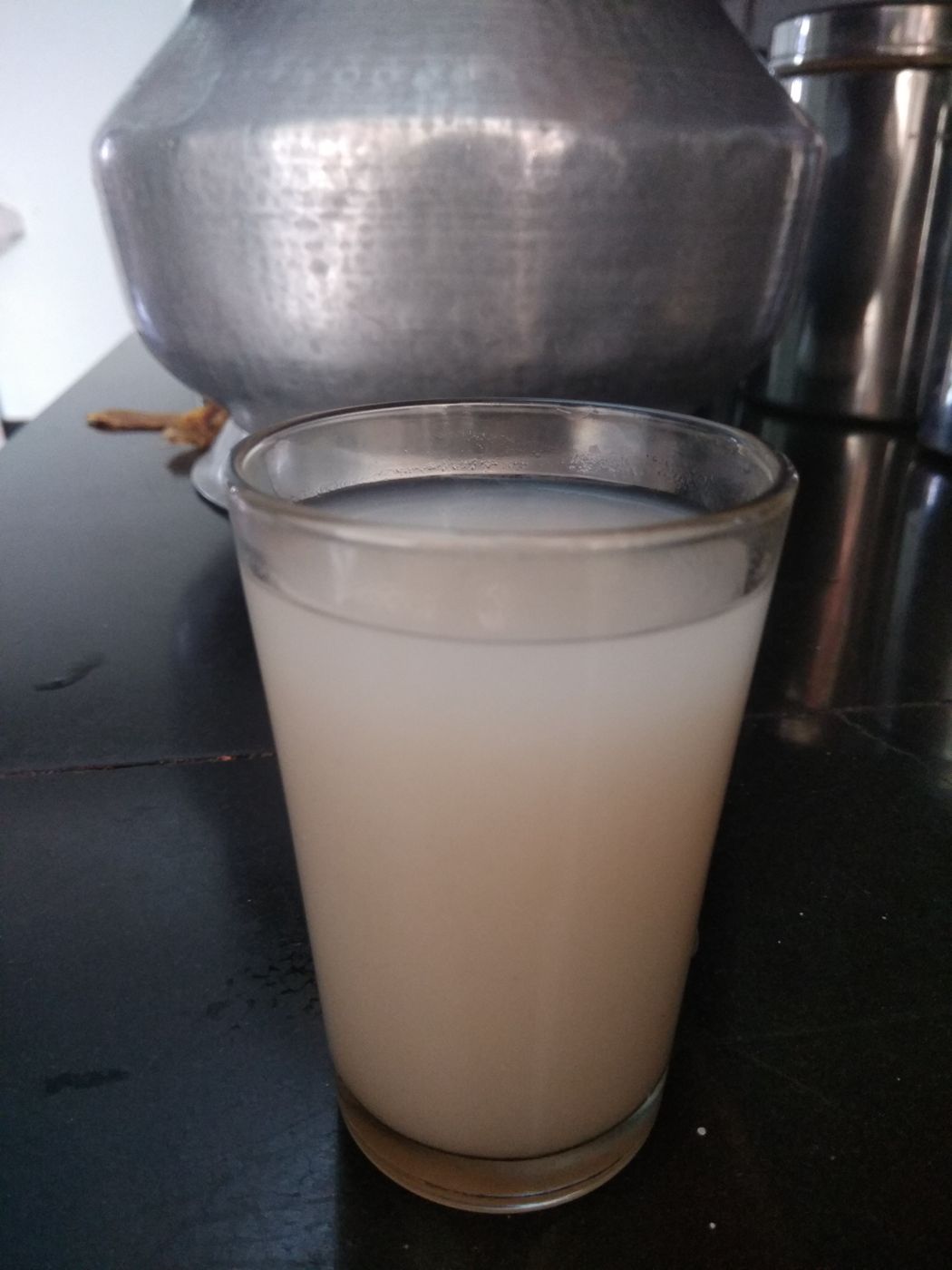 Photo: BHARATHESHA ALASANDEMAJALU, CC BY-SA 3.0, via Wikimedia Commons
Before rice goes into the pot, it is rinsed, and the cloudy water that comes off is ssalddeumul (쌀뜨물). In many Korean kitchens it is not poured away. The milky liquid is saved as a base for doenjang-jjigae, for soups, and for simmering vegetables. Rice is the center of the Korean table (rice in Korean culture), so this by-product is always at hand.
In the kitchen
Rice water is mostly water carrying loose starch from the surface of the grains. A food writer at The Takeout describes it as a free way to give broths a softer, more velvety body without flour or cornstarch, and notes that Korean cooks use it in stews such as doenjang-jjigae and in samgyetang. Many home cooks discard the very first rinse and keep the second or third. The stew it enriches is built on fermented soybean paste (doenjang); rice water simply rounds out the broth.
A folk face and hair wash
Korean household lore also uses ssalddeumul as a gentle rinse for the face and hair. Beauty brands and magazines often say the custom goes back to the Joseon period, but that claim is hard to trace to historical texts. Today the practice is easy to find in Korean-language beauty articles, which usually advise using only plain rice water, with no seasoning or leftover food, and skipping the first rinse.
What research shows
Very little research tests the kitchen rinse itself. The studies that do exist mostly concern rice bran or purified rice compounds, not the water left from washing grains.
- Rice bran and hair: A 2022 systematic review from UC Irvine in the Journal of Drugs in Dermatology analyzed 10 studies on rice bran and hair, six on efficacy and four on safety. The authors called the literature promising, citing mainly laboratory findings, such as effects on growth signals and enzyme activity. Rice bran is a different material from the starchy rinse water.
- The rinse itself: The review does not evaluate homemade rice water, and we found no controlled human study of a household rice-water rinse.
In short, the claims that rice water brightens skin or strengthens hair are traditional and anecdotal. Evidence is limited, and rice water should not be treated as a remedy for any skin or scalp condition.
If you try it
- Patch-test first. Any new product can irritate, especially on sensitive or eczema-prone skin. Try a small area for a day before using it more widely.
- Use it fresh. Rice water is a starchy liquid and can sour when left standing, so make it the same day rather than storing it.
- Keep it plain. Use clean rice and clean water, not water that has touched seasoning, oil or other food.
- Stop if it bothers you. Redness, itching or stinging means rinse it off and leave it out.
Seen this way, rice water is less a skincare discovery than an example of how a Korean kitchen wastes little. See also the rise of K-beauty and fermented ingredients in K-beauty.