Ingredient
Soft tofu (sundubu)
순두부
Romanization: sundubu
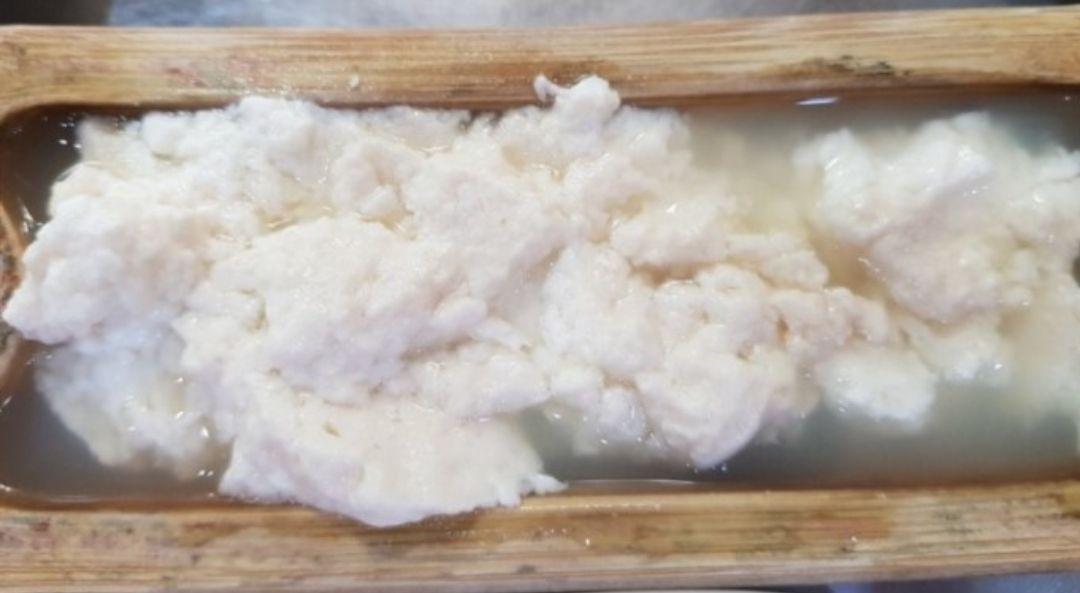
Silky, custard-soft tofu ladled out as soon as the soy milk curdles, before it is pressed into blocks. It is the star of fiery sundubu-jjigae and of the seawater-curdled tofu of Chodang village in Gangneung.
Flavor
Delicate, milky and subtly sweet with a clean soybean flavor; seawater-set Chodang tofu has a faint mineral salinity. The texture is wobbly and custard-like, melting in the mouth.
Origin & History
Sundubu is tofu at its earliest stage: soy milk that has just set into soft curds and has not been pressed. To make it, soaked white soybeans are ground fine, boiled and strained through cloth to separate the milk from the pulp (biji). A coagulant is stirred in, and the milk gathers into tender curds floating in clear whey. Ladle them out now and you have sundubu; press them in a cloth-lined box and you get firm dubu. The Encyclopedia of Korean Culture notes that there is no specific early record of sundubu, but tofu soups appear in the writings of the late-Goryeo scholar Yi Saek. It reasons that the soft curds were surely eaten alongside tofu and biji.
The most famous sundubu comes from Chodang village in Gangneung on the east coast, where tofu is set with seawater instead of the usual bittern (gansu). Local lore says the village and its tofu were named after the mid-Joseon scholar Heo Yeop, whose pen name was Chodang, and who supposedly began curdling tofu with seawater there. The Encyclopedia of Korean Culture notes there is no documentary evidence for the story, and that seawater and salt-water coagulants are mentioned in the royal annals as early as the first year of King Munjong's reign, in the mid-fifteenth century. East Sea water is rich enough in magnesium and calcium to set soy milk without being concentrated. Since the 1990s Chodang has become a destination lined with tofu restaurants, each with its own method, and it now sells tofu ice cream and desserts too.
For sundubu-jjigae, the curds go into an earthenware ttukbaegi, are brought to a boil, and are finished with seasoned clams, a seasoning sauce and shredded green onion. The encyclopedia notes one cook's trick: seasoning only with soy sauce darkens the tofu, so salt is used alongside it, while salted shrimp firms the curds.
Nutrition
| Calories | 44 kcal |
|---|---|
| Protein | 6.85 g |
| Fat | 1.35 g |
| Carbohydrates | 0.69 g |
| Fiber | 0.3 g |
| Sodium | 4 mg |
Notable forProtein (6.9 g) · Thiamin (0.28 mg)
Values copied from the Korean Food Composition Table (Rural Development Administration / National Institute of Crop Science) for this exact food, per 100 g edible portion. Sundubu is about 90% water, so it is lower in energy and protein per 100 g than pressed firm tofu. Actual values vary with ingredients, portion size and preparation.
Health Benefits
- Light, gentle protein: Per the Korean Food Composition Table, sundubu is very low in energy and fat while still supplying several grams of soy protein per 100 g, and its soft texture makes it easy to eat. Harvard's Nutrition Source describes soy as a complete protein.
- The stew, not the tofu, is salty: Plain sundubu is nearly sodium-free, but sundubu-jjigae is seasoned with chili paste, soy sauce, salted seafood and stock; see sodium in Korean food.
- Soy allergen: Tofu is made from soybeans, one of the nine major food allergens the U.S. FDA requires on labels.
- Keep it cold and fresh: Packaged soft tofu is a moist, high-protein food — refrigerate it and use it by the date on the pack. See food safety at home.
Informational, not medical advice. Talk to a qualified professional about your own health and diet.
Dishes with Soft tofu (sundubu)
Dish guides featuring soft tofu (sundubu) are coming soon.
Sources
- 01순두부찌개 (Sundubu-jjigae) — Encyclopedia of Korean Culture
- 02강릉 초당두부 (Gangneung Chodang tofu) — Encyclopedia of Korean Culture
- 03Korean Food Composition Table — Tofu, Unpressed
- 04Straight Talk About Soy — The Nutrition Source, Harvard T.H. Chan School of Public Health
- 05Food Allergies — U.S. Food and Drug Administration