Ingredient
Sagwa (apple)
사과
Romanization: sagwa
Korea's everyday fruit and the classic ending to a meal, sliced and shared at the table. Crisp, juicy Fuji-type apples dominate; they also sweeten kimchi seasoning, marinades and dipping sauces.
Flavor
Sweet-tart and juicy, from the honeyed crunch of Fuji to the sharp, green bite of early aori apples. The peel adds a slight astringency.
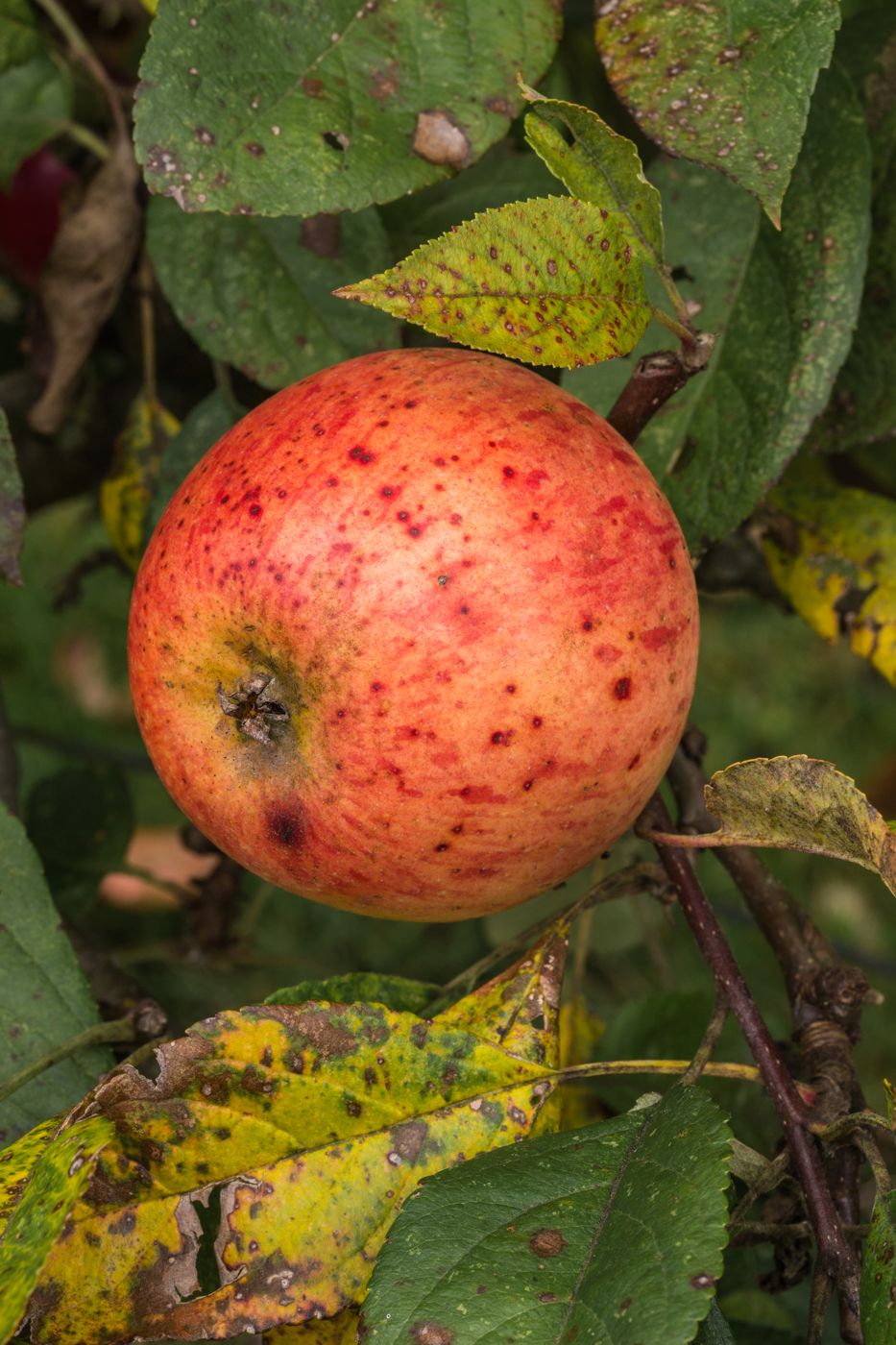 Photo: Agnes Monkelbaan, CC BY-SA 4.0, via Wikimedia Commons
Origin & History
Sagwa is the cultivated apple, a deciduous tree of the rose family (the Encyclopedia of Korean Culture lists it as Malus pumila). Korea long grew a small native apple, neunggeum, but the improved Western apple is a recent arrival. According to the encyclopedia, missionaries brought a few trees from 1884, mostly grown as curiosities; commercial growing began in 1901, when Yun Byeong-su planted an orchard near Wonsan with saplings obtained through an American missionary, and in 1906 a government horticultural station at Ttukseom in Seoul began trialing imported fruit varieties.
Daegu became the name most tied to Korean apples. Local histories credit Woodbridge Johnson, the American medical missionary who founded the Jejungwon clinic that grew into Dongsan Hospital, with planting 72 saplings of three varieties from the United States at his house in Namsan-dong; accounts date the planting to 1899 or 1903. The Daegu history encyclopedia says these trees were spread and grafted with native neunggeum to produce the so-called Daegu apple. A descendant of Johnson's surviving tree still grows at the hospital's missionary museum. Rapid urbanization and a warming climate have since pushed most orchards out of the city; a 2019 report counted about 160 apple farms left, mainly in Pyeonggwang-dong.
Production has always centered on Gyeongsang: the encyclopedia's 1980s figures put about two-thirds of the national crop in Gyeongsangbuk-do. Counties such as Cheongsong in Gyeongbuk and Yesan in Chungcheongnam-do are now known for their apples, and both are registered geographical indications; in a 2011 government survey, Cheongsong was the apple region consumers recognized most. Varieties shifted in the early 1970s, when Fuji (busa) and other Japanese cultivars replaced the older Gukgwang and Hongok, and the early green Tsugaru, sold as aori, became the apple of the Chuseok season.
Most apples are eaten raw, usually peeled and cut into wedges; the rest go into juice, cider vinegar, jam and dried fruit. Grated apple is also a common sweetener in marinades and kimchi seasonings.
Nutrition
| Calories | 52 kcal |
|---|---|
| Protein | 0.26 g |
| Fat | 0.07 g |
| Carbohydrates | 13.96 g |
| Fiber | 1.8 g |
| Sodium | 0 mg |
Notable forDietary fiber · Potassium
Korean Food Composition Table entry "Apple (Sagwa), Raw" (사과, 생것): also 10.62 g total sugars, 116 mg potassium and 2.03 mg vitamin C per 100 g. Apples are modest in most vitamins and minerals; their value is mainly as a low-fat fruit with fiber. Actual values vary with ingredients, portion size and preparation.
Health Benefits
- Whole fruit: Per the Korean Food Composition Table, apples are low in fat and sodium and provide fiber and potassium; eating the peel keeps more of the fiber.
- Natural sugars: Most of an apple's calories come from its sugars, so apple juice and syrups concentrate sugar without the fiber; see sugar in Korean food.
- Pollen-food allergy: The American College of Allergy, Asthma and Immunology lists apple among foods commonly linked to birch-pollen food allergy syndrome, which causes an itchy mouth or throat after eating raw fruit; cooked apple is usually tolerated.
- Wash before eating: The FDA advises rinsing produce under running water before peeling or cutting, so surface dirt and bacteria are not carried onto the flesh.
Informational, not medical advice. Talk to a qualified professional about your own health and diet.
Dishes with Sagwa (apple)
Dish guides featuring sagwa (apple) are coming soon.
Sources
- 01사과나무 — Encyclopedia of Korean Culture
- 02동산동 사과나무 — 대구역사문화대전 (Academy of Korean Studies)
- 03“120년 대구 사과, 역사문화체험관으로 잇자” 주민 목소리 본격화 — 매일신문 (2019)
- 04지역특화산업 육성을 위한 지리적표시제도의 운영실태와 발전방안 (R652) — Korea Rural Economic Institute (2011)
- 05Korean Food Composition Table: Apple (Sagwa), Raw — National Institute of Agricultural Sciences
- 06Pollen Food Allergy Syndrome — American College of Allergy, Asthma and Immunology