Ingredient
Japanese butterbur (meowi)
머위
Romanization: meowi
A damp-ground perennial whose long leaf stalks are blanched and dressed as a slightly bitter spring namul. The broad young leaves are also blanched and used as wraps (ssam).
Flavor
Green, aromatic and pleasantly bitter, with a juicy, fibrous stalk. Blanching and soaking soften the bitterness, and *doenjang* or sesame dressings round it out.
Origin & History
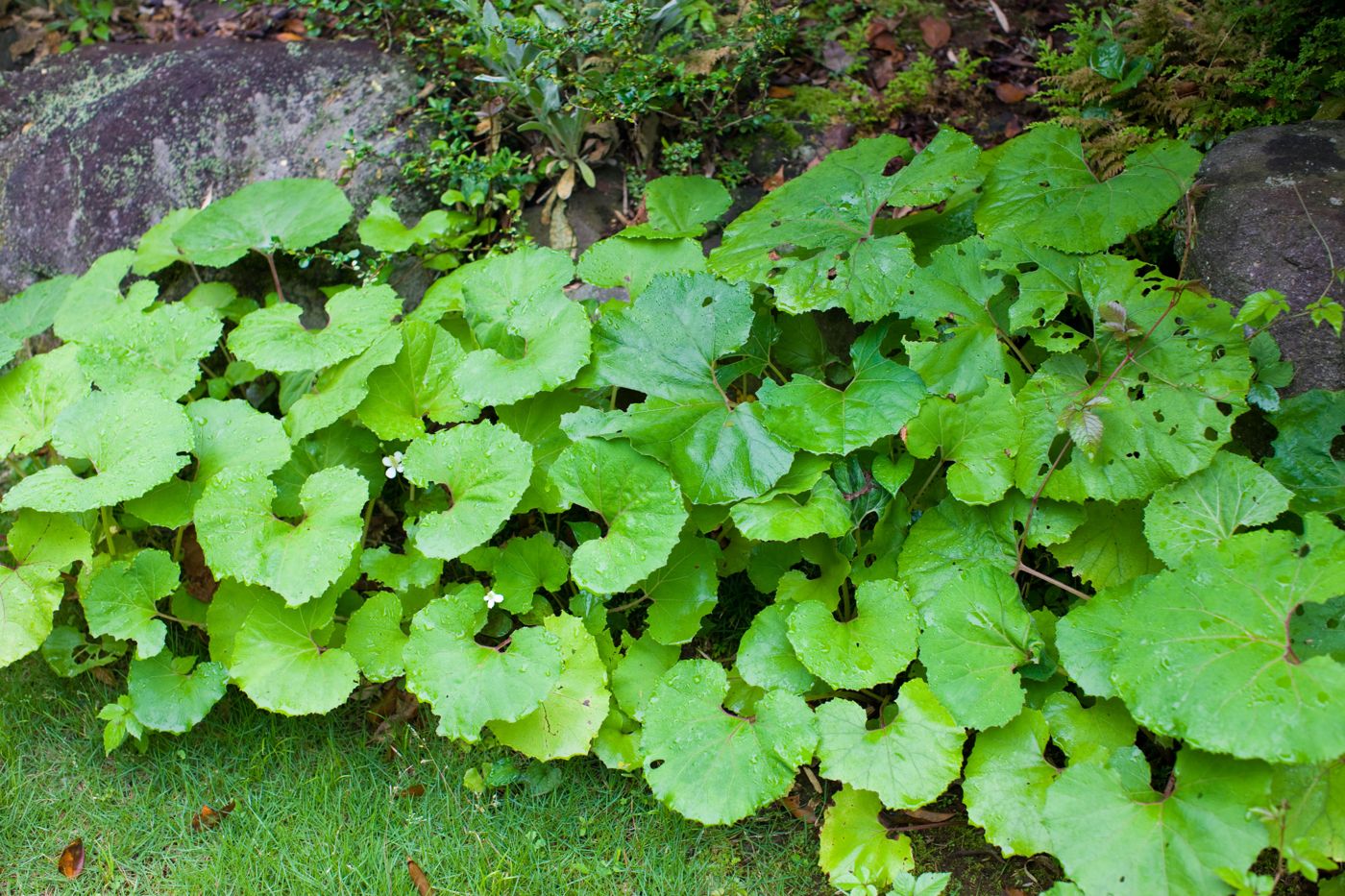
Meowi is Petasites japonicus, a perennial of the daisy family. The Encyclopedia of Korean Culture describes a plant that spreads by creeping underground stems and does best in moist, fertile soil beside mountain streams and in damp valleys. In early spring, before any leaves appear, flower stalks push up from the rootstock. The broad leaves follow, on stalks that can grow to roughly 60 cm. Those leaf stalks are the part Korean cooks value most.
The same encyclopedia says the stalks are blanched and served as namul, prized for a distinctive fragrance, while young leaves are eaten as ssam in some places. The rural extension service adds that the early flowers are eaten too, and that the usual method is to boil the stalks briefly in salted water, for about two or three minutes, rinse them, and soak them to take the edge off their bitterness. The cut surface browns quickly, which the service attributes to chlorogenic acid and other polyphenols. See blanching and seasoning namul for the general method.
Meowi belongs to the spring wild-green season described in seasonal foods, alongside ssukgat and chamnamul. The same plant has an old place in East Asian herbal medicine: the Encyclopedia of Korean Culture lists the rootstock among traditional medicinal uses. Those are traditional practices, not tested treatments, and they sit apart from the kitchen use described here.
Nutrition
| Calories | 17 kcal |
|---|---|
| Protein | 2.31 g |
| Fat | 0.14 g |
| Carbohydrates | 2.74 g |
| Fiber | 2.7 g |
| Sodium | 2 mg |
Notable forVitamin K · Potassium · Calcium
Values from the Korean Food Composition Table, which also lists about 530 mg potassium, 103 mg calcium and about 322 µg vitamin K per 100 g raw. Its blanched entry (머위, 데친것) lists about 512 µg vitamin K per 100 g. Actual values vary with ingredients, portion size and preparation.
Health Benefits
- Fiber and minerals: In the Korean Food Composition Table, raw butterbur stalks supply about 2.7 g of fiber and 530 mg of potassium per 100 g for only 17 kcal, so they are a light, fibrous vegetable.
- A very high vitamin K green: The same table lists roughly 322 µg of vitamin K per 100 g raw. MedlinePlus advises people taking warfarin to keep their intake of vitamin K foods steady rather than swing between none and a lot, so mention a spring meowi binge to a prescriber. See vitamin K and leafy greens.
- Pyrrolizidine alkaloids: A 2020 review of Petasites japonicus notes that the plant can contain pyrrolizidine alkaloids such as petasitenine and senkirkine, which can damage the liver. The review advises caution with large amounts, especially for people who are ill, pregnant or children, though it considers typical concentrations unlikely to cause acute poisoning, and it recommends boiling stalks and buds in water before eating. Traditional blanching fits that advice; eating the raw plant in quantity does not.
- Wild-plant caution: Foraged butterbur can be confused with other plants of damp ground, so buy from a market or learn it from someone experienced rather than guessing from a photo.
Informational, not medical advice. Talk to a qualified professional about your own health and diet.
Dishes with Japanese butterbur (meowi)
Dish guides featuring japanese butterbur (meowi) are coming soon.
Sources
- 01머위 (Meowi) — Encyclopedia of Korean Culture
- 02채소 > 산채류 머위의 특성 및 영양학적 가치 — Nongsaro, Rural Development Administration
- 03Butterbur(Meowi), Petiole, Raw — Korean Food Composition Table, National Institute of Agricultural Sciences
- 04Antioxidant compounds of Petasites japonicus and their preventive effects in chronic diseases: a review — J Clin Biochem Nutr (PMC)
- 05Taking warfarin (Coumadin) — MedlinePlus Medical Encyclopedia (NIH)