Ingredient
Maesil (green plum)
매실
Romanization: maesil
The hard, sour fruit of the flowering apricot, harvested green in early summer. Too tart to eat raw, it is steeped with sugar into maesil-cheong, pickled, or brewed into liquor.
Flavor
Raw green maesil is hard, astringent and mouth-puckeringly sour, with a fresh, floral-almond aroma. Steeped in sugar or alcohol it becomes fruity, tart and fragrant; ripe yellow fruit is softer and more apricot-like.
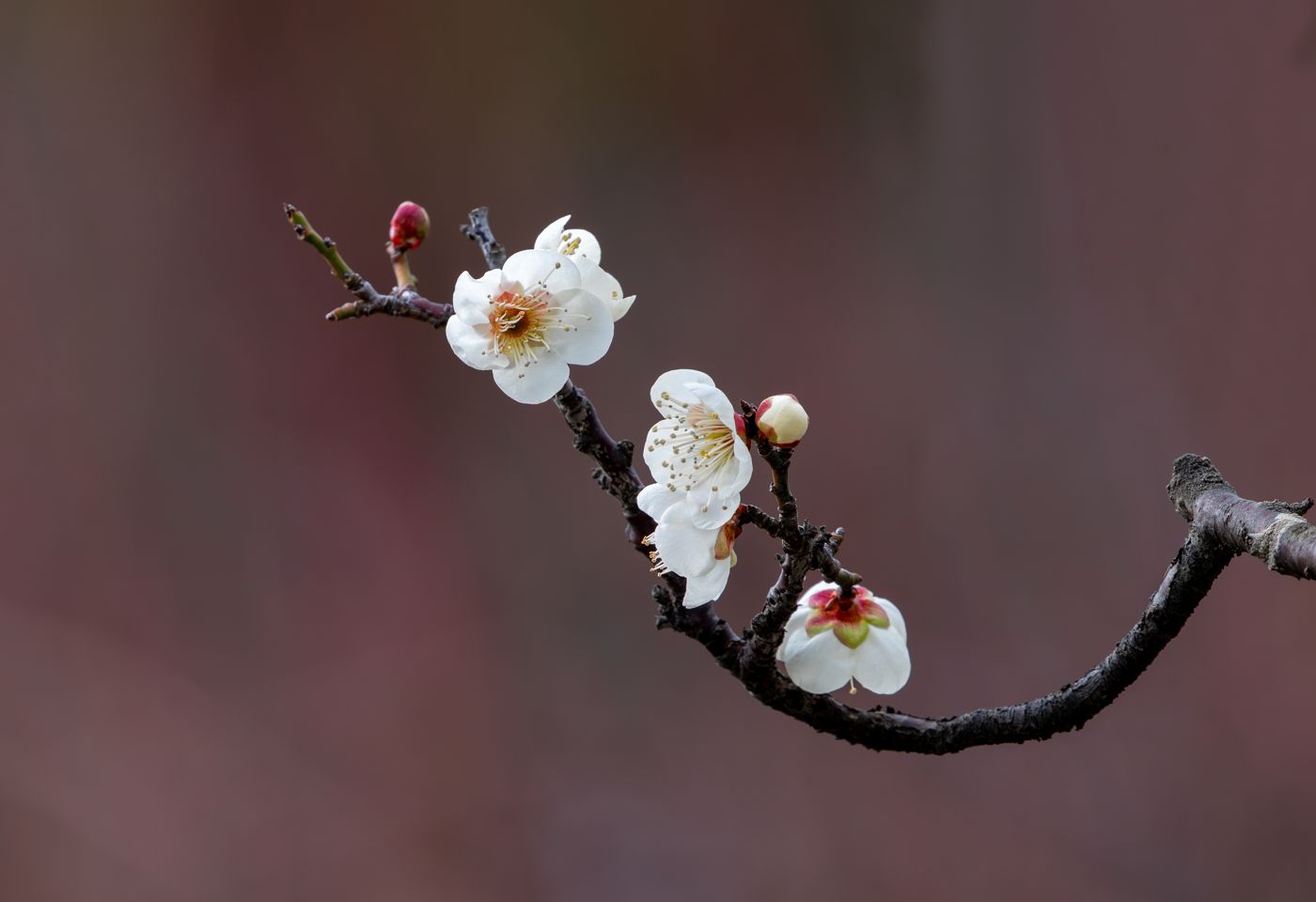 Photo: Laitche, CC BY-SA 4.0, via Wikimedia Commons
Origin & History
Maesil is the fruit of maehwa, the flowering apricot or Japanese apricot (Prunus mume), a small tree of the rose family. The Encyclopedia of Korean Culture describes fragrant pale blossoms in early spring before the leaves, followed by fuzzy green fruits like small apricots that turn yellow by July and are intensely sour. The tree itself carries great cultural weight: blooming in the cold, it became an emblem of scholarly integrity in Korean poetry and painting.
Fruit picked green and salted then sun-dried was called baengmae; fruit dried in the smoke of burning straw without salt became omae, both used in traditional medicine for coughs, thirst and diarrhea. Maesil was also a source of vinegar: the Joseon cookbook Gyugon siuibang records dried omae ground to powder and mixed with water as a souring agent. Today the fruit is most often steeped in soju as maesil-ju or layered with sugar to make the syrup maesil-cheong.
Gwangyang, in South Jeolla, is the best-known growing area. The Encyclopedia of Korean Culture notes heavy maesil production on the slopes of Baegunsan and especially in Daap-myeon along the Seomjin River, where the fruit is sold fresh and processed into extract, maesil-jangajji and drinks, and where a plum blossom festival is held each March among roughly 330,000 square meters of riverside orchards. See Jeolla.
Green fruit is picked in early summer. At home, cooks pit it and slice it for sweet-sour maesil-jangajji, pickle it in gochujang, or make syrup that is later diluted as a drink or used to sweeten namul dressings and marinades.
Nutrition
| Calories | 41 kcal |
|---|---|
| Protein | 1.1 g |
| Fat | 1.1 g |
| Carbohydrates | 7.8 g |
| Fiber | Not reported |
| Sodium | 3 mg |
Notable forVitamin C · Potassium
Korean Food Composition Table entry "Japanese apricot (Maesil), Raw" (매실, 생것): also 11 mg vitamin C, 301 mg potassium and 89.4 g water per 100 g. Fiber, folate and vitamin K are not reported for this older entry. Actual values vary with ingredients, portion size and preparation.
Health Benefits
- Fresh fruit: Per the Korean Food Composition Table, raw maesil is low in calories with some vitamin C and potassium, though it is almost never eaten raw.
- Cyanogenic compounds: The seeds and unripe fruit contain amygdalin, which can release cyanide. Korea's Ministry of Food and Drug Safety advises removing the stems and seeds before making syrup, which it says cuts cyanogenic compounds by about 95 percent, and choosing ripe yellow fruit, which carries about 70 percent less than green fruit. A 2024 study found that amygdalin in maesil syrup falls sharply with nine months or more of maturation.
- Never eat the kernels: Do not crack and eat maesil pits or use them in home preparations.
- Sugar in syrup: Maesil-cheong is made with roughly equal weights of fruit and sugar, so it is a sweetener, not a health tonic; see sugar in Korean food.
- Traditional uses: Korean herbal medicine uses dried omae for coughs, thirst and diarrhea. These are traditional uses, not proven treatments.
Informational, not medical advice. Talk to a qualified professional about your own health and diet.
Dishes with Maesil (green plum)
Dish guides featuring maesil (green plum) are coming soon.
Sources
- 01매실나무 — Encyclopedia of Korean Culture
- 02광양시 — Encyclopedia of Korean Culture
- 03매실청 안전하게 담그려면? — Ministry of Food and Drug Safety, via Korea.kr (2024)
- 04The Effect of One-Year Fermentation of Maesil Fruit (Prunus mume) Sugar Syrup on Amygdalin Level: A Natural Toxic Compound — Foods (2024)
- 05Korean Food Composition Table: Japanese apricot (Maesil), Raw — National Institute of Agricultural Sciences