Ingredient
Sea snail / whelk (golbaengi)
골뱅이
Romanization: golbaengi
A chewy marine snail, mostly canned and imported, tossed with chili, vinegar, vegetables and noodles into golbaengi-muchim, one of Korea's best-loved snacks to eat with beer.
Flavor
Clean, lightly briny and mild on its own, with a springy, rubbery chew. Canned snails take on seasoning readily, which is why the dish leans on a hot, sweet and sour dressing.
Origin & History
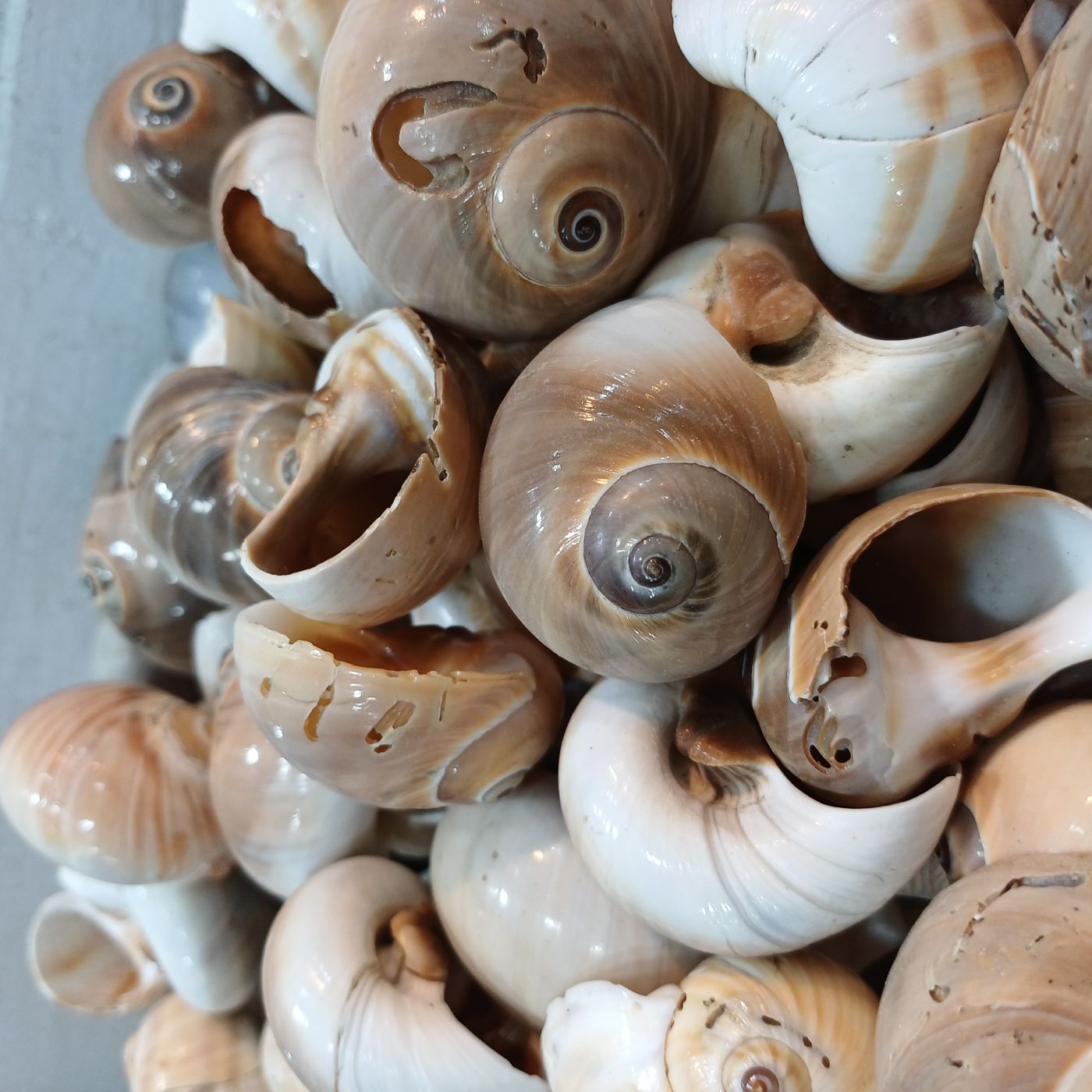
"Golbaengi" is a market name rather than one species. A Korean article on shell names explains that the standard name sora belongs to a single species, while most of what Korean markets sell as chamsora or golbaengi is actually a whelk (godung). It gives mulle-godung as the standard name of the East Coast's baekgolbaengi. The Korean Food Composition Table, meanwhile, lists a moon snail (큰구슬우렁이) under the label "golbaengi", with raw, canned and seasoned entries, so the name covers several animals.
As a snack, golbaengi is a late-twentieth-century story. Korea JoongAng Daily reports that golbaengi-muchim became a bar favorite as draft beer spread, first made with canned snails, chili powder, vinegar and sugar, and that today's versions add richer sauces, more vegetables and wheat noodles. The same article says overfishing in the East Sea depleted local stocks, so canneries turned to imports from the early 1990s, mostly from the United Kingdom and Ireland. Sources differ on exactly when the dish took off; a Korean news site places its wide popularity in the late 1980s and says Koreans eat most of the world's supply. Those are industry claims relayed by journalists rather than official statistics.
The classic bar plate pairs the snails with cucumber and onion, often with somyeon wheat noodles (see somyeon and cucumber) and a sweet-sour-hot gochugaru dressing. It belongs among the foods discussed in anju and drinking culture. Fresh snails need different handling from canned: the Korean shell-names article warns that many whelks are carnivorous and may carry the neurotoxin tetramine, so their innards should be removed before cooking.
Nutrition
| Calories | 109 kcal |
|---|---|
| Protein | 19.33 g |
| Fat | 0.83 g |
| Carbohydrates | 5.97 g |
| Fiber | 0 g |
| Sodium | 504 mg |
Notable forProtein · Zinc · Magnesium
Values from the Korean Food Composition Table for canned golbaengi solids (about 1.7 mg zinc and 54 mg magnesium per 100 g). The table's species is a moon snail, which is not necessarily the whelk in imported cans. Its raw golbaengi entry is lower in energy (71 kcal) and does not report sodium. Actual values vary with ingredients, portion size and preparation.
Health Benefits
- Lean protein: Canned golbaengi solids supply about 19 g of protein and under 1 g of fat per 100 g in the Korean Food Composition Table.
- Salt in cans and dressing: The same entry lists about 504 mg of sodium per 100 g before any dressing is added. Rinsing the snails and keeping the dressing light both help. See sodium in Korean food.
- Shellfish allergy: Snails are mollusks. People with shellfish allergies should check with an allergist before eating them. See allergens in Korean food.
- Handling fresh snails: Do not cook wild whelks with their innards on. The tetramine warning in the shell-names article applies mainly to carnivorous species, so ask the seller what kind of snail you are buying.
Informational, not medical advice. Talk to a qualified professional about your own health and diet.
Dishes with Sea snail / whelk (golbaengi)
Dish guides featuring sea snail / whelk (golbaengi) are coming soon.
Sources
- 01한국인 99%가 소라나 골뱅이로 잘못 알고 먹는다는 '이것'의 정체 — WikiTree
- 02From sea snails to barnacles — here are some of Korea's lesser-known delicacies from the deep — Korea JoongAng Daily
- 03해외에선 버려지지만 한국에서는 '국민 안주'로 사랑받는 뜻밖의 음식 — WikiTree
- 04Real bladder moon snail, Canned, Solid — Korean Food Composition Table, National Institute of Agricultural Sciences
- 05Golbaengimuchim, Seasoned real bladder moon snail — Korean Food Composition Table, National Institute of Agricultural Sciences