Beauty
Jeju in Beauty
제주와 뷰티
Tangerines, green tea, camellia and volcanic ash tie Jeju's land to its cosmetics. The farm history is solid; the skin claims mostly come from brands and the lab.
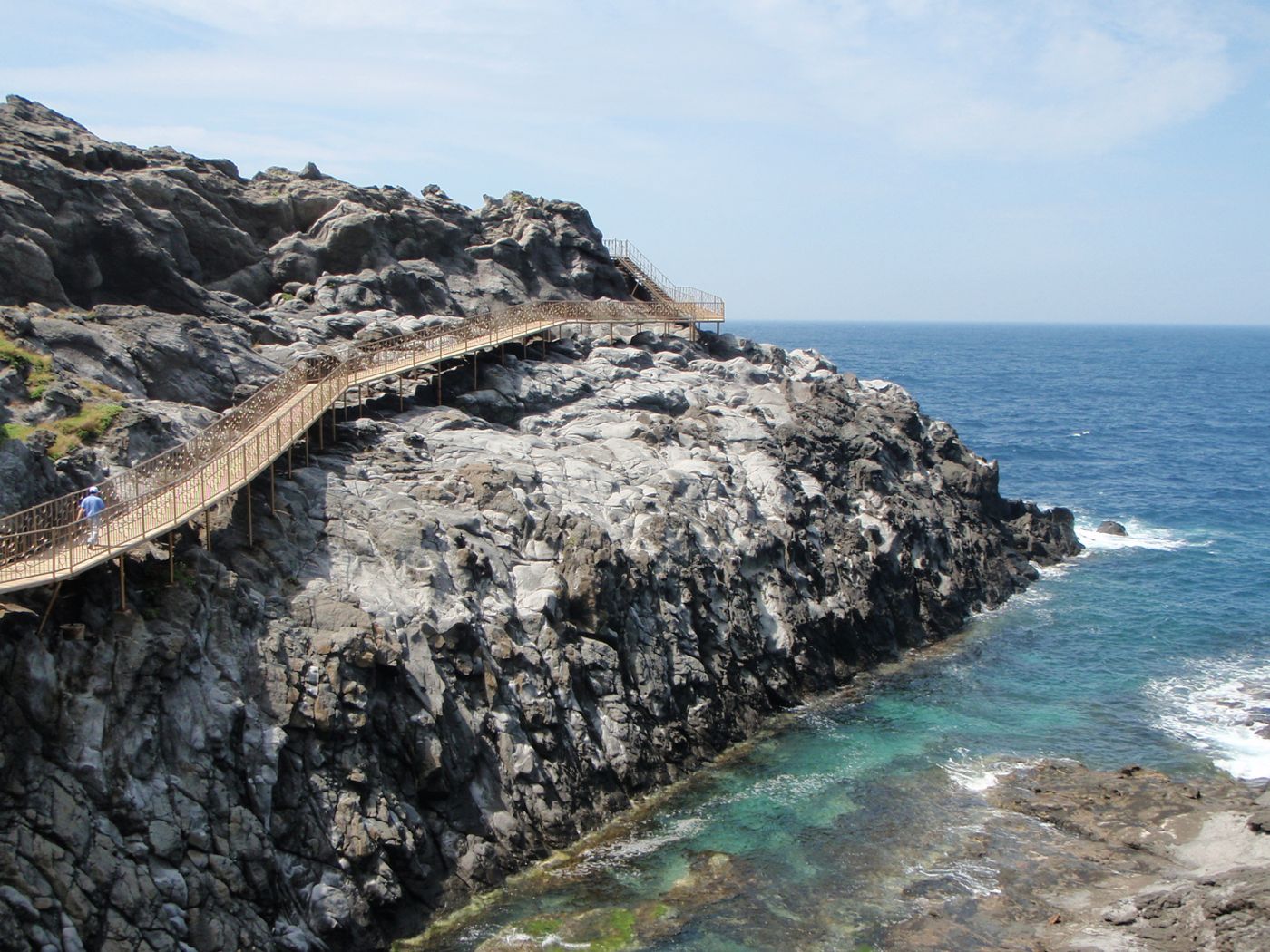 Photo: Korea.net / Korean Culture and Information Service, CC BY-SA 2.0, via Wikimedia Commons
Jeju's volcanic island is easy to turn into a beauty brand. UNESCO listed it in 2007, and Visit Jeju counts about 368 volcanic cones (oreum) and an estimated 160 lava tubes. This page walks through four ingredients linked to the island, separating the food and farm history, which is well documented, from the skin claims, which are not. For the island's cooking, see Jeju.
Tangerines and their peel
The Encyclopedia of Korean Culture says citrus has probably been grown on Jeju since the Three Kingdoms period. In Goryeo and Joseon the fruit was a tribute item sent to the court each winter, and heavy demands led some farmers to cut down their trees. Large-scale orchards began in the early 1960s, and the entry says the fruit moved from luxury to mass consumption in the 1970s. Most orchards now grow the Onju mikan, introduced from Japan in 1911, and only about ten native types remain. See gyul and the related yuja in beauty.
Dried tangerine peel (jinpi, 진피) is a traditional herbal ingredient. The encyclopedia's entry on the formula haengsotang names it as one of eight ingredients and credits it with easing cough and phlegm and settling the stomach. That is a medicine record, not a beauty record, and I found no Korean source describing the peel as a traditional face or body treatment. In the lab, a 2007 paper in the Journal of Enzyme Inhibition and Medicinal Chemistry tested Citrus unshiu peel extracts: a purified fraction cut pigment production in mouse melanoma cells, and nobiletin blocked the pigment enzyme tyrosinase more strongly than hesperidin did. A 2000 paper in Cancer Research traced anti-inflammatory activity in Citrus unshiu to nobiletin, tested in cells and on mouse skin. Neither study used people, and neither tested peel as it is steeped or cooked at home. I found no human trial of topical Citrus unshiu peel.
Green tea and camellia
Jeju's tea fields and camellia groves have their own pages: see green tea in Korean beauty, Korean tea culture and camellia oil. In short, tea is well established as a drink and well studied in the laboratory, camellia oil is documented as a hair oil, and neither has firm evidence of facial benefit from large human trials.
Volcanic ash and clay
Volcanic ash is the newest of the four. Korean cosmetic brands market Jeju volcanic ash cleansers and clay masks for absorbing oil and clearing pores. A 2020 launch report on The Face Shop's cleansing line describes the ash as known for sebum absorption and lists it beside plant extracts and Jeju spring water. These are brand claims, repeated by the press. I found no independent study measuring the ash's effect on skin, and any absorbent clay can dry or irritate. If you try a clay mask, keep it brief and moisturize afterward.
Evidence status
- Farm and food history: well documented (citrus tribute and orchards; tea and camellia on their own pages).
- Tangerine peel: documented as a herbal medicine; cell and mouse studies only for skin; no human trial found.
- Volcanic ash clay: brand claims; no independent study found.
- Practical note: citrus peel preparations can irritate or sensitize skin, so patch-test first. A Jeju origin on a label is a marketing point, not a measure of quality.
Sources
- 01감귤 (Citrus) — Encyclopedia of Korean Culture
- 02행소탕 (Haengsotang) — Encyclopedia of Korean Culture
- 03World Natural Heritage — Visit Jeju
- 04Tyrosinase inhibitory effects and inhibition mechanisms of nobiletin and hesperidin from citrus peel crude extracts (Europe PMC)
- 05Inhibitory effect of citrus nobiletin on phorbol ester-induced skin inflammation, oxidative stress, and tumor promotion in mice (Europe PMC)
- 06The Face Shop Launches Renewed Jeju Volcanic Soil Cleansing Line (Asia Economy)