Ingredient
Black bean paste (chunjang)
춘장
Romanization: chunjang
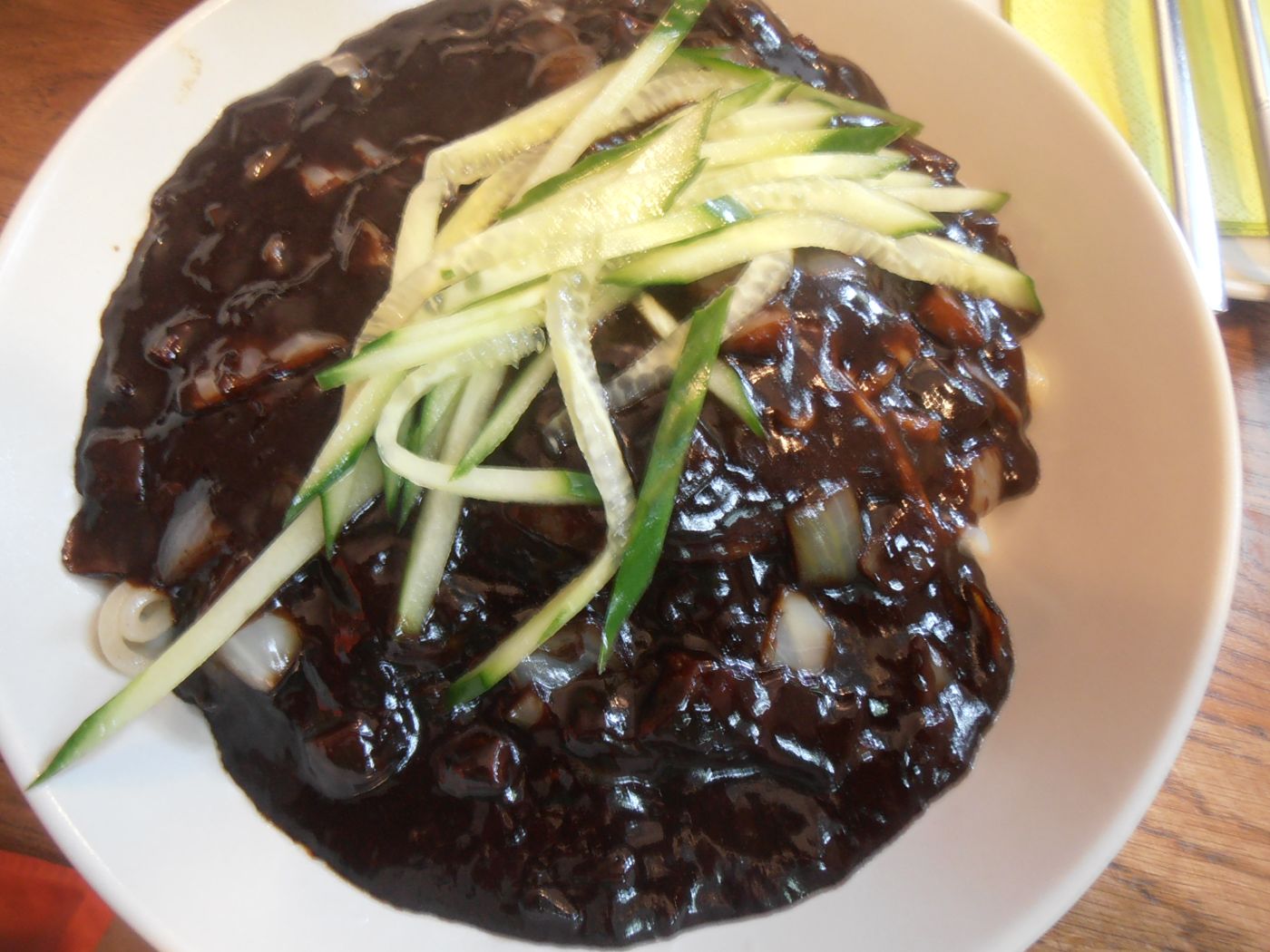
A thick, glossy, nearly black fermented paste, fried in oil with pork and onions to make the sauce for jajangmyeon. It is the defining ingredient of Korean-Chinese cooking, born in Incheon's Chinatown.
Flavor
Deeply savory and salty with a caramel sweetness, a slight bitterness and a faint fermented tang; cooked into sauce with pork and onions it turns rounder and roasty.
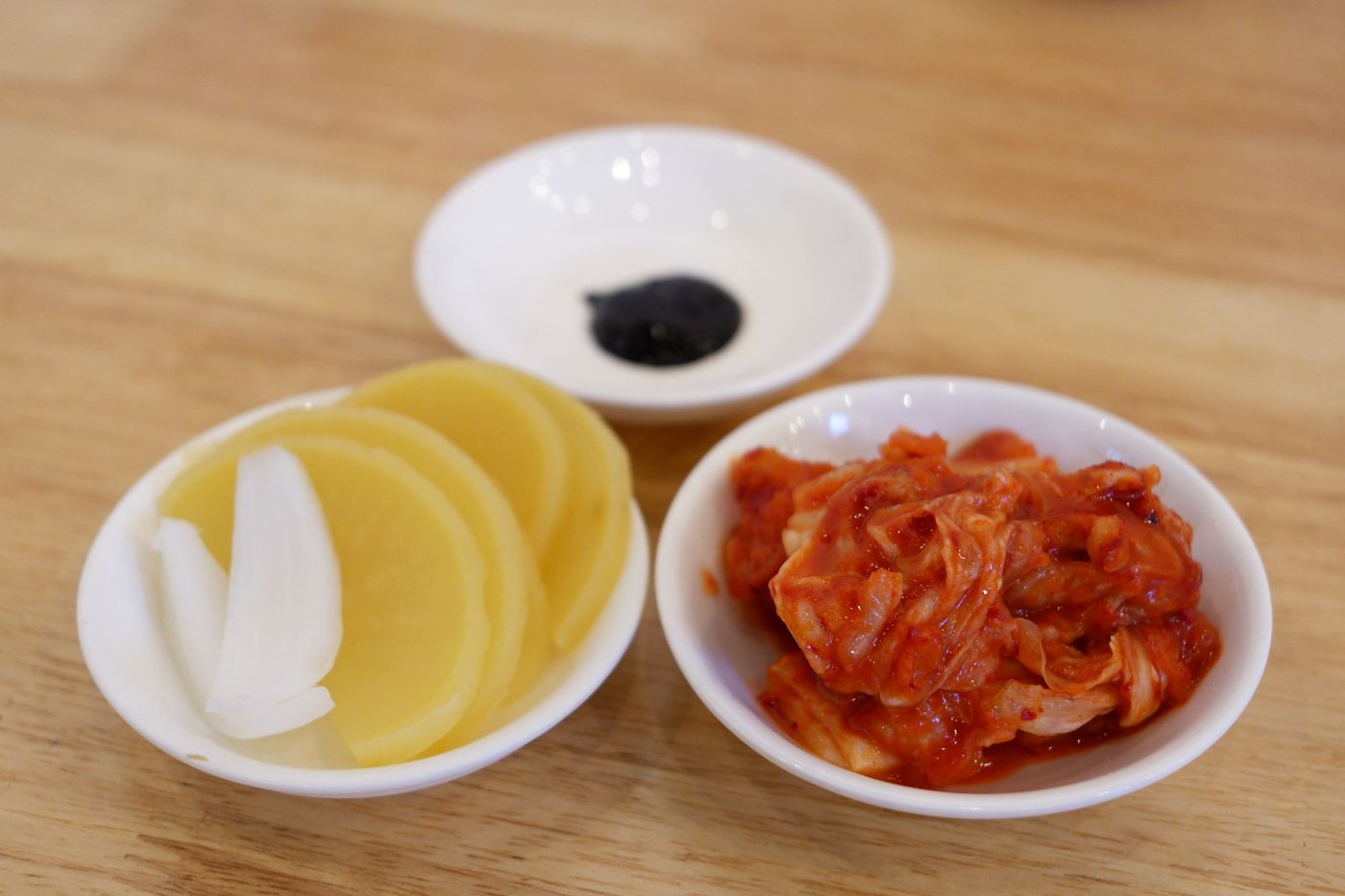 Photo: Vee Satayamas, CC BY 2.0, via Wikimedia Commons
Origin & History
Chunjang descends from tianmianjiang, a sweet northern Chinese sauce made by fermenting wheat flour with salt. Chinese migrants from Shandong brought it with them after Incheon's port opened in 1883. There it went into chaojiangmian, noodles topped with sauce fried in oil, the ancestor of Korea's jajangmyeon. The restaurant Gonghwachun, founded in Incheon's Chinatown in the early 1900s, is credited with first selling the dish. The restaurant closed in 1984, and its two-story red-brick building was registered as cultural heritage in 2006. See Korean-Chinese food.
Early versions of the sauce, made from fermented wheat and beans, were brown rather than black. The Encyclopedia of Korean Culture credits Wang Songshan, an ethnic Chinese manufacturer, with developing modern chunjang in 1948 by adding caramel to the fermented paste. The Korea Tourism Organization dates the caramel-black sauce becoming standard to the 1950s. Government campaigns of the 1960s and 70s that urged people to eat flour foods instead of rice helped make jajangmyeon one of the country's cheapest, most popular meals.
Chunjang is a cooking paste rather than a condiment. For jajang sauce, diced pork or beef, seafood, onions, green onions, potatoes and squash are stir-fried in oil in a wok, then the paste goes in with rice wine and stock, and starch is stirred in to thicken it into a glossy sauce for the noodles. The Korean Food Composition Table files it with seasonings, alongside jajang sauce.
Nutrition
| Calories | 206 kcal |
|---|---|
| Protein | 11.8 g |
| Fat | 4.16 g |
| Carbohydrates | 30.46 g |
| Fiber | 7.9 g |
| Sodium | 3399 mg |
Notable forSodium (3,399 mg) · Folate (221 µg) · Riboflavin (0.98 mg)
Values copied from the Korean Food Composition Table (Rural Development Administration / National Institute of Crop Science) for this exact food, per 100 g edible portion. A recipe of jajang sauce typically uses a few tablespoons of paste per serving, plus oil for frying it, so the sodium and fat of the finished dish depend heavily on portion and method. Actual values vary with ingredients, portion size and preparation.
Health Benefits
- Very high in sodium: At about 3,400 mg per 100 g in the Korean Food Composition Table, chunjang is a concentrated salt source. The U.S. FDA's Daily Value is less than 2,300 mg a day and it counts 20% DV or more per serving as high — see sodium in Korean food.
- Cooked with oil and meat: Jajang sauce is built by stir-frying pork and vegetables in oil before the paste goes in, which adds fat and energy to the finished dish.
- Soy and wheat allergens: The paste is made from fermented beans and wheat, two of the nine major food allergens the U.S. FDA requires on labels; check the label of any brand.
- Not gluten-free: Because it contains wheat, chunjang — and the wheat noodles it is served on — is unsuitable for people with celiac disease, per NIDDK.
Informational, not medical advice. Talk to a qualified professional about your own health and diet.
Sources
- 01자장면 (Jajangmyeon) — Encyclopedia of Korean Culture
- 02Jjajangmyeon: A Korean-Chinese Favorite for All Ages — VISITKOREA (Korea Tourism Organization)
- 03Korean Food Composition Table — Black bean sauce, Chunjang, Black bean paste
- 04Sodium in Your Diet — U.S. Food and Drug Administration
- 05Food Allergies — U.S. Food and Drug Administration
- 06Eating, Diet, & Nutrition for Celiac Disease — NIDDK