Ingredient
Chik (kudzu root)
칡
Romanization: chik
The starchy, fibrous root of the kudzu vine. Pressed for juice, brewed as tea or refined into starch, it gives its earthy taste and dark color to chewy chik-naengmyeon noodles.
Flavor
Earthy, faintly sweet and slightly bitter, with a woody, fibrous texture when raw. In noodles, kudzu starch adds a gray-brown color, a subtle nutty earthiness and a firm, springy chew.
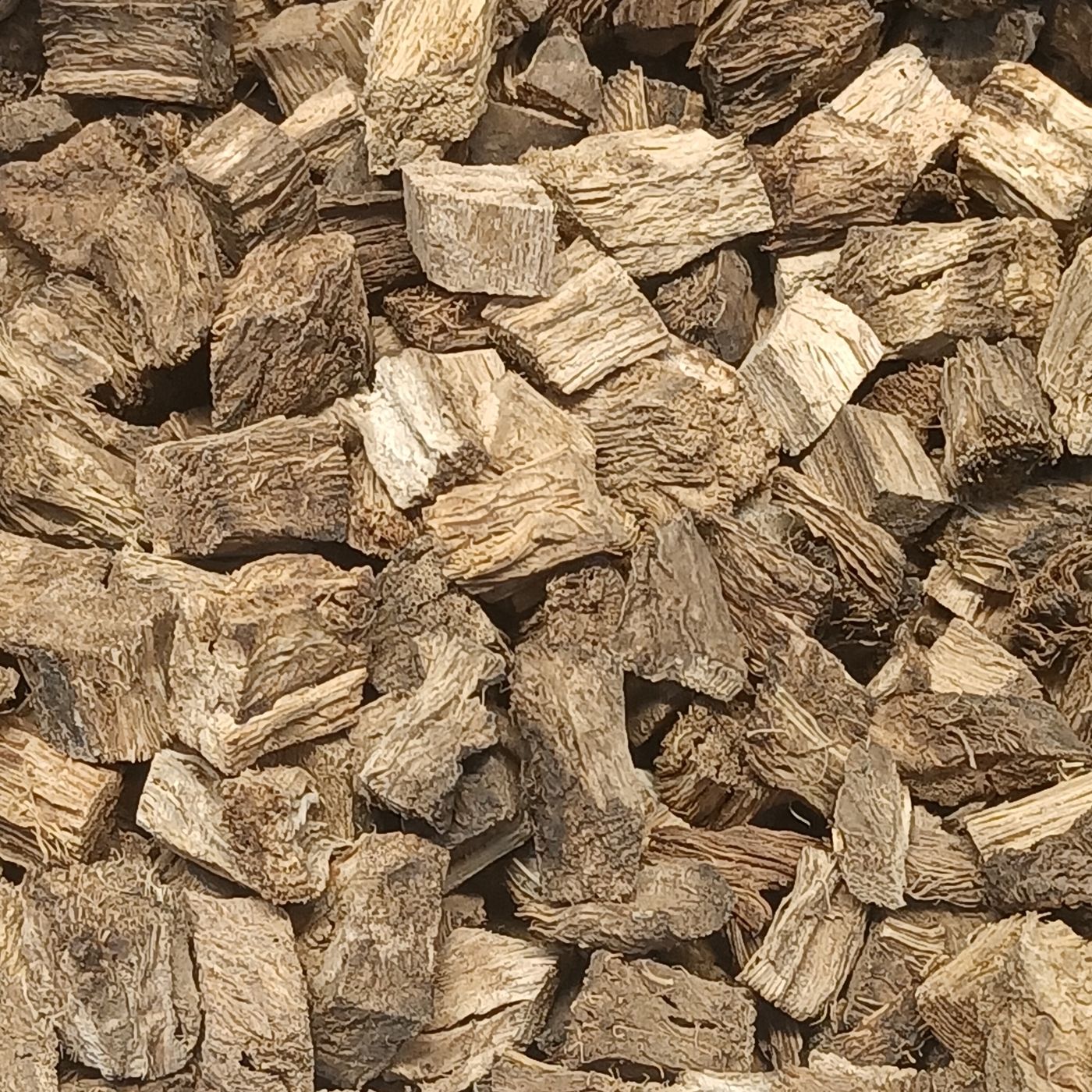 Photo: Fumikas Sagisavas, CC0, via Wikimedia Commons
Origin & History
Chik is kudzu (Pueraria lobata), a climbing vine of the pea family that grows wild on hillsides across Korea. The Encyclopedia of Korean Culture describes leaves of three leaflets, purple-red flower spikes in August and thick roots that run deep. Once planted to stabilize eroding slopes, the vine now smothers trees in places and is cut back as a pest. Its stems were stripped for fiber, the vine fed livestock, and the flowers were a folk remedy for hangover.
The root is the part people eat. Because it is rich in starch, the encyclopedia explains, kudzu root was an important famine food, and Joseon households dug it, washed out the starch and dried it as galbun, kudzu flour, for jelly, porridge and eung-i, a thin starch gruel recorded in Gyuhap chongseo and Siui jeonseo and sometimes flavored with ginger, omija or honey. A Gwangju folk survey adds that roots were dug in late winter, chewed raw or pressed for juice, and that galbun was mixed with wheat flour for noodles and rice cakes. See making muk.
Those famine noodles became a summer specialty. Chik-naengmyeon, cold noodles of kudzu starch blended with wheat flour, is especially associated with the Jirisan area: the Digital Namwon Culture Encyclopedia says restaurants selling it clustered around the mountain as tourism grew, using kudzu gathered around Sannae, Hamyang and Machon, and that its distinctive aroma made it a draw for city visitors. In Namwon the noodles are served with a seasoning sauce and just enough cold broth to moisten them. See noodles in Korean history.
Kudzu root is also pressed into chik-jeup juice and simmered as chik-cha, sold as a health drink, and Korean herbal medicine uses the root to induce sweating and reduce fever.
Nutrition
| Calories | 137 kcal |
|---|---|
| Protein | 2.48 g |
| Fat | 0.1 g |
| Carbohydrates | 32.05 g |
| Fiber | 4.4 g |
| Sodium | 0 mg |
Notable forCalcium · Magnesium · Dietary fiber · Folate
Korean Food Composition Table entry "East Asian arrowroot (Chik), Root, Raw" (칡, 뿌리, 생것): also 383 mg calcium, 242 mg magnesium, 243 mg potassium, 2 mg iron and 69 µg folate per 100 g. The raw root is fibrous and is rarely eaten in this form; noodles made from kudzu starch differ greatly in composition. Actual values vary with ingredients, portion size and preparation.
Health Benefits
- Starchy root: Per the Korean Food Composition Table, raw kudzu root is mostly starch, with fiber and notable calcium and magnesium.
- Traditional uses: The Encyclopedia of Korean Culture records kudzu porridge as food for invalids and the elderly, and folk beliefs that kudzu quenches thirst and eases the effects of alcohol. These are traditional ideas, not established effects.
- Noodles are mostly wheat: Commercial chik-naengmyeon is typically made with wheat flour as well as kudzu starch, so it is not gluten-free; see gluten-free Korean eating.
- Concentrates and supplements: Kudzu root extracts sold as supplements are far more concentrated than food uses. Talk to your doctor or pharmacist before taking them, especially if you take prescription medication or are pregnant.
- Broth and sauce sodium: The salt in a bowl of naengmyeon comes from the broth and seasoning; see sodium in Korean food.
Informational, not medical advice. Talk to a qualified professional about your own health and diet.
Dishes with Chik (kudzu root)
Dish guides featuring chik (kudzu root) are coming soon.