Ingredient
Canned Tuna
참치 통조림
Romanization: chamchi tongjorim
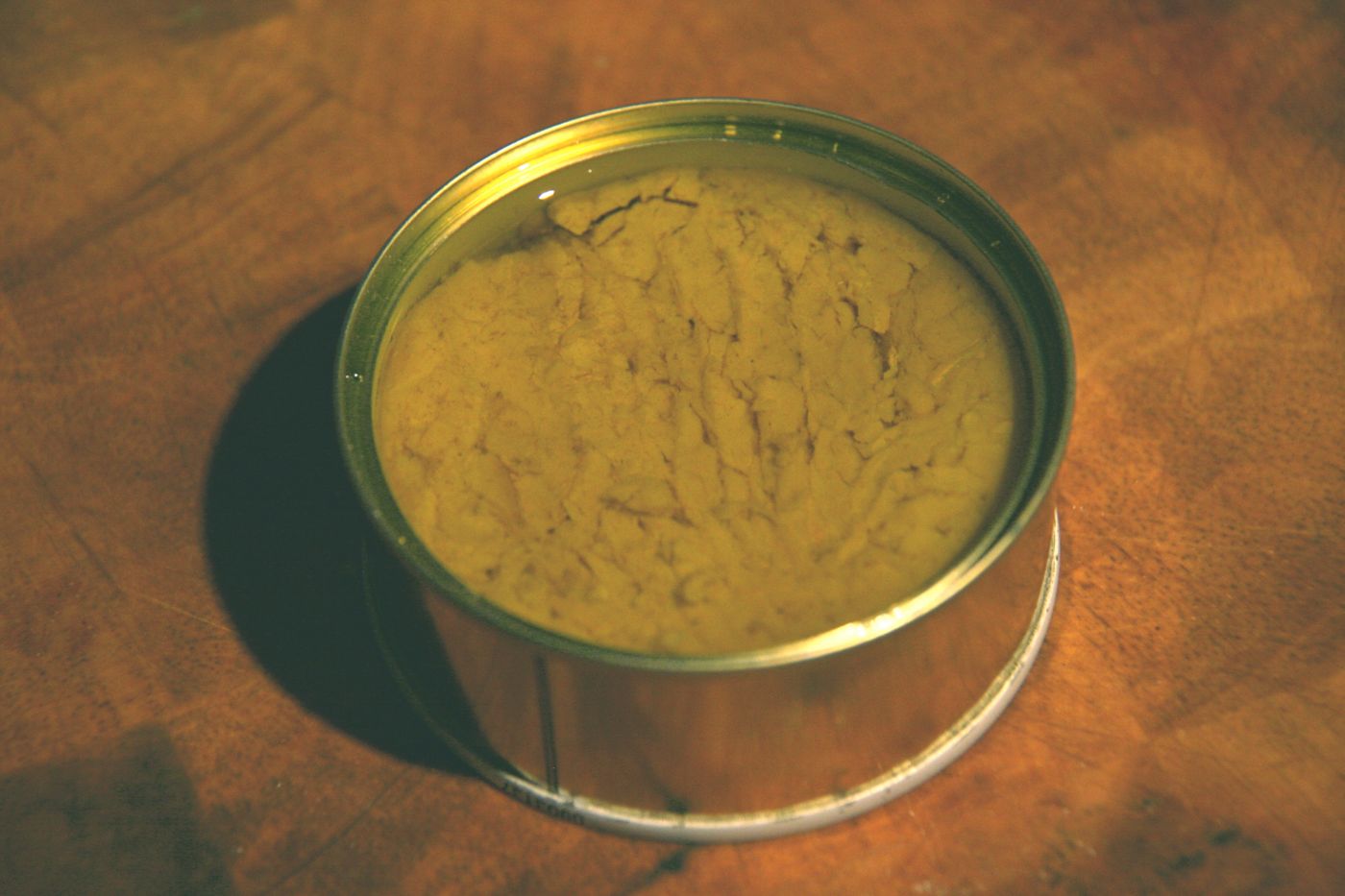
Oil-packed canned tuna, usually skipjack, has been a pantry staple since the 1980s. It goes into kimchi stew, gimbap, rice balls, fried rice and quick side dishes. Its oil is often cooked into the dish rather than drained away.
Flavor
Mild, savory and meaty, with soft flakes; oil-packed tuna is rich and rounded. Simmered with sour kimchi it gives a gentle seafood depth, and mixed with mayonnaise it becomes a creamy filling.
Origin & History
Canned tuna is young in Korea. The Encyclopedia of Korean Culture dates Korean canning to crab packed off Wonsan in the early 1900s, and canneries revived after the Korean War on military contracts. Tuna came later. Korea's deep-sea fleet was already longlining tuna in the Indian Ocean by 1969, when the fisheries company that became Dongwon sent out its first vessel. The encyclopedia's company entry records that this firm brought canned tuna to the Korean market in November 1982, when tuna was little known to Korean shoppers. It sold some six million cans the following year.
Demand then climbed fast. The encyclopedia's canned-food entry says the market for canned tuna boomed from the late 1980s as incomes rose. By 1997 tuna made up most of Korea's canned seafood market, ahead of saury, mackerel and whelk. Flavored versions, such as tuna with vegetables or in black-bean sauce, followed, and stacks of cans are now a standard holiday gift set.
At home, canned tuna fills the gap that fresh fish once did. It can stand in for pork in kimchi-jjigae and is a filling for gimbap and triangle rice balls. It also goes into fried rice, jeon and quick braises with soy sauce.
Nutrition
| Calories | 185 kcal |
|---|---|
| Protein | 22.31 g |
| Fat | 10.6 g |
| Carbohydrates | 0 g |
| Fiber | 0 g |
| Sodium | 157 mg |
Notable forProtein · Selenium · Niacin · Vitamin D
Values from the Korean Food Composition Table (RDA), which also lists about 95 µg selenium, 11.4 mg niacin and 6.3 µg vitamin D per 100 g. Draining the oil lowers fat and energy; flavored and seasoned canned tuna contains more sodium and sugar. Actual values vary with ingredients, portion size and preparation.
Health Benefits
- Convenient protein: Canned tuna is a source of protein, and the Korean Food Composition Table lists notable selenium, niacin and vitamin D.
- Mercury: The FDA and EPA place canned light tuna (which includes skipjack) among their 'Best Choices' for lower mercury, while canned albacore (white) tuna is a 'Good Choice' to eat less often. Korea's Ministry of Food and Drug Safety found canned tuna averaged 0.03 ppm methylmercury in 2004–2008 testing, versus 0.21 ppm for large tuna species.
- Pregnancy and young children: MFDS advised in 2014 that pregnant women, women who may become pregnant and nursing mothers eat large fish such as tuna, swordfish and shark no more than 100 g a week. See seafood, omega-3 and mercury.
- Oil and salt: Oil-packed tuna adds fat, and seasoned varieties add sodium. Drain the can or choose water-packed tuna to lighten a dish.
- Fish allergy: Fish is one of the nine major food allergens in the US.
Informational, not medical advice. Talk to a qualified professional about your own health and diet.
Dishes with Canned Tuna
Dish guides featuring canned tuna are coming soon.
Sources
- 01통조림 (Canned food) — Encyclopedia of Korean Culture
- 02㈜동원F&B (Dongwon F&B) — Encyclopedia of Korean Culture
- 03다랑어, 가다랑어, 통조림, 유지 (Skipjack tuna, canned in oil) — Korean Food Composition Table, RDA
- 04Advice about Eating Fish — U.S. Food and Drug Administration
- 05참고자료 (임신부의 참치 섭취로 인한 수은의 위해성 논란 관련) (Reference material on mercury and tuna in pregnancy, August 2014) — Ministry of Food and Drug Safety