Beauty
Jjimjilbang: Korea's Heated-Room Spa
찜질방
The all-day Korean bathhouse-and-sauna complex: its clay, salt and ice rooms, the sikhye and baked eggs sold inside, its role as a family space, and sensible heat-safety cautions.
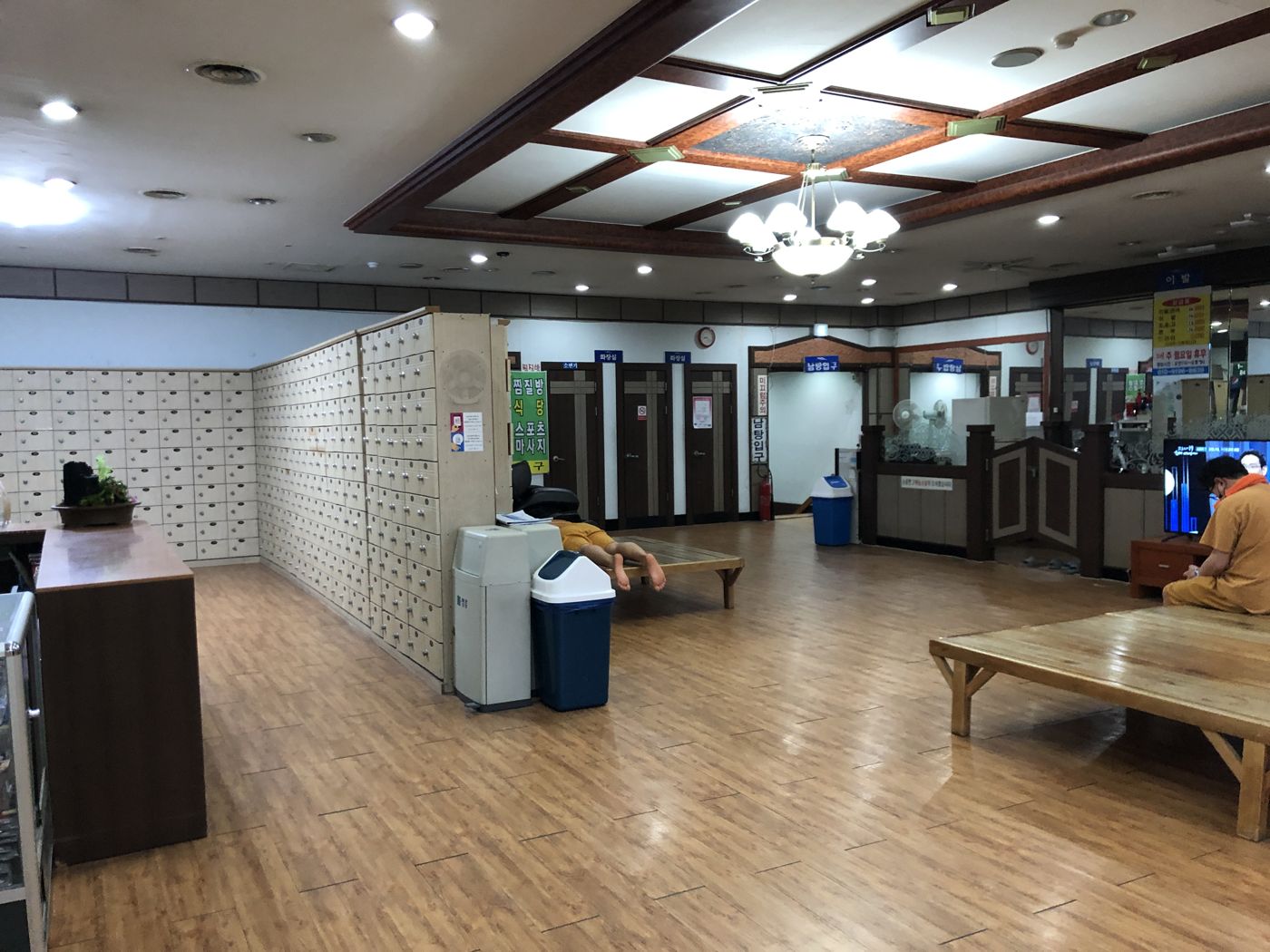 Photo: Choikwangmo9, CC0, via Wikimedia Commons
A jjimjilbang is a bathhouse and sauna complex where people sweat, soak, eat, nap and visit with relatives, often for hours. Seoul Tourism describes it as a 24-hour venue where Koreans of all ages bathe, sweat, sleep, eat and socialize. It sits alongside the older neighborhood mogyoktang: the gender-separated bathing floor is similar, but a jjimjilbang adds shared, co-ed lounge areas where everyone wears the provided uniform.
Origins
Heated rooms have deep roots: a Korean Culture and Information Service feature notes that in the Joseon period the state built red-clay sauna rooms for the poor. The modern, all-day format is more recent. The same feature says rules eased in the late 1990s to permit 24-hour operation, which suits a venue where people stay overnight.
The rooms
A typical complex has several heated rooms, each visited for a short spell. Seoul Tourism lists a hwangto-bang (yellow clay room) at about 50°C, a salt room at about 60°C, and an ice room at about 5°C for cooling off between hot rooms; it also names jade, charcoal, oxygen and pyramid rooms. Visits to each room usually last about 15 to 30 minutes. Health claims sometimes made for clay or salt rooms are marketing language rather than established findings.
What people eat
The snack counter is part of the experience. Seoul Tourism lists sikhye, the chilled sweet rice drink, along with hard-boiled eggs and the smoked-flavored maekbanseok eggs (맥반석 계란) that are cooked in the sauna's heat. Shaved-ice dessert (patbingsu), instant noodles, beer and soju also appear. For more on the rice behind the drink, see rice in Korean culture.
A family and social space
The jjimjilbang is presented as a multigenerational place where people relax, eat and sleep together. Some complexes include children's play areas, and an overnight stay is a budget option for travelers, according to Seoul Tourism.
Heat safety
Hot rooms are not for everyone. The guidance below is general and is not medical advice.
- Hydration: Seoul Tourism advises drinking water constantly, limiting each sauna session to 15 to 20 minutes, leaving any room if dizzy, easing into the hottest pool, and avoiding alcohol before using the saunas.
- Heart conditions: The same guide says to skip the saunas if you have a heart condition. Anyone with cardiovascular disease, or taking medication, should check with their own doctor first.
- Pregnancy: The same guide says to skip the saunas while pregnant. A 2022 expert review in the International Journal of Biometeorology notes that obstetric guidance on heat exposure is inconsistent and not well evidence-based, that short exposures may stay within safe temperature limits, and that animal studies link large rises in core temperature, especially early in pregnancy, to harm. The cautious course is to ask a midwife or doctor before going.
A jjimjilbang is best treated as a place to rest, not as a treatment for any condition.