Ingredient
Sorghum
수수
Romanization: susu
Small, round, reddish-brown grains of sorghum, cooked into mixed-grain rice and ground into flour for rice cakes. Its red color gives it a protective meaning: sorghum balls rolled in red bean are a traditional first-birthday food.
Flavor
Earthy, nutty and slightly tannic, with a chewy, springy bite when cooked; glutinous sorghum flour fries into a crisp outside and a stretchy, mochi-like inside.
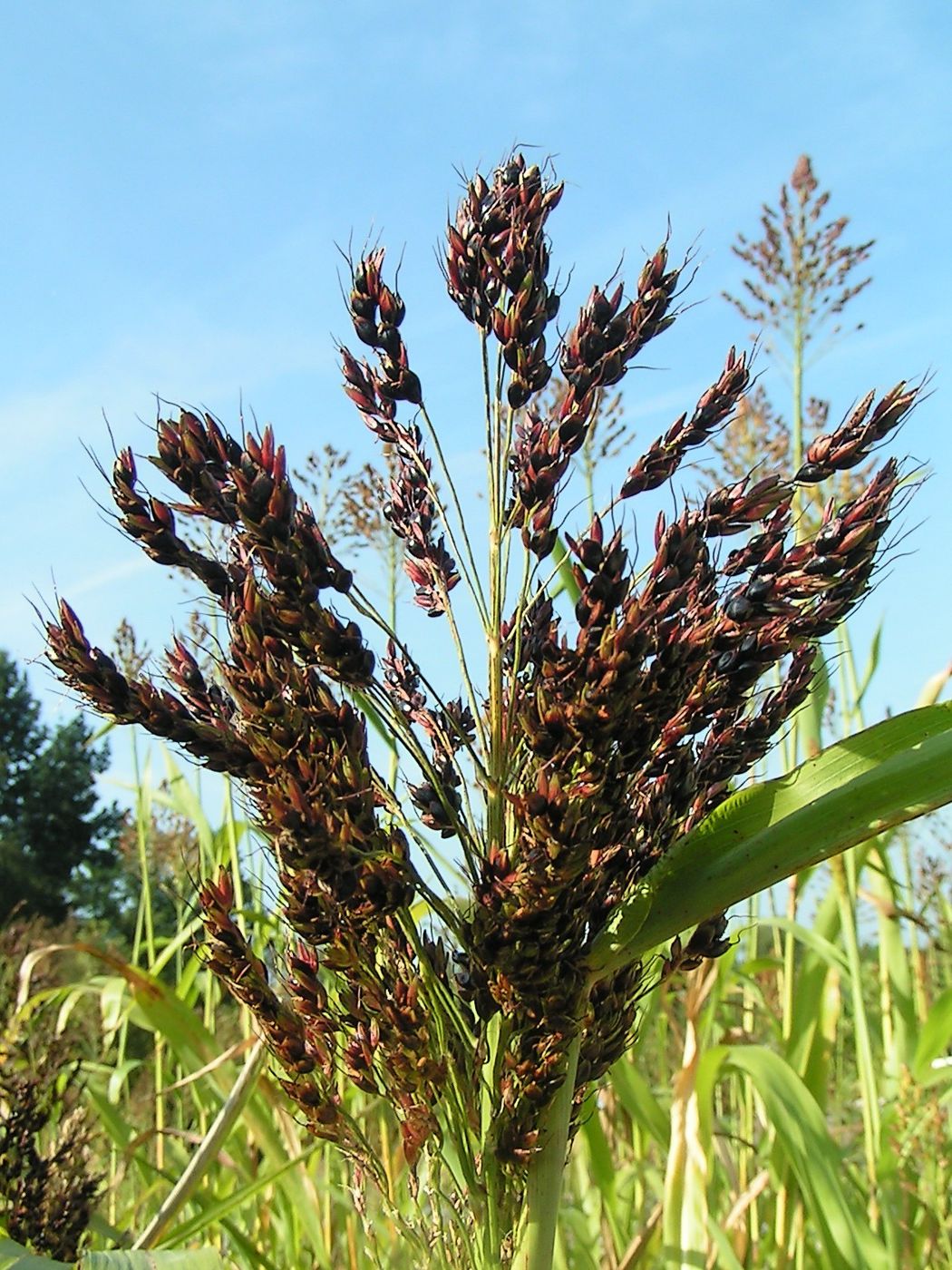 Photo: No machine-readable author provided. Pethan assumed (based on copyright claims)., CC BY-SA 3.0, via Wikimedia Commons
Origin & History
Susu is sorghum, Sorghum bicolor, a tall grass that can reach two meters, written in Chinese characters as goryang (高粱). The plant originated in tropical Africa and spread through India and Asia. Sorghum is reported from the Bronze Age site of Odong in Hoeryong, North Hamgyeong, dating to roughly the sixth to fourth centuries BCE, though the Encyclopedia of Korean Culture treats that find as uncertain and suggests sorghum most likely reached the peninsula by way of China. It was cultivated in small amounts, often interplanted with soybeans after the barley harvest, and the planted area shrank steadily from the late 1960s.
Like rice and millet, sorghum comes in two starch types. Glutinous chalsusu is the kind cooked with rice as susubap and made into tteok; non-glutinous mesusu has mostly gone to animal feed and brewing. Sorghum is noticeably astringent, so cooks soak the grain and pour off the water before grinding or cooking it.
Sorghum's red color is the key to its ritual role. Because red was believed to repel malevolent spirits — an idea rooted in five-elements thought — little balls of glutinous sorghum dough are boiled and rolled in mashed red beans to make susu-pat-danja (also called susu-pattteok). These are set out on the table at a baby's doljanchi, the first-birthday celebration, and by tradition made again on every birthday until the child turns ten and shared with the neighbors. See life ritual foods and pat.
Sorghum flour also goes into susu-bukkumi, a pan-fried winter rice cake. Sorghum and glutinous rice are soaked and ground, made into a dough with hot water, fried into rounds, filled with sweetened red bean, folded into a half-moon and fried again. The Digital Chungju encyclopedia records it as a local food of the Suanbo area and a winter snack and holiday treat.
Nutrition
| Calories | 368 kcal |
|---|---|
| Protein | 10.94 g |
| Fat | 3.17 g |
| Carbohydrates | 72.54 g |
| Fiber | 6.3 g |
| Sodium | 3 mg |
Notable forDietary fiber (6.3 g) · Magnesium (139 mg) · Niacin (2.05 mg)
Values copied from the Korean Food Composition Table (Rural Development Administration / National Institute of Crop Science) for this exact food, per 100 g edible portion. Values are for dry grain; glutinous sorghum is the kind used for rice and tteok. Non-glutinous polished sorghum lists similar figures (374 kcal, 6.4 g fiber). Actual values vary with ingredients, portion size and preparation.
Health Benefits
- A whole-grain fiber source: Per the Korean Food Composition Table, polished glutinous sorghum supplies several times the dietary fiber of polished white rice, along with magnesium and niacin.
- Naturally gluten-free: The Celiac Disease Foundation lists sorghum among naturally gluten-free grains, while cautioning that cross-contact during harvesting and processing is possible; choose products tested below 20 ppm.
- Sweet rice cakes add sugar and fat: Susu-bukkumi is pan-fried in oil and filled with sweetened red bean, and susu-pat-danja is coated in salted red-bean paste, so they are richer than plain sorghum rice.
- Sticky rice-cake caution: Chewy glutinous-grain cakes should be cut small and eaten slowly by young children and older adults.
Informational, not medical advice. Talk to a qualified professional about your own health and diet.
Dishes with Sorghum
Dish guides featuring sorghum are coming soon.