Ingredient
Subak (watermelon)
수박
Romanization: subak
The defining fruit of the Korean summer: big, striped melons with sweet red flesh, cut into wedges after a meal or scooped into chilled fruit punch on the hottest days.
Flavor
Cool, sweet and very juicy, with a crisp, granular flesh that is sweetest at the heart and paler and more cucumber-like toward the rind.
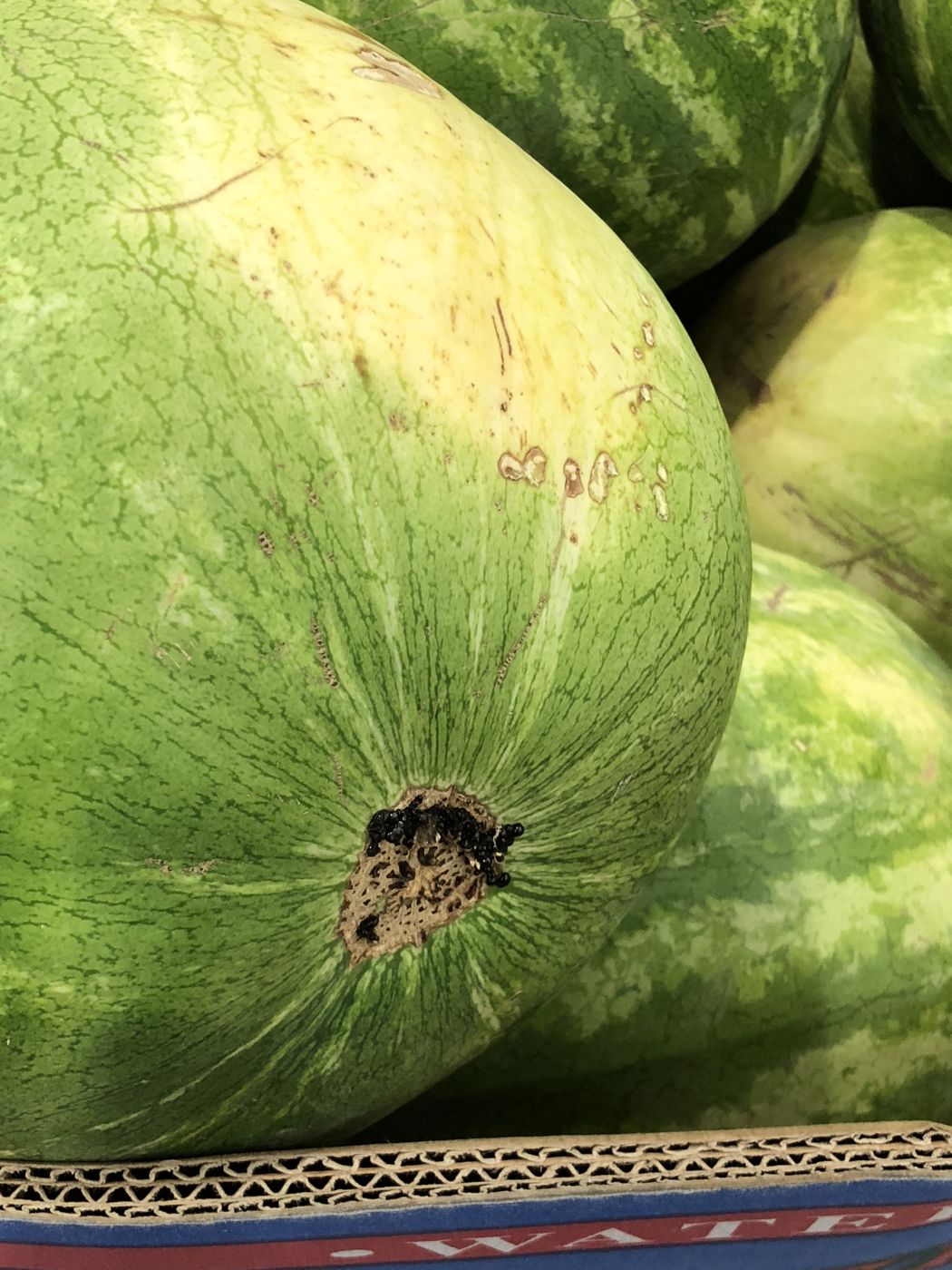 Photo: FASTILY, CC BY-SA 4.0, via Wikimedia Commons
Origin & History
Subak is the watermelon, a trailing annual vine of the gourd family; older Sino-Korean names are seogwa, the western melon, and sugwa, the water melon. The Encyclopedia of Korean Culture gives its likely homeland as tropical Africa and notes that it was grown in ancient Egypt and reached China around the year 900.
Korea probably received it during the Goryeo period, though the date is an inference rather than a record. The Joseon food commentary Domun daejak tells a pointed story: watermelon was first planted at Gaeseong by Hong Dagu, a Goryeo man who went over to the Mongols and returned to harass his countrymen. The encyclopedia repeats the tale but treats the Goryeo introduction itself only as an estimate, and its entry on Mudeungsan watermelon likewise says seeds were probably brought from Yuan China in late Goryeo.
By the Joseon period watermelon was grown widely, and some local strains became famous. Mudeungsan watermelon, an old native type raised on the slopes above Gwangju, was among the tribute goods sent to the palace in King Yeongjo's reign. Grown on well-drained hillsides above 300 meters and thinned to one fruit per vine, it is harvested from late August and can exceed 30 kilograms. See jinsang tribute foods.
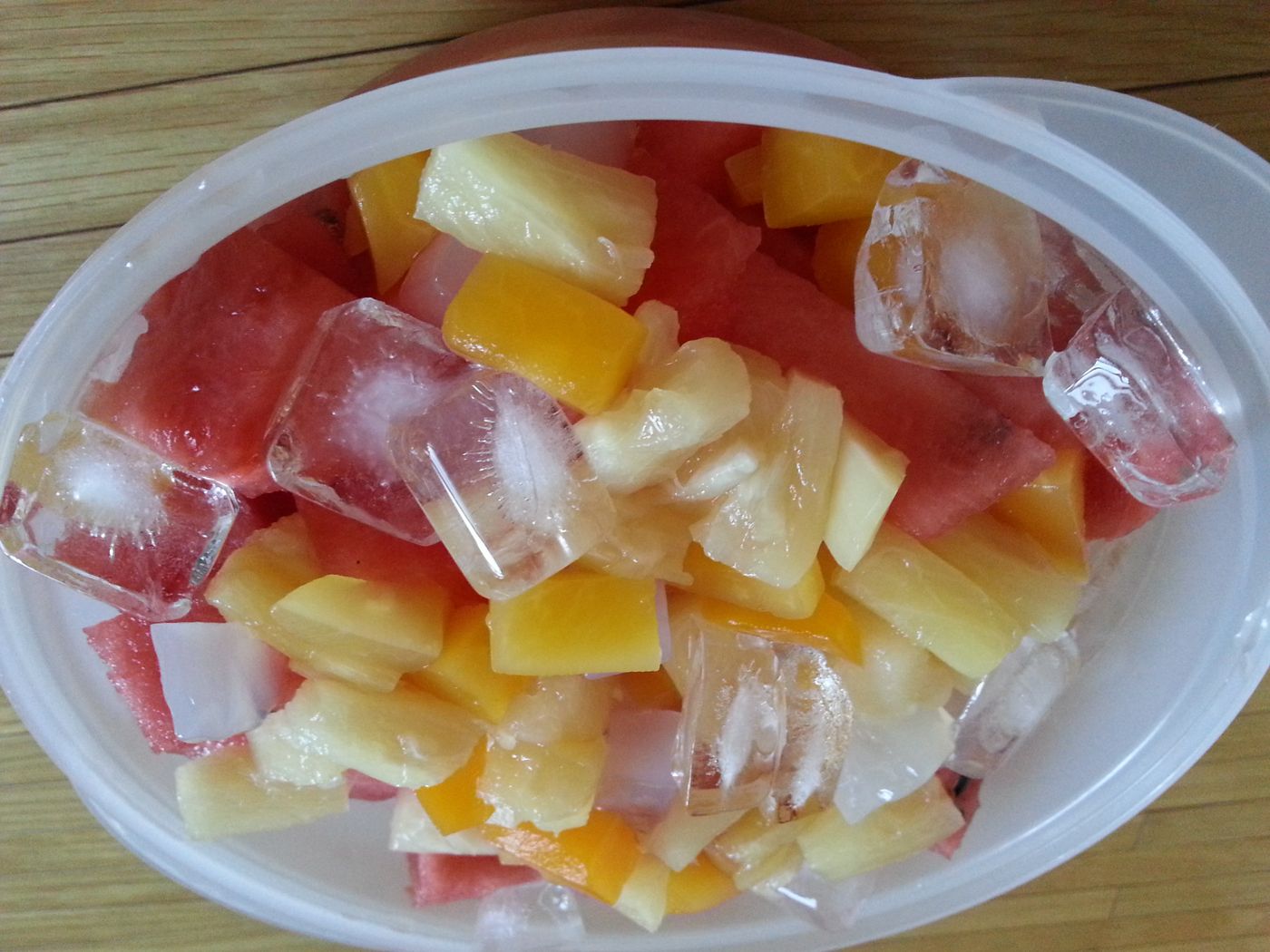
Today watermelons are grown mostly as seedlings started under cover and are sold from late spring through summer. Koreans eat them in chilled wedges or turn them into subak-hwachae, a cold watermelon punch; the encyclopedia also records the traditional view of watermelon as cooling, thirst-quenching and diuretic. See boknal and summer foods.
Nutrition
| Calories | 31 kcal |
|---|---|
| Protein | 0.79 g |
| Fat | 0.05 g |
| Carbohydrates | 7.83 g |
| Fiber | 0.2 g |
| Sodium | 0 mg |
Notable forVitamin A (as beta-carotene) · Potassium
Korean Food Composition Table entry "Watermelon (Subak), Red pulp, Raw" (수박, 적육질, 생것): 91.1 g water, 5.06 g total sugars, 853 µg beta-carotene (71 µg RAE vitamin A) and 109 mg potassium per 100 g. Vitamin C is not reported for this entry. Actual values vary with ingredients, portion size and preparation.
Health Benefits
- Mostly water: Per the Korean Food Composition Table, red watermelon flesh is over 90 percent water and low in calories, with some beta-carotene and potassium.
- Traditional cooling food: Korean tradition counts watermelon among foods that relieve summer heat and thirst. That is a cultural belief rather than a measured effect, though its high water content is real.
- Keep cut melon cold: The FDA advises buying pre-cut melon only if it is refrigerated or on ice, scrubbing the rind before cutting so bacteria are not carried into the flesh, and refrigerating cut fruit.
- Pollen-food allergy: The American College of Allergy, Asthma and Immunology lists melons among foods linked to grass- and ragweed-pollen food allergy syndrome.
Informational, not medical advice. Talk to a qualified professional about your own health and diet.
Sources
- 01수박 — Encyclopedia of Korean Culture
- 02무등산수박 — Encyclopedia of Korean Culture
- 03Korean Food Composition Table: Watermelon (Subak), Red pulp, Raw — National Institute of Agricultural Sciences
- 04Selecting and Serving Produce Safely — U.S. Food and Drug Administration
- 05Pollen Food Allergy Syndrome — American College of Allergy, Asthma and Immunology