Ingredient
Neulgeun-hobak (mature Korean pumpkin)
늙은호박
Romanization: neulgeun-hobak
The "old pumpkin": a Korean squash left on the vine until its rind turns hard and tawny and its flesh deep orange. Stored through winter, it is the pumpkin behind velvety hobak-juk porridge.
Flavor
Mildly sweet and nutty, with a soft, earthy squash flavor that deepens and sweetens with long cooking. The dense flesh cooks down to a silky, almost creamy texture.
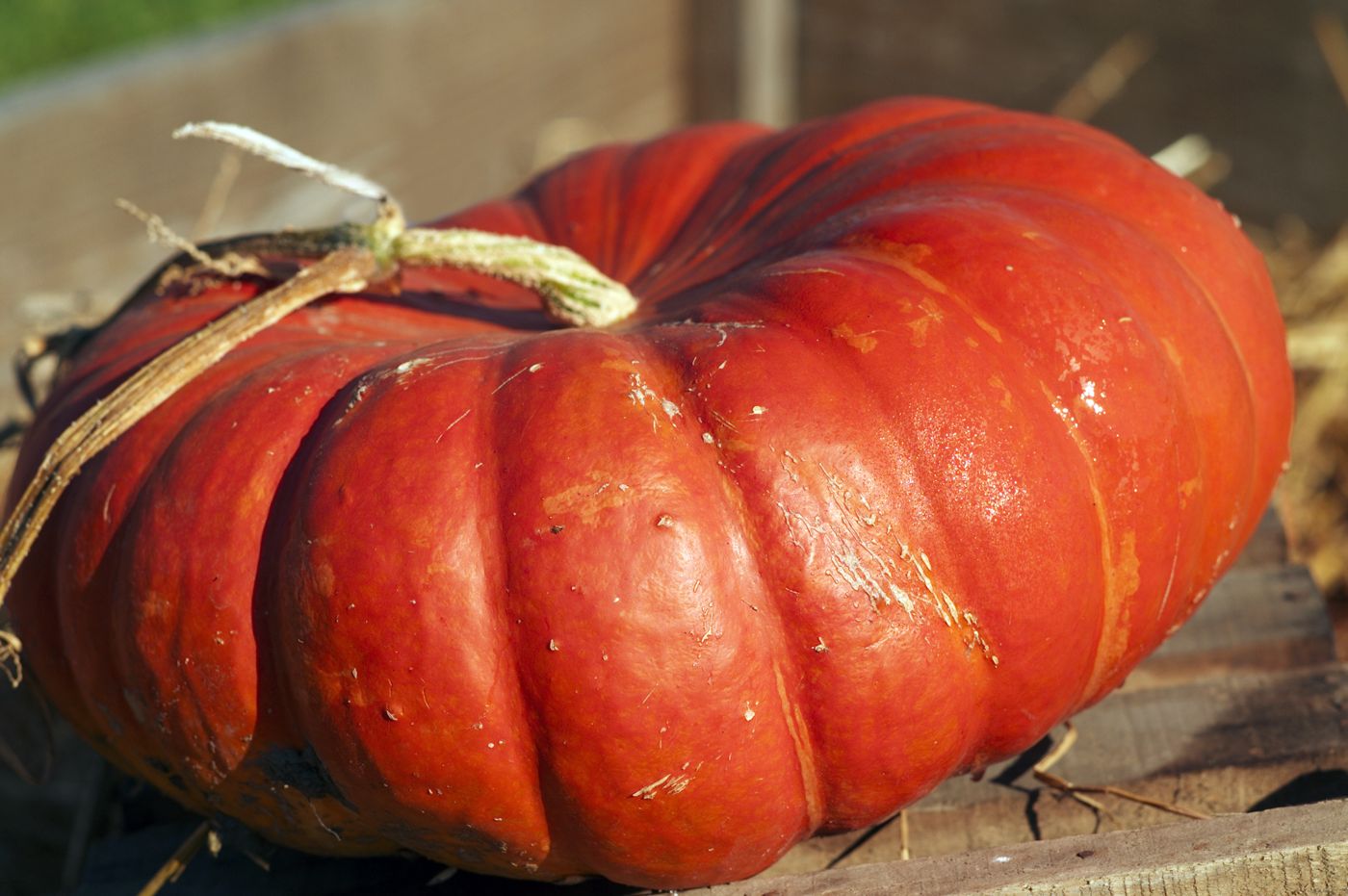 Photo: INRA DIST from France, CC BY 2.0, via Wikimedia Commons
Origin & History
Hobak is the Korean name for pumpkins and squashes, and the Encyclopedia of Korean Culture gives the main Korean type as Cucurbita moschata. Korean cooks distinguish the same Asian-type plant by its stage of growth: picked young and green it is aehobak, the tender summer squash of namul and hobak-jeon; left to ripen until late autumn it becomes neulgeun-hobak (literally "old pumpkin"), also called cheongdung-hobak, a large, ribbed fruit with a hard tan-to-orange rind. The sweet danhobak (kabocha) and zucchini belong to the Western and pepo groups and are treated as separate vegetables.
Pumpkins are American in origin and arrived in Korea comparatively late. Korean reference works date their spread to after the Japanese invasions of the 1590s, when they came in via Japan and China. Because Buddhist monks were early growers, the vegetable was nicknamed seungso, "monks' greens." By the late Joseon period it had become an everyday food of ordinary households, and its starchy, filling flesh made it valuable in lean times.
A mature pumpkin keeps for months. Households picked them in late autumn and stored them on shelves in a room that was neither cold nor hot, so that firm, unblemished fruit could be used through winter, when fresh vegetables were scarce. Deep yellow or orange flesh was prized as the sweetest.
The classic use is hobak-juk: the flesh is boiled soft, mashed or sieved and simmered with glutinous rice flour, often with red beans or other beans, then lightly salted and sweetened. Related dishes include the thicker hobak-beombeok, studded with beans, chestnuts and rice-cake dumplings; hobak-puldae-juk, a Gyeongsangnam-do porridge cooked with red beans and a little rice; rice cakes made with the flesh; and pumpkin dried in strips for winter. Folk tradition also gives boiled pumpkin to new mothers, a practice described further below.
Nutrition
| Calories | 38 kcal |
|---|---|
| Protein | 0.88 g |
| Fat | 0.17 g |
| Carbohydrates | 8.49 g |
| Fiber | 1.8 g |
| Sodium | 1 mg |
Notable forVitamin A (as beta-carotene) · Potassium · Folate
Korean Food Composition Table entry "Pumpkin, Ripe, Raw" (호박, 늙은호박, 생것): also 853 µg beta-carotene (71 µg RAE vitamin A), 336 mg potassium and 44 µg folate per 100 g. Actual values vary with ingredients, portion size and preparation.
Health Benefits
- Beta-carotene: Mature pumpkin is a source of beta-carotene, which the body converts to vitamin A, and Korean food references highlight this as its main nutritional value. It also provides potassium and fiber and is low in calories.
- Gentle food: Pumpkin porridge is traditionally given to people recovering from illness, the elderly and small children because it is soft and easy to eat.
- Traditional beliefs: Folk tradition holds that boiled pumpkin helps new mothers and others shed swelling. This is a traditional belief, not an established medical effect.
- Sugar in porridge: Pumpkin itself is low in sugar, but hobak-juk is often made with glutinous rice flour and sweetened with sugar, so it is richer than the raw vegetable.
Informational, not medical advice. Talk to a qualified professional about your own health and diet.