Ingredient
Eel (jangeo)
장어
Romanization: jangeo
Jangeo covers several long, snake-like fish: the freshwater eel grilled in Gochang and along Korean rivers, and the sea-going conger and pike conger of the south coast. All are summer stamina foods.
Flavor
Freshwater eel is rich, soft and fatty, caramelizing under a sweet soy or chili glaze; conger is leaner and firmer, with a clean, sweet taste, while pike conger is delicate and is usually sliced thin.
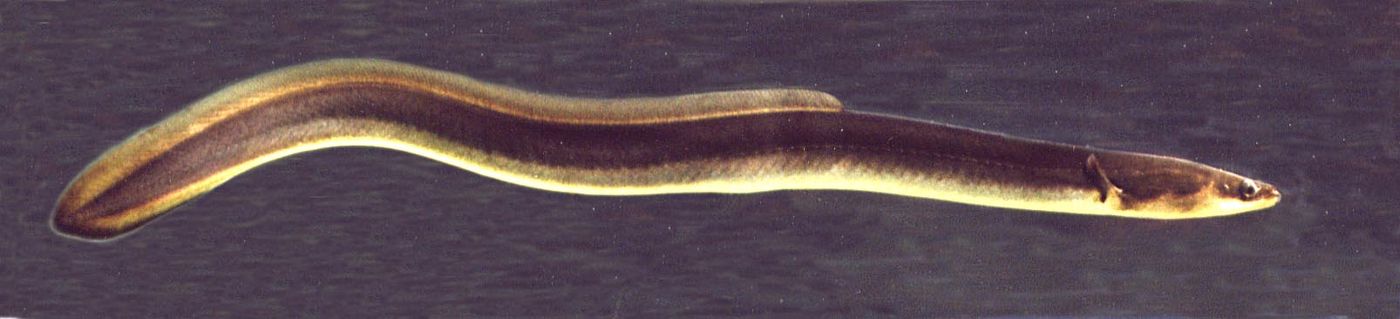 Photo: Unknown author, CC BY-SA 3.0, via Wikimedia Commons
Origin & History
Jangeo ("long fish") is an umbrella word. The Encyclopedia of Korean Folk Culture separates the true eels of the order Anguilliformes from the jawless hagfish and lampreys that also carry the name. Among the true eels, three matter most in the kitchen. Baemjangeo (Anguilla japonica), the Japanese freshwater eel, is the only one that grows up in rivers and migrates to the open Pacific to spawn and die; its larvae drift back and enter estuaries as transparent glass eels. Glass eels are caught in river mouths and grown out on eel farms; Korea began farming it in 1966 at Noksan in Gimhae, according to the Encyclopedia of Korean Culture. Butjangeo, the whitespotted conger, is a sea fish with a line of white dots along its side, caught mostly off Tongyeong, Geoje and the south-coast islands from autumn to spring. Gaetjangeo, the daggertooth pike conger, has long jaws and sharp canine teeth and is caught on longlines in summer around Yeosu, Goheung and Goseong.
Korean attitudes to the sea eels changed within living memory. Jeong Yak-jeon's Jasan eobo praised the freshwater eel as sweet and good for the body, recommending eel porridge for chronic diarrhea, but late-19th and early-20th-century fisheries surveys record that coastal Koreans rarely bothered to catch conger and the folk encyclopedia traces conger's rise as a food to that Japanese demand; Tongyeong's siraegi-guk soup is said to have begun as a broth of conger heads and bones. Today eel is a classic summer restorative: grilled, simmered into jangeo-tang, or, for pike conger, sliced and swished through hot broth as Yeosu's jangeo-dechim.
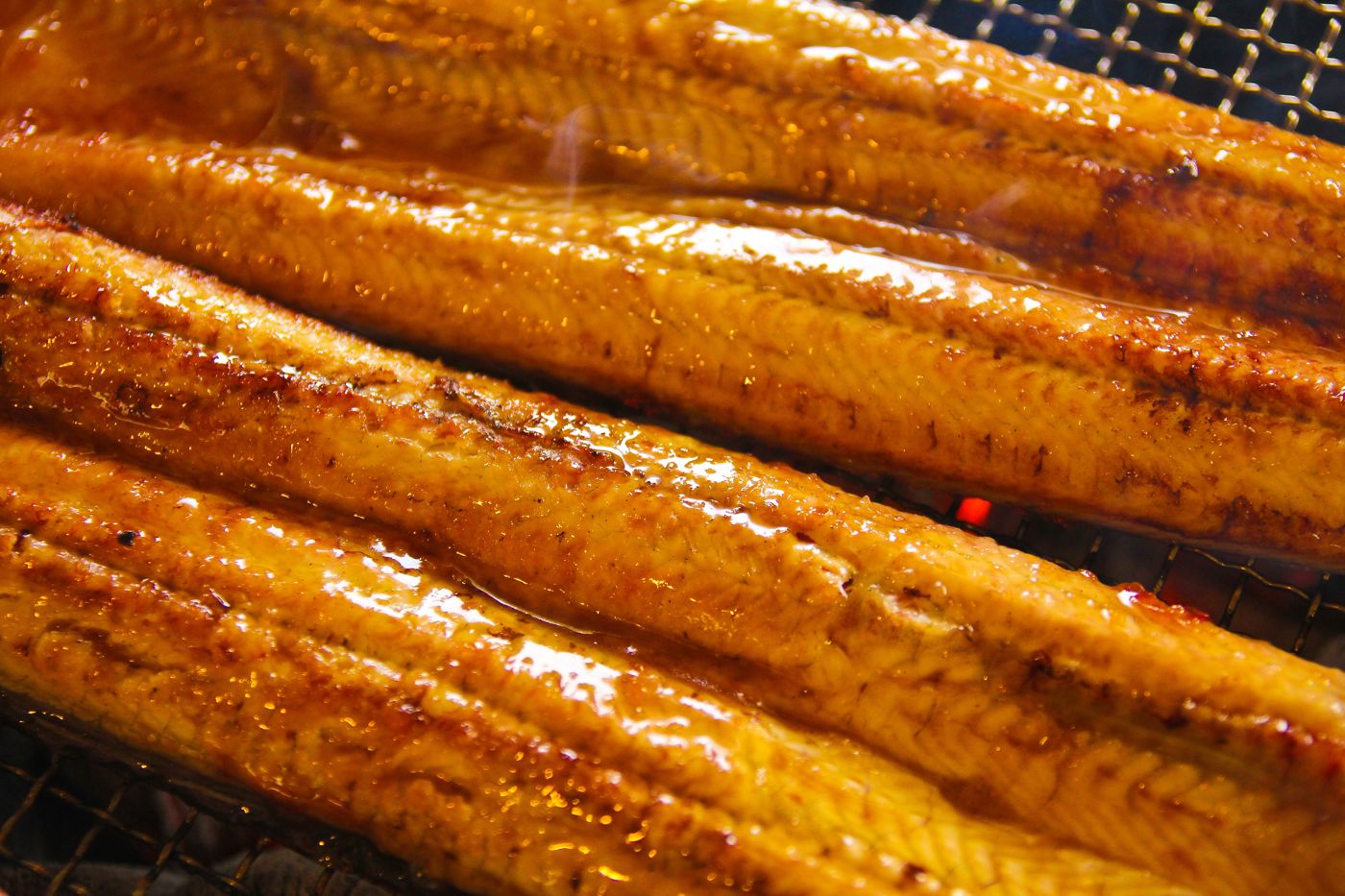
The most famous name is Gochang's pungcheon-jangeo. A 2015 Cultural Heritage Administration magazine article explains that pungcheon is not a place but the brackish stretch of the Incheon River near Seonunsan, where river water meets the tides of Gomso Bay. Wild eels from there were long counted with sparrow-tongue tea and bokbunja wine among the specialties of the Seonunsa area, and grilling restaurants line the road to the temple. Truly wild pungcheon eels are now almost impossible to find; local farms raise eels in fresh water and then finish them in tidal conditions for several months. They are usually grilled over charcoal, glazed repeatedly with a chili-paste sauce.
Nutrition
| Calories | 223 kcal |
|---|---|
| Protein | 14.4 g |
| Fat | 17.1 g |
| Carbohydrates | 0.3 g |
| Fiber | 0 g |
| Sodium | 65 mg |
Notable forVitamin A (1,050 µg) · Thiamin (0.66 mg) · Calcium (157 mg)
Values copied from the Korean Food Composition Table (Rural Development Administration / National Institute of Crop Science) for this exact food, per 100 g edible portion. Blank fields in the table are shown as not reported. Sea eels are much leaner: raw whitespotted conger (장어, 붕장어, 생것) has 135 kcal, 17.4 g protein, 6.4 g fat and 360 µg vitamin A per 100 g. Actual values vary with ingredients, portion size and preparation.
Health Benefits
- Rich in vitamin A: The Korean table lists about 1,050 µg of vitamin A per 100 g of raw freshwater eel, a very high amount, along with thiamin.
- A fatty fish: Freshwater eel carries about 17 g of fat per 100 g, nearly three times as much as conger; its reputation as a restorative rests partly on that richness.
- Traditional claims: Eel is traditionally eaten for stamina in the hottest weeks of summer; claims that it cures particular illnesses are folk belief.
- Fish allergy and mercury: Fish is one of the nine major food allergens under U.S. law. The FDA/EPA fish-advice chart does not rate eel, so it offers no mercury guidance for it.
Informational, not medical advice. Talk to a qualified professional about your own health and diet.
Sources
- 01뱀장어 (Japanese eel) — Encyclopedia of Korean Culture
- 02풍천장어 (Pungcheon eel) — Encyclopedia of Korean Culture
- 03장어 (Eels) — Encyclopedia of Korean Folk Culture, National Folk Museum of Korea
- 04자연과 습성이 만들어낸 걸작의 진미 '고창 풍천장어' (Gochang pungcheon eel) — Cultural Heritage Administration monthly (2015)
- 05Korean Food Composition Table — Japanese eel, Raw
- 06Food Allergies — U.S. Food and Drug Administration