Ingredient
Gondre (Korean thistle)
곤드레
Romanization: gondeure
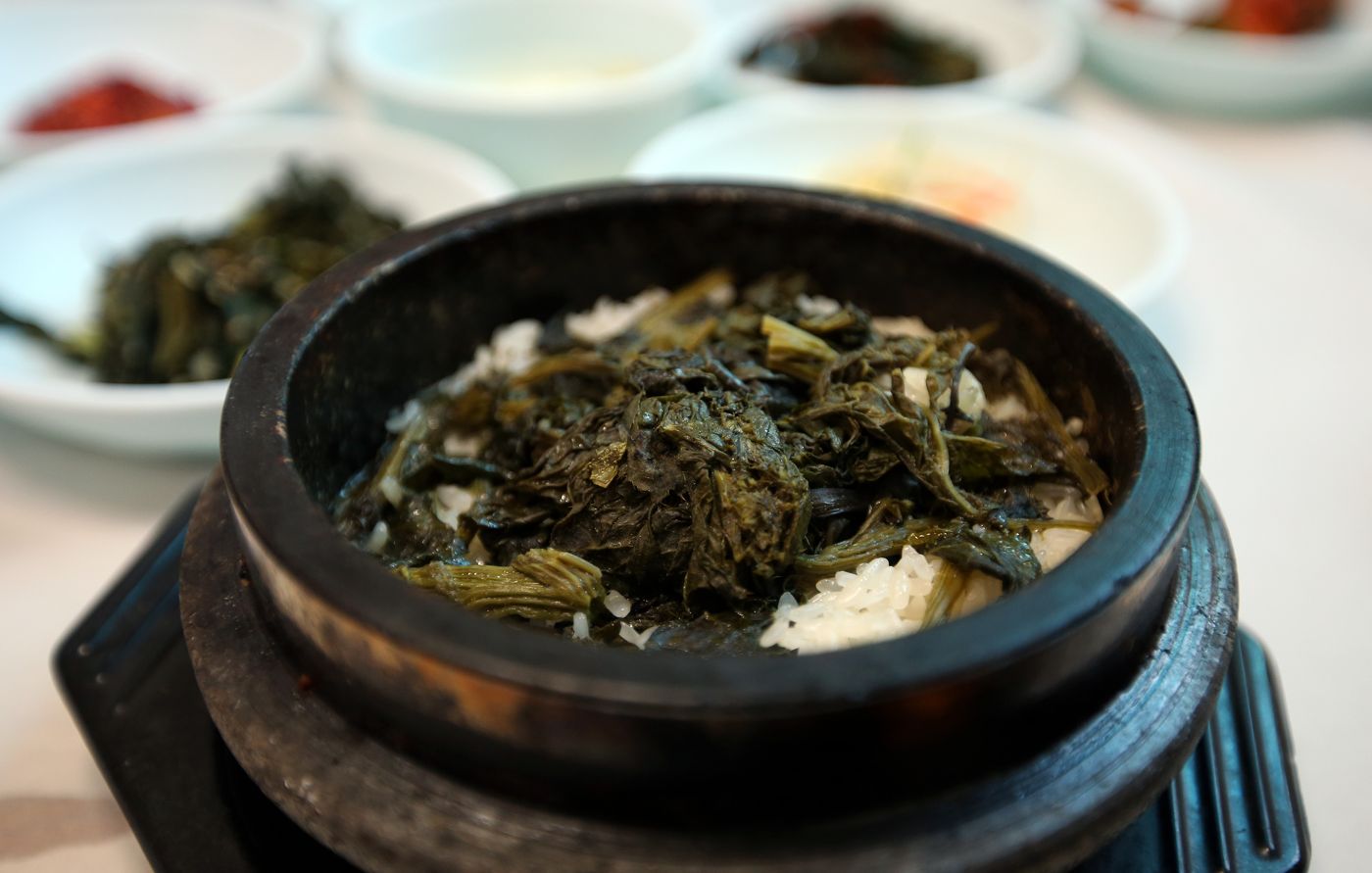
The soft, spineless leaves of a mountain thistle, blanched, dried and simmered back to tenderness. Best known in gondre-bap, rice steamed with seasoned thistle and mixed with soy-sauce dressing, the signature dish of Jeongseon in Gangwon Province.
Flavor
Mild, soft and faintly nutty, with a gentle green flavor once dried and rehydrated. It is milder than many wild greens and absorbs oil and seasoning beautifully.
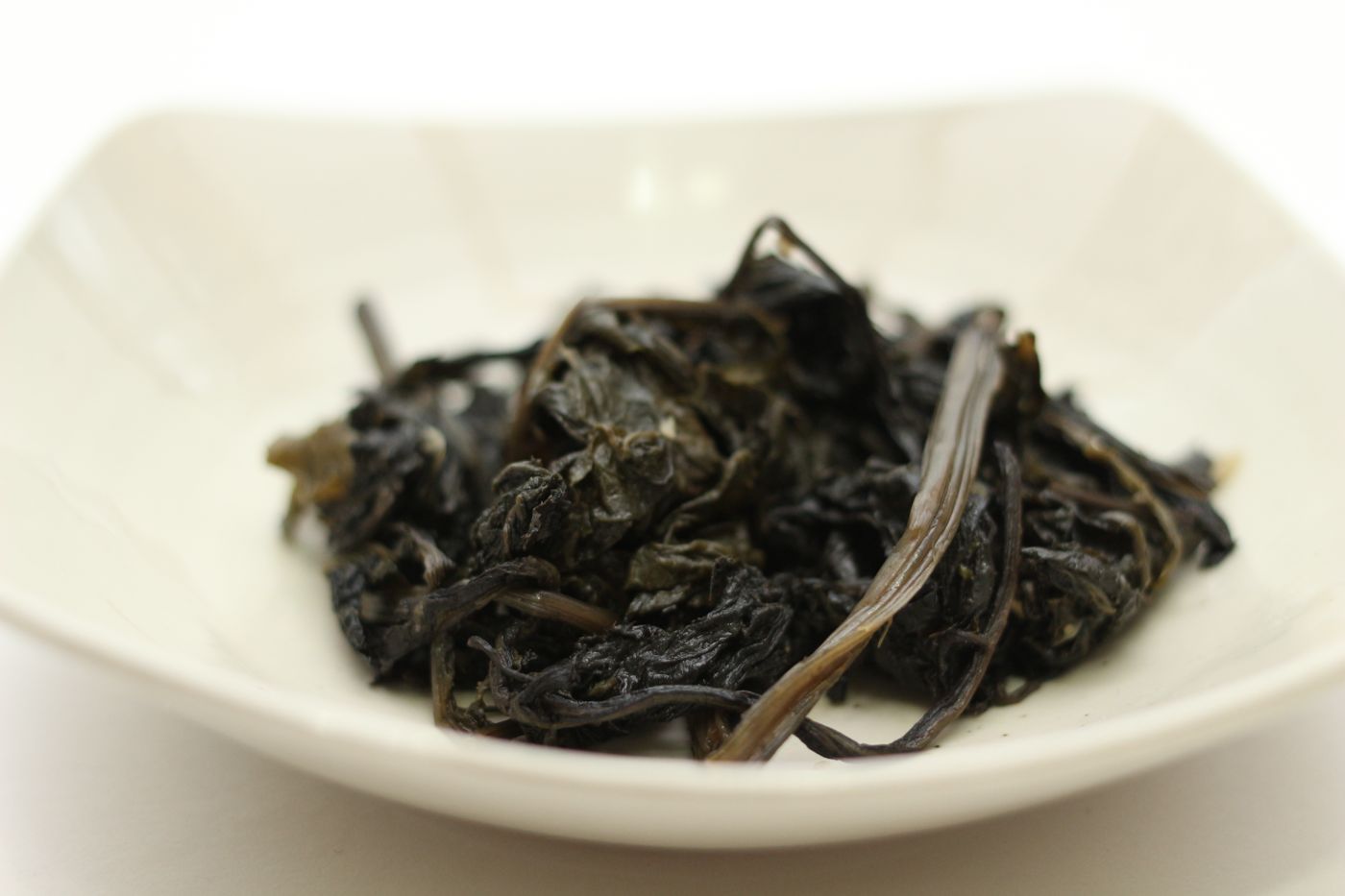 Photo: Hyeon-Jeong Suk, CC BY 2.0, via Wikimedia Commons
Origin & History
Gondre is the Korean name for Cirsium setidens, a perennial thistle of the daisy family (Asteraceae) also called goryeo-eonggeongkwi, "Goryeo thistle." Its tender leaves are eaten as a wild green. It grows wild in the high mountains of Korea, and the steep, high country around Jeongseon in Gangwon Province, with many peaks above 1,000 meters, is especially known for its harvest.
For mountain households gondre was a famine food, gathered in the lean weeks of spring when stored grain ran low and stretched by cooking it with a small amount of rice or grain. That humble dish, gondre-bap, has since become a regional specialty: restaurants across Gangwon serve it, and bundles of dried gondre are among the most popular purchases at the Jeongseon Five-Day Market, famous for its mountain greens.
The leaves are picked in spring, blanched, and thoroughly dried for storage. Before use, dried gondre is soaked, often overnight, then simmered and rinsed well to soften it and remove astringency.
For gondre-bap, the rehydrated greens are tossed with perilla or sesame oil and a little salt or soy sauce, laid over rice in the pot and steamed together. The rice is served with a soy-sauce dressing of green onion, garlic and sesame, and sometimes with doenjang or gochujang. Gondre is also seasoned as namul or simmered in doenjang soups.
Nutrition
| Calories | 290 kcal |
|---|---|
| Protein | 28.72 g |
| Fat | 5.01 g |
| Carbohydrates | 49.84 g |
| Fiber | 35.9 g |
| Sodium | 4 mg |
Notable forDietary fiber · Vitamin K · Vitamin A · Calcium
Korean Food Composition Table entry "Korean thistle (Gondeure), Dried" (곤드레, 말린것): 8.9 g water, 4,834.5 µg vitamin K, 3,948 µg RAE vitamin A, 1,718 mg calcium, 12.84 mg iron and 1,966 mg potassium per 100 g. Dried gondre absorbs a great deal of water when soaked and simmered, so a cooked serving contains far less per 100 g. For comparison, raw native gondre leaf (곤드레, 재래종, 잎, 생것) provides 28 kcal, 3.7 g fiber and 267 µg vitamin K per 100 g. Actual values vary with ingredients, portion size and preparation.
Health Benefits
- Fiber and minerals: Dried gondre is dense in fiber, calcium and beta-carotene by weight (Korean Food Composition Table); rehydration dilutes these considerably.
- Whole-meal tradition: Gondre-bap stretches a modest amount of rice with greens, adding fiber and volume to the bowl.
- Vitamin K and warfarin: Like other dried greens, gondre is extremely high in vitamin K; people taking warfarin should keep their intake consistent and consult their doctor before changing their diet.
- Traditional beliefs: Folk uses of thistle for bleeding or inflammation are traditional and not established effects of eating gondre.
- Sodium caveat: The greens themselves are low in sodium, but the soy-sauce dressing served with gondre-bap adds salt; use it sparingly.
Informational, not medical advice. Talk to a qualified professional about your own health and diet.
Sources
- 01곤드레밥 — 디지털강릉문화대전 (Encyclopedia of Korean Local Culture)
- 02Jeongseon County: from coal to tourism — Korea.net
- 03Thistle Rice (곤드레나물밥 / Gondeurenamulbap) — VISITKOREA
- 04Korean Food Composition Table: Korean thistle (Gondeure), Dried — National Institute of Agricultural Sciences
- 05Korean Food Composition Table: Korean thistle, Native, Leaf, Raw — National Institute of Agricultural Sciences
- 06Warfarin — MedlinePlus Drug Information