Ingredient
Deodeok (bonnet bellflower root)
더덕
Romanization: deodeok
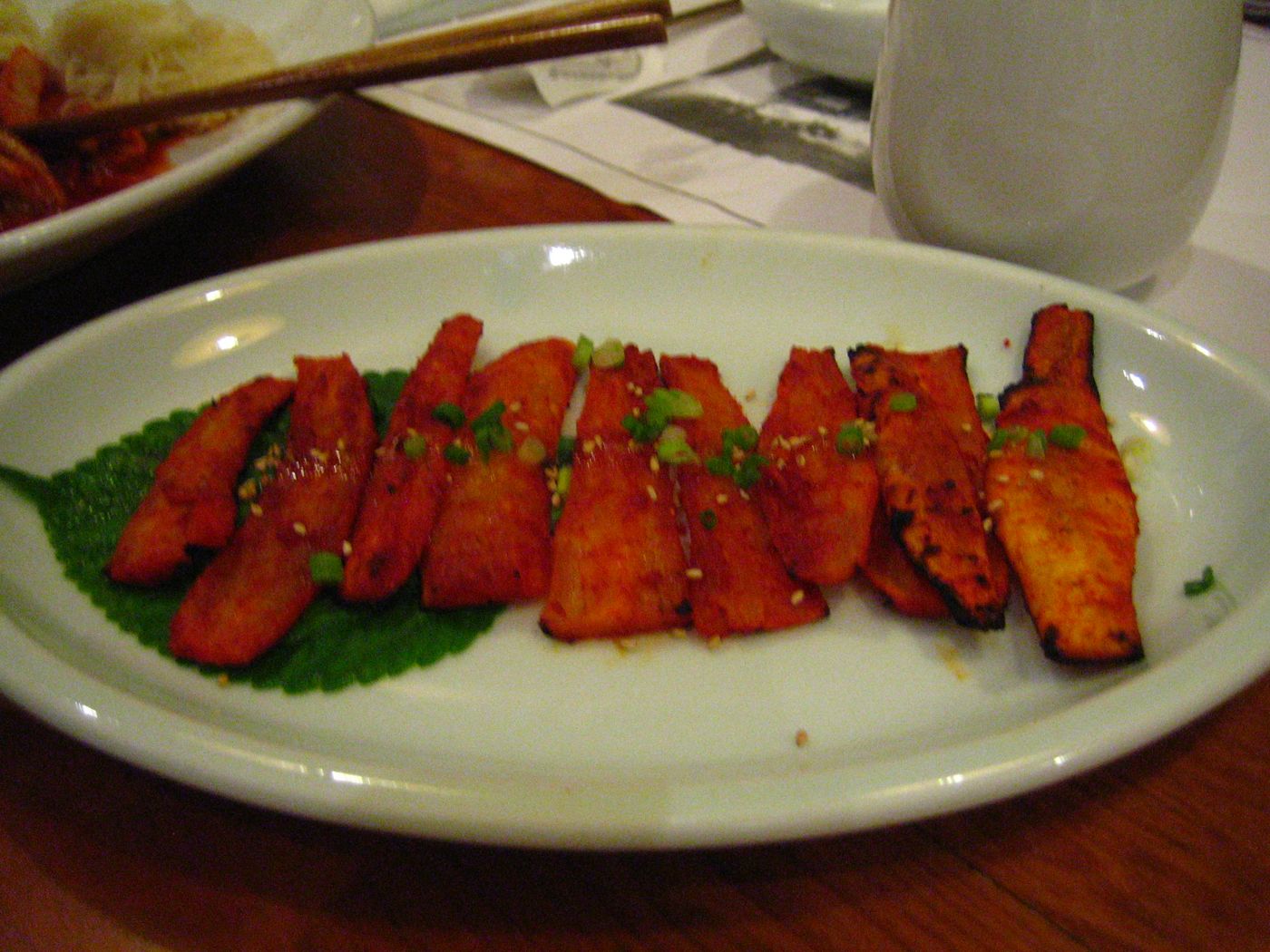
A gnarled, milky mountain root with a bold, resinous aroma. Pounded flat, brushed with a seasoned glaze and grilled as deodeok-gui, or shredded raw for deodeok-saengchae, it is one of the most savored mountain roots.
Flavor
Earthy, piney and slightly bitter, with a perfumed, almost ginseng-like aroma. The flesh is fibrous and chewy, and flattened and grilled it becomes meaty and satisfying.
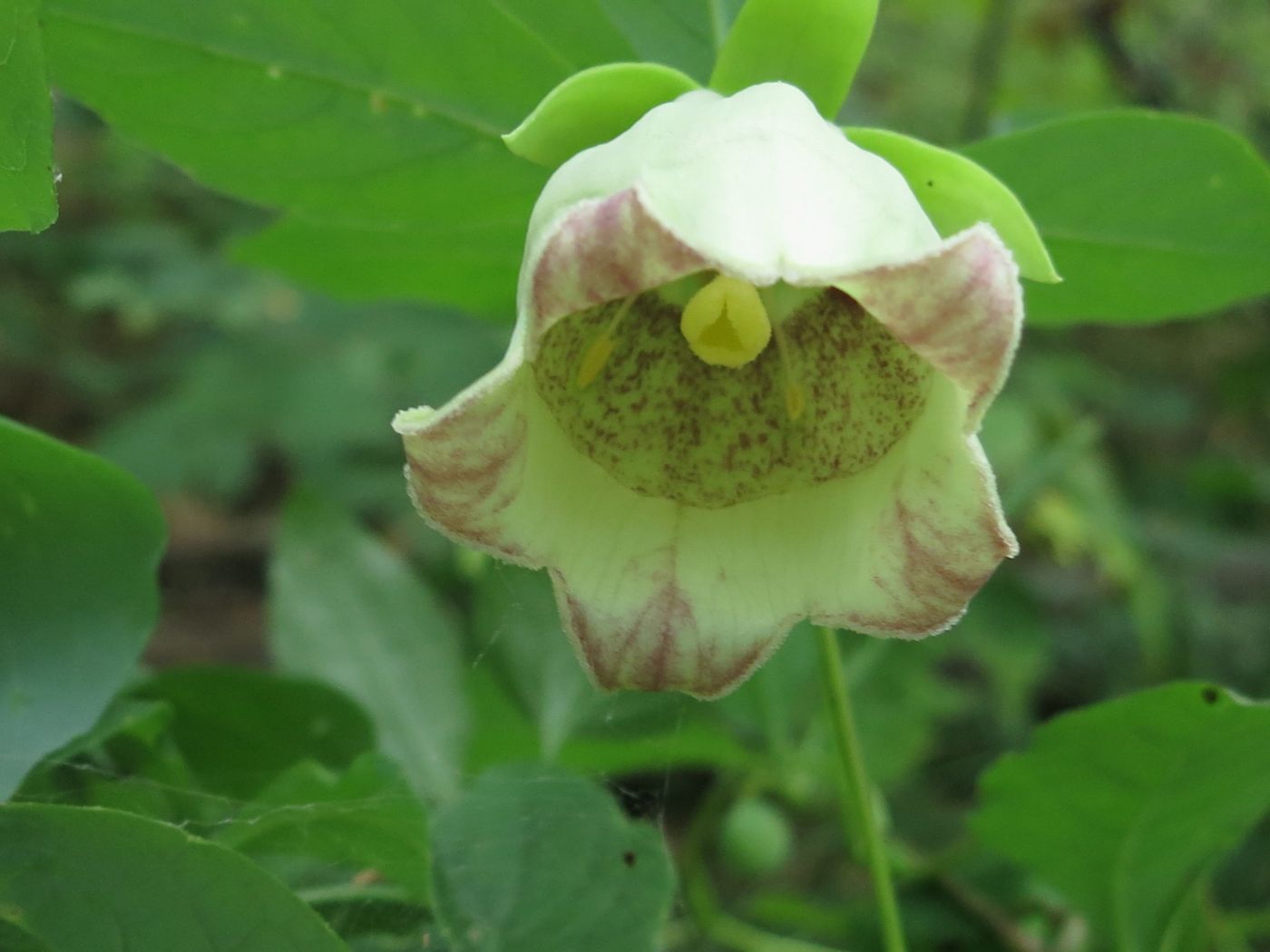 Photo: Repina Tatyana, CC BY 4.0, via Wikimedia Commons
Origin & History
Deodeok is the root of Codonopsis lanceolata, a twining perennial vine of the bellflower family (Campanulaceae), a relative of doraji. The vine climbs to about two meters, bleeds white sap when cut and bears nodding, bell-shaped purple flowers in late summer and autumn. Its thick, wrinkled root resembles those of doraji and ginseng. It grows wild almost everywhere in Korea, from high mountain slopes to riverbanks and foothills. The Sino-Korean name is sasam.
Deodeok has been a Korean food for a long time. The fifteenth-century medical compilations Hyangyak chaechwi wollyeong and Hyangyak jipseongbang write it with characters read as gadeok, an idu transcription of the native word. In the twelfth century the Song envoy Xu Jing, describing Goryeo in Gaoli tujing, noted that deodeok appeared daily among the vegetables served by officials, large, tender and tasty, and remarked that Koreans seemed to eat it as food rather than as medicine, as was done in China. By the eighteenth century Jeungbo sallim gyeongje gave instructions for transplanting it in the second lunar month, suggesting that wild roots were no longer enough and it was being cultivated.
Young leaves are eaten blanched as namul or raw in wraps, but the root is the prize. It is pickled in gochujang as jangajji, shredded raw for salad, candied as jeonggwa, steeped into liquor and, most famously, made into deodeok-gui: the peeled root is sliced, beaten flat with the back of a knife, soaked in cold water to soften its bitterness, rubbed with sesame oil and grilled while being brushed with a seasoned sauce.
In Korean folk and herbal medicine deodeok was grouped with ginseng among the "five sam" roots and credited with tonic properties; it contains saponins, a family of compounds also found in ginseng. These remain traditional associations rather than established effects.
Nutrition
| Calories | 80 kcal |
|---|---|
| Protein | 2.28 g |
| Fat | 0.76 g |
| Carbohydrates | 17.58 g |
| Fiber | 3.7 g |
| Sodium | 0 mg |
Notable forDietary fiber · Potassium · Manganese
Korean Food Composition Table entry "Bonnet bellflower (Deodeok), Root, Raw" (더덕, 뿌리, 생것): also 226 mg potassium, 0.43 mg manganese and 4.72 mg vitamin C per 100 g; sodium is reported as 0. Values are for the peeled root (24% refuse). Actual values vary with ingredients, portion size and preparation.
Health Benefits
- Fiber-rich root: Per the Korean Food Composition Table, raw deodeok provides about 80 kcal and 3.7 g of fiber per 100 g, with some potassium and manganese.
- Saponins and tradition: Deodeok contains saponins and has long been regarded in Korean folk medicine as a tonic for the lungs and stomach; research is limited and these remain traditional beliefs.
- Cooking method matters: Grilled deodeok-gui is brushed with gochujang and sugar, adding sodium and sugar; the plain root is naturally low in sodium.
- Low in vitamin K: Unlike leafy greens, the root contains essentially no vitamin K (Korean Food Composition Table).
Informational, not medical advice. Talk to a qualified professional about your own health and diet.