Ingredient
Songi-beoseot (pine mushroom)
송이버섯
Romanization: songi-beoseot
Korea's most prized wild mushroom: a thick-stemmed, brown-capped autumn mushroom that grows only among the roots of living red pines. Its piney, spicy aroma is so valued that it is sold by grade at auction and eaten simply.
Flavor
Intensely fragrant, with a resinous pine-forest, cinnamon-like aroma and a firm, crisp, almost meaty flesh that squeaks between the teeth. The flavor itself is mild; the scent is the point.
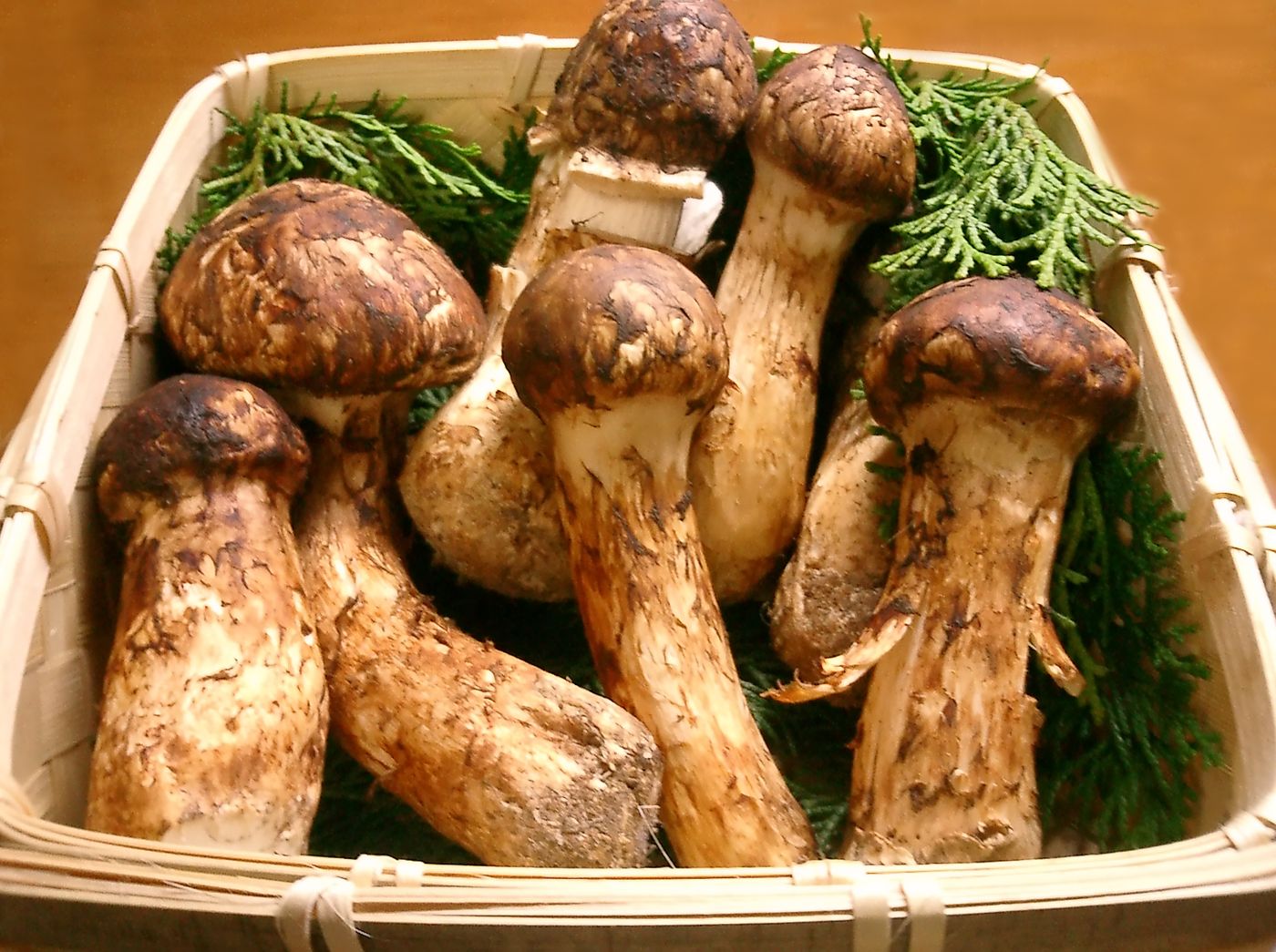 Photo: Tomomarusan, CC BY 2.5, via Wikimedia Commons
Origin & History
Songi is the pine mushroom, known in Japan as matsutake (Tricholoma matsutake). As the Encyclopedia of Korean Culture explains, it lives in partnership with the fine roots of the Korean red pine (jeoksong), forming mycorrhizae, and pushes up its fruiting bodies in autumn when soil temperatures fall to around 19°C, often in a ring around the trunk. It favors well-drained soil weathered from granite. The cap is dark brown above with dense gills below. Because it depends on living trees, it has not been successfully cultivated; supply still comes from foraging in managed pine forests.
In Korea the best songi forests lie along the east coast and the Taebaek and Sobaek ranges. Yangyang in Gangwon-do was the first forest product registered for geographical indication by the Korea Forest Service, in 2006, and its top-grade mushrooms set auction price records; in 2026 the Yangyang–Sokcho Forestry Cooperative reported about 1.62 million won per kilogram. In Gyeongsangbuk-do, Bonghwa grows songi in the sandy granite soils of the Taebaek foothills, and county figures put its harvest at around 30 tonnes a year from about 1,920 hectares of forest. Also in Gyeongsangbuk-do, coastal Yeongdeok reports the largest harvest of all, about 18 of roughly 121 tonnes nationwide in 2025. The season runs from about September to October, and the harvest swings sharply with heat and rainfall.
Songi has a long literary history in Korea. The Encyclopedia of Korean Culture traces it to poems by the Goryeo writer Yi Illo, later echoed by Yi Saek and Kim Si-seup. The Joseon medical classic Donguibogam ranked it first among tree mushrooms for its pine-scented flavor, and Jeungbo sallim gyeongje recommended simmering it in soup with pheasant or threading it on skewers, brushing it with sesame oil and soy sauce, and grilling it until just cooked. Much of the Korean harvest has historically been exported to Japan.
Cooks handle songi gently so as not to lose its aroma: it is torn or sliced and grilled with little seasoning, or added at the last moment to clear soups and rice dishes.
Nutrition
| Calories | 21 kcal |
|---|---|
| Protein | 2.05 g |
| Fat | 0.15 g |
| Carbohydrates | 8.12 g |
| Fiber | 4.6 g |
| Sodium | 1 mg |
Notable forDietary fiber · Niacin · Riboflavin · Potassium
Korean Food Composition Table entry "Pine mushroom (Songi-beoseot), Raw" (송이버섯, 생것): also 3.758 mg niacin, 0.402 mg riboflavin, 317 mg potassium and 1.85 mg iron per 100 g. Actual values vary with ingredients, portion size and preparation.
Health Benefits
- Fiber-rich mushroom: Per the Korean Food Composition Table, pine mushrooms are low in calories and fat and a source of fiber, niacin, riboflavin and potassium. The Encyclopedia of Korean Culture notes that most of their carbohydrate is fiber.
- Never forage without expertise: Korea's National Institute of Forest Science warns that poisonous wild mushrooms are hard to tell from edible ones and can cause vomiting, fever, diarrhea and even death, with symptoms typically appearing 30 minutes to three hours after eating. Buy songi from forestry cooperatives or trusted sellers.
- Folk tests don't work: The same agency calls common rules of thumb dangerous myths, such as that dull colors, splitting lengthwise, a ring on the stem, insect damage or an untarnished silver spoon mean a mushroom is safe, or that boiling or frying removes toxins.
- Suspected poisoning: If anyone becomes ill after eating wild mushrooms, seek emergency medical care promptly and bring any leftover mushrooms for identification.
Informational, not medical advice. Talk to a qualified professional about your own health and diet.
Dishes with Songi-beoseot (pine mushroom)
Dish guides featuring songi-beoseot (pine mushroom) are coming soon.