Ingredient
Octopus (muneo)
문어
Romanization: muneo
Large octopus from the cold East Sea, boiled and sliced into pinkish-white rounds. In Andong and across North Gyeongsang, boiled muneo is a fixture of ancestral rites and feasts.
Flavor
Sweet, mild and gently briny, with a firm, springy chew; boiled octopus has a clean, almost nutty flavor and a deep reddish skin around white flesh.
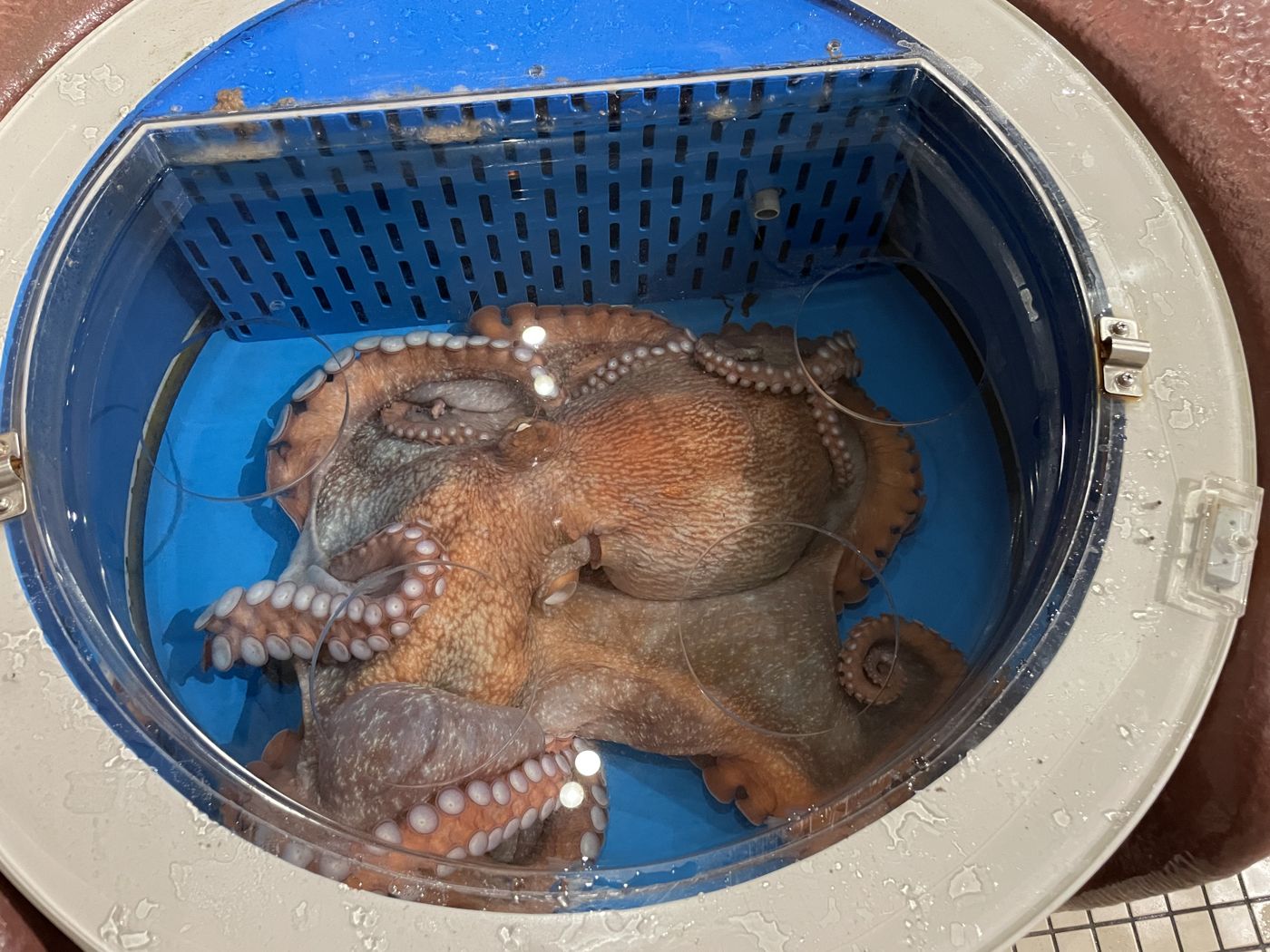 Photo: Totti, CC BY-SA 4.0, via Wikimedia Commons
Origin & History
Muneo properly means the giant octopus of the cold North Pacific, which the Encyclopedia of Korean Culture lists as Paroctopus dofleini. It lives at depths of 100 to 200 m and can reach 3 m in length and 30 kg, ranging from Korea and Japan to Alaska and California. Koreans also call the much smaller and more common octopus muneo; the Korean Food Composition Table separates daemuneo (giant octopus) from chammuneo (common octopus). The usual old Chinese name was palchoeo ("eight-tailed fish"), but the native name muneo is old as well, and is commonly written with characters meaning "letters fish."
The 16th-century gazetteer Dongguk yeoji seungnam lists octopus as a local product of 37 districts in Gyeongsang, Jeolla, Gangwon and Hamgyeong, so the East and South Seas have long been rich grounds. A later encyclopedia, Jeoneoji, describes catching octopus by lowering pots on cords: each pot, large or small, takes a single octopus that crawls in by itself. The 19th-century household manual Gyuhap chongseo recommends slicing octopus into coin shapes and stir-frying it, and Korean cooks have long cut dried octopus into ornate phoenix and dragon shapes to decorate feast tables.
Nowhere is octopus more honored than in Andong and the inland towns of North Gyeongsang. Octopus from the coast at Uljin traveled over the mountains to these yangban households, where its legs are halved, threaded onto skewers and set on the ancestral-rite table beside beef and shark meat. An MBC News report from Andong's market describes octopus as essential at local rites and feasts and links it to the region's scholarly culture: the characters for muneo suggest writing, and its ink recalls a scholar's brush. The same report cites an estimate that about 40 percent of the octopus caught in Korea is eaten in the Andong area, a figure an editor may wish to treat as a local claim. Elsewhere, muneo is most often simply boiled and sliced, served as muneo-sukhoe with a vinegared chili dip.
Nutrition
| Calories | 70 kcal |
|---|---|
| Protein | 16.4 g |
| Fat | 0.7 g |
| Carbohydrates | 0.1 g |
| Fiber | 0 g |
| Sodium | 280 mg |
Notable forMagnesium (55 mg) · Potassium (290 mg) · Zinc (1.6 mg)
Values copied from the Korean Food Composition Table (Rural Development Administration / National Institute of Crop Science) for this exact food, per 100 g edible portion. This general raw-octopus entry is the most complete one in the table; the separate giant-octopus entry (문어, 대문어, 생것) reports only a few nutrients. Boiled octopus in the same table has 91 kcal and 21.7 g protein per 100 g, and the raw entry lists 150 mg of cholesterol. Actual values vary with ingredients, portion size and preparation.
Health Benefits
- Lean protein: Raw octopus supplies about 16 g of protein and under 1 g of fat per 100 g, with magnesium, potassium and zinc.
- Sodium: The Korean table lists 280 mg of sodium per 100 g of raw octopus, and dipping sauces add more.
- Mollusk allergy: Octopus is a mollusk. U.S. law's major-allergen list names crustacean shellfish, not mollusks, so labeling may differ; people with shellfish allergies should ask an allergist whether to avoid it.
- Chew carefully: Boiled octopus is firm and chewy; cut it thin for children and older adults.
Informational, not medical advice. Talk to a qualified professional about your own health and diet.
Dishes with Octopus (muneo)
Dish guides featuring octopus (muneo) are coming soon.