Ingredient
Chamoe (Korean melon)
참외
Romanization: chamoe
A small, oblong melon with bright yellow, white-furrowed skin and crisp white flesh, Korea's quintessential summer fruit. Nearly all of it now comes from Seongju, near Daegu.
Flavor
Lightly sweet and refreshing, like a cross between honeydew and cucumber. The flesh is crisp and juicy, and the soft seed core is the sweetest part.
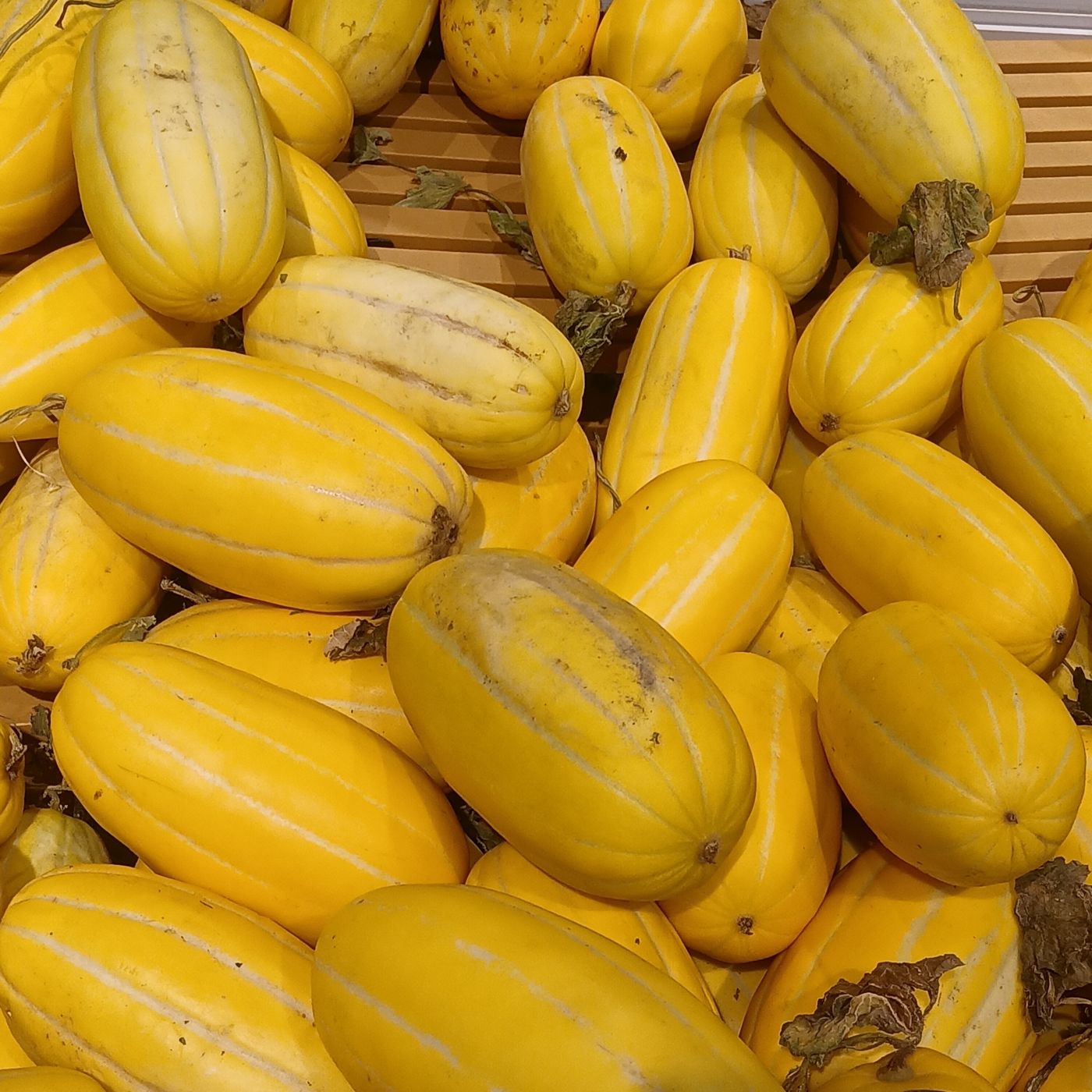 Photo: Fumikas Sagisavas, CC0, via Wikimedia Commons
Origin & History
Chamoe is an East Asian melon, Cucumis melo var. makuwa, a trailing annual vine of the gourd family; botanically it is the same species as Western melons. Korean references place its wider origins in Africa and Asia and its arrival in Korea from northern China by the Three Kingdoms period. By Unified Silla it was apparently grown widely. Goryeo potters shaped celadon ewers and vases after the ribbed melon, a symbol of fertility for its many seeds.
Under the Joseon court, melons were grown for royal offerings and ancestral rites, and officials could be punished for delivering unripe ones. In summer, chamoe was cheap and plentiful, eaten alongside watermelon on the hottest days of boknal. Old varieties included the green, mottled Seonghwan chamoe, nicknamed gaeguri ("frog") melon. Yellow, white-striped euncheon types took over in the twentieth century, and the sweet geumssaragi euncheon line of the 1980s, grown in plastic greenhouses, stretched the season into a long harvest from spring to early autumn.
Today chamoe is almost entirely a greenhouse crop of the Daegu–North Gyeongsang region, which grows over 90 percent of the national total. Within it, Seongju County, where melon growing took off from the 1950s, accounts for roughly 70 percent of the area planted and about 85 percent of production, helped by sunny, well-watered land between Gayasan and the Nakdong River. Harvest begins in late winter and peaks around May.
Chamoe is mostly eaten fresh: peeled thinly or simply washed, cut into wedges and eaten with its sweet, juicy seed core. It is also made into hwachae punches, cold soups, kkakdugi-style kimchi and jangajji pickled in doenjang.
Nutrition
| Calories | 43 kcal |
|---|---|
| Protein | 1 g |
| Fat | 0.4 g |
| Carbohydrates | 10.15 g |
| Fiber | 1.6 g |
| Sodium | 2 mg |
Notable forVitamin C · Potassium · Folate
Korean Food Composition Table entry "Oriental melon (Cham-oe), With seed, Raw" (참외, 생것, 씨 포함): also 22 mg vitamin C, 394 mg potassium and 32 µg folate per 100 g. Without seeds (참외, 생것, 씨 제거): 40 kcal and 1.1 g fiber. Actual values vary with ingredients, portion size and preparation.
Health Benefits
- Hydrating fruit: Chamoe is about 90 percent water, and per the Korean Food Composition Table it provides vitamin C, potassium and folate for few calories.
- Eat it fresh: Korean folk wisdom warns that chamoe is "break-even at best": overripe or waterlogged fruit, or overindulging when your stomach is sensitive, can cause digestive upset. Choose firm, fragrant melons. A melon that sinks in water is said to be waterlogged.
- Traditional beliefs: Korean herbal texts credit chamoe with easing coughs and acting as a diuretic. These are traditional ideas, not established health effects.
- Wash before cutting: As with any melon eaten with or near the skin, wash it well before slicing so surface dirt is not carried into the flesh.
Informational, not medical advice. Talk to a qualified professional about your own health and diet.
Dishes with Chamoe (Korean melon)
Dish guides featuring chamoe (korean melon) are coming soon.